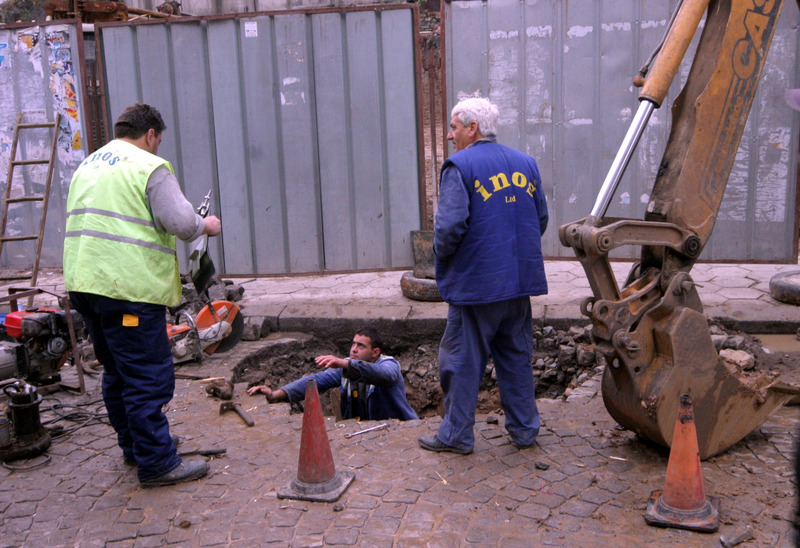
Adding up all the sums spent in the last ten years on water development strategies, legal analysis and consultations, proposals for legislative acts, conferences on water infrastructure etc., the amount would probably turn out to be sufficient to modernize at least half of the sewage network in the country. Alas, today the sector continues to be ruled by chaos. Nobody knows who owns the facilities, as we could see in the recent floorings in February 2012. The responsible institutions are so many that eventually all of them came out clean from the problematic situation. With a promise to introduce order in the sector the management of water resources in the country proposed modifications in the Water Act, though some experts doubt this would produce the required results.
The official proposal concentrates on clarifying the owner of the infrastructure, and respectively defining the responsibilities.
The reality behind these formal explanations, however, is somewhat different. It turns out that instead of the promised a month ago centralization and tighter control, the proposal suggests entirely the opposite – the coordination of the water sector to be carried out by nine ministries, not four as is the case now. Whether this will lead to greater blurring of responsibilities, is almost certain.
The so-called Coordinating Board will be comprised of the Ministers of Environment and Water, Agriculture and Food, Economy, Energy and Tourism, Regional Development and Public Works, Finance, Healthcare, Interior affairs, Transport, and even of – Education and Science. New mega authority is supposed to coordinate activities related to development of management plans for river basin management and flood risk, funding and implementation of measures to reduce the likelihood and consequences of flooding, and ensuring the security of dams.
The bill provides that the Minister of Regional Development and Public Works is to maintain a single register for all equipment in the water sector. He will be also the one to approve the short- and medium term programmes of research, design and construction of all water systems.
The control of facilities’ technical condition as well as the safety of all dams and related facilities, regardless of their ownership, will be carried out by the Minister of Economy and Energy. In cases of failure to meet a prescription he will be in position to ban the use of or access to ponds that are operated in violation of safety requirements, and even order the decommissioning or removal of dams, as well as prohibit their supply with electricity or heat.