
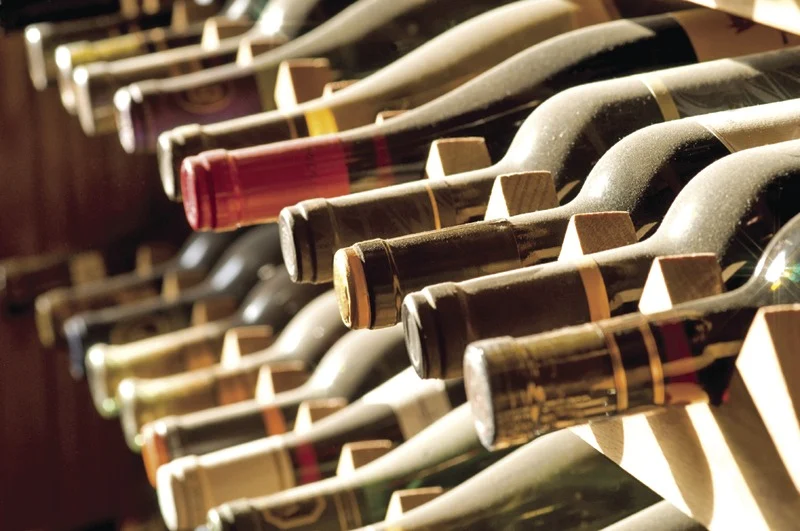
According to unofficial data the Bulgarians consume between 30 and 60 million liters of wine a year, it is not clear how much of is home-made. Last year’s growth was about 18 percent based on the sales in 2010. Estimates are that in 2012 the rise will continue at around 7-8 percent. This is a global trend that is followed at a national level, wine producers say.
Wines offered in the country can be divided into three price segments – low (BGN2 to 8 for a bottle of 0.75 l), medium (from BGN9 to 20) and high (above BGN20). Marketing studies show that over 60 percent of Bulgarians buy low market products, about 20 percent prefer the middle price segment and only 5-6 percent buy expensive wines, whether Bulgarian or imported. Nearly 14 percent rely mainly on domestic production. Almost half of the buyers of cheap wine do prefer bottled wine in plastic packaging that is produced in some small wineries, often unregistered and associated with the informal sector. Experts argue that the content of grapes there is often minimal.
The bad news for Bulgarian wine is the market penetration of imported wines in the lower price range. French, Spanish and Italian wines with prices from BGN3 to 8 a bottle can now be bought in many supermarkets, and Bulgarians gradually get used to their special characteristics and their preferences have changed under the pressure of purely financial nature. For example, red Spanish wine of declared geographical area in the capital city of Sofia may cost BGN3.50 per bottle in the shop while a comparable Bulgarian one will come to BGN6.80. Even cheaper are imported red wines in tetra pack packaging as they cost less than BGN3 in the retail chains. For comparison – in the same packaging Bulgarian wines from established manufacturers cost BGN12-14 per 3 litres and BGN11-15 litre for 5 litres.
Promotions of Bulgarian wines in large chain stores are rare. Traders comment that the ratio between the number of discount prices of Bulgarian and imported wines is 1:4. The question is how and why local production has become more expensive to consumers than the imported one which has to calculate higher transportation costs? In principle, each bottle quality wine contains the juice of about 1.5 kg of grapes, and includes the price of glass containers, corks, and labels. In addition, prices reflect labour costs, barrels, overhead storage, plus the retail margin. Given that most of these variables are generally standard for European producers, it seems strange that some wines are much more expensive than others. If it could be argued that the quality is nearly the same. The judgment of taste is always marked by the element of subjectivity, and it does not always determine the purchase decision.
The good news for Bulgarian wine production sector is the increasing exports over the past two years. For 2011, the provisional figures show exports of about 40 million litres of wine, or a growth of nearly 3 percent. Our main partner in this respect is still Russia, where almost half of Bulgaria’s exports go to. Recently, however, our presence in the Russian market is difficult because there are new restrictions on imports of semi-arid and semi-sweet wines, and the established Bulgarian brands there are just in that category.
Rather unexpectedly, the second place in the Bulgarian exports of wines in 2011 was occupied by Romania. The reason is in the increasingly large number of Romanian guests to Bulgaria’s sea and winter resorts who also explore the Bulgarian wine industry, experts say. The common border further boost exports.
The other countries that buy Bulgarian wines are Poland, Britain, the Czech Republic, Belgium, Germany, Hungary and Mongolia, but the quantities are not that large. In most EU countries, wine exports are primarily intended for representatives of the Bulgarian diaspora and rarely manage to attract local connoisseurs of the red drink. In Britain, for example, where twenty years ago Bulgarian wine had solid presence, it can now be found in limited quantities, and in smaller stores, while it is virtually missing from the middle class retail chains. There, the lowest retail prices of Spanish, Argentine and other imported wines start from GBP5 and go up to BGP15.
Bulgarian wines are at European and world level in terms of packaging and labels, say participants of the last wineries in Plovdiv. But problems with raw material and the need for significant investments in vineyards increases costs of wine and this is reflected in the final product price. If Bulgarian wines fail to find a way to become more competitive without sacrificing quality, the proportion of our production on the domestic market will continue to decline.