That the state has become the main sponsor and advertiser in some media, is clear for everybody. Of course, all this buying of media comfort is explained by the plausible goal of promoting EU funds and is paid by Brussels. Dividends, however, are only for those in power.
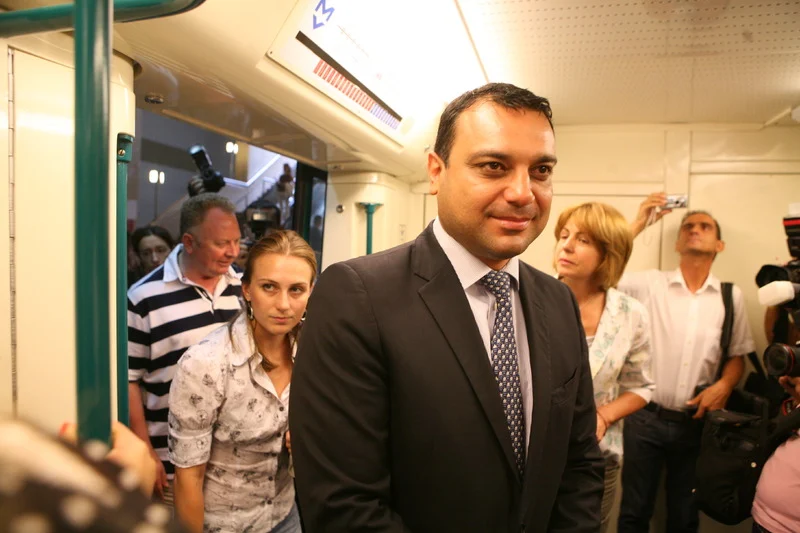
The undisputed leader in this segment is the Agriculture Minister Miroslav Naydenov, who probably knows by heart the bank accounts of certain publishers and broadcasters after the dozens of transactions for the published and broadcast PR materials. Soon, however, a strong competitor will turn up in the face of Minister of Transport and Communications Ivaylo Moscovski. For several days he has been seeking an agency to arrange interviews and publications in print and electronic media for the project Development of electronic administrative services and Improved service to citizens and businesses in the Ministry of Transport and Communications, through the development of spatial data and services . In order for Moscovski and his experts to give learned by heart answers to prepared in advance questions on what is a European government, the state will provide over 309,000. It’s true that money does not come from the national budget but from the Administrative Capacity programme, but this does not change much.
Officially, everything is done because specially hired experts from the transport department have concluded that there is insufficient and fragmented information in the public space about the nature and benefits of e-administration, as well as a lack of confidence in the safety of sharing personal information online. For the development of administrative services electronically the general public will learn from 30 one-minute video clips and five interviews that will run in the TV’s prime time in the evening and morning shows. A total of 50 radio broadcasts of 30-second audio clips, plus five other interviews in the national radio’s prime time and morning shows will support the campaign. Press will publish five posts of up to 2,000 characters, plus as many ad slots, and ten interviews of one page each, evenly distributed in at least five daily newspapers. For the electronic news agencies a package of 50 publications are provided. A similar number of materials will be circulated in the local media.
As for the project Improving services to citizens and businesses in the Ministry of Transport and Communications, through the development of spatial data and services, – it will only be advertised in the newspapers, and then through three press releases.
But who will select the media to publish these materials. It will not be the Minister himself. It turns out that PR agencies have found Cornucopia in times of crisis, creating a true closed loop in the allocation of EU funds. How is that possible? Well, very simple. At the end of 2011 the transport ministry signed a contract with the consortium Prime Time – Master PR for the development of communication strategy to promote the project Development of Electronic Administrative Services. The amount paid for target is BGN46,200, without VAT. It is this firm that distributes the portions among their colleagues, and why not to itself.
The consortium includes Prime Time and Master PR. The first agency is run by Mariana Tsutsekova and has regularly serviced public institutions, most often partnering with Grain Advertising of Martin Batkov and Argento 2020 of Vladimir Denev and Johana Darakova.