The current 2012 will be remembered as the year which established some new trends in the market for clothing and footwear, according to people in the industry. Changes affected the mentality of buyers, prices and even the way of trading in these goods. All this happened under the pressure of stagnation and decline in consumption.
Textile manufacturers have not corrected their prices significantly in September compared to August, recent data from the National Statistical Institute showed. On an annual basis they increased by no more than 5.6%, although in the last 12 months only the increase in energy prices has been above 15 percent. Compared to 2005 these prices rose by only 43%, or 6% per year. Even smaller were changes in the prices of clothing – in September compared to August they fell by 0.3% while on an annual basis have risen by 3%. These numbers are measurable with inflation and do not reflect the increase in fuel prices and raw materials used in the industry.
The crisis has changed something else – judging by the statistics, Bulgarian spend in the second quarter of 2012 a modest 2.9 percent of their income on clothing and shoes. This makes about 65 lev per household consisting of three people. Anyone who has been in a shop in Bulgaria knows what can be bought for 20-25 levs. Therefore it is not surprising that retailers reported a decline in sales at the beginning of September by 32% compared to the same month of 2011. This has continued for three years now and is not likely to change during the upcoming 2013.
Big blow hit Bulgarian producers. They face not only reduced consumption and low sale prices, but also the competition from foreign producers, mainly from China in clothes and from Europe – in shoes. Four years ago, there were periods in which there were discounts at fairs for the majority of Bulgarian products, which now happens rarely. Consumers in Bulgaria began to trim the family budget and the first reduction affected the expenses on clothing and shoes, note representatives of the Bulgarian Association of Retailers. This is clearly evident by the declining number of specialised stores in cities. Even in malls, which focused on attracting major retailers, the situation is far from rosy. Last year, one of the companies producing clothing under its own brand, signed an agreement with the Ministry of Education, which require teachers from Sofia to spend money on clothes only in its stores – about 180 lev per person,. This year, however, such an agreement was not reached, and the money for clothes to teachers are likely not to be paid out so the sector will be deprived of up to 400,000 levs.
Since October most specialised stores also lowered the prices of their summer collections, but the result, according to traders in the capital is minimal. The best segments are those of children’s clothing because of the beginning of the school year, but in the men’s segment – suits, shirts and trousers, the decline is the greatest. Some observations show that in 2012 and the sales of male clothes slumped by 40% yar-on-year.
The market is divided into two very distinct zones. On the one hand, buyers with more money that form a segment of not more than 7-8% of all customers, preferr branded clothes and high quality imported clothes. They make the biggest share of turnover in recent months – according to some unofficial estimates, suits priced from 250 to 500 levs form nearly 30% of all sales. What is not that good for traders is that these people can and often buy clothes from abroad, where their price is not much different from the Bulgarian one but their quality is better.
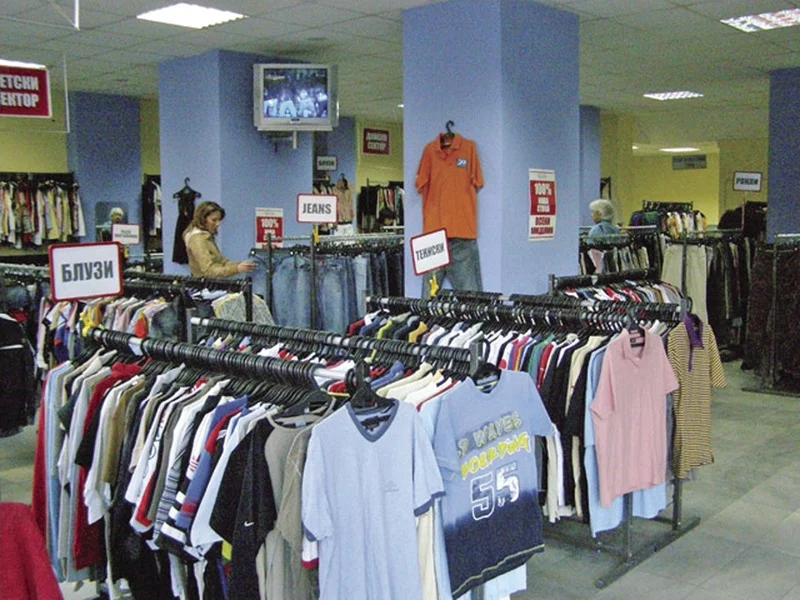
The second part of the market is occupied by expensive new clothes at reduced prices. Rapidly is evolving also the second-hand trade. Everywhere one can see advertisements for sales of used clothing, the prices being very popular. Sellers of such shops argue that clients already buy everything – from shirts and ties to jackets and coats.
The BANKER
nbsp;