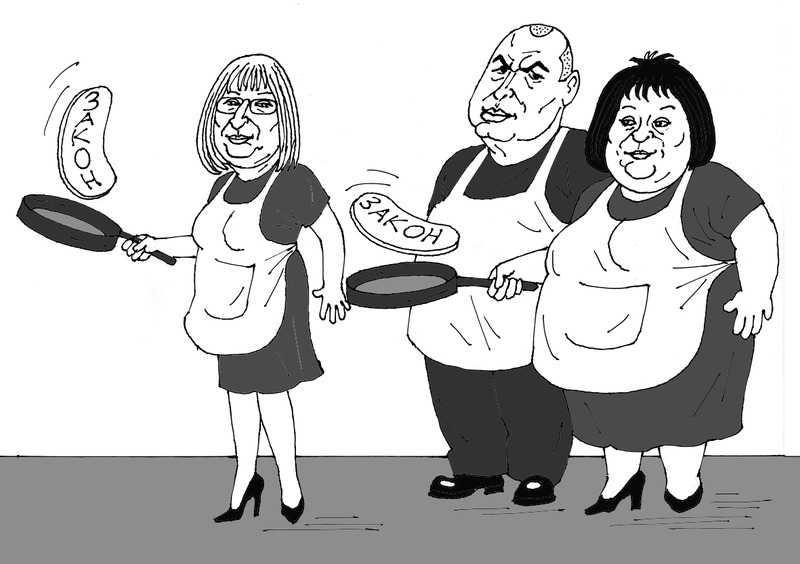
In the fourth year in office, to shift position by 180 degrees for those in power is hardly a surprise. Government vividly illustrates that when concerns about ratings become the most serious factor in the making of decisions, this is nothing more than degradation for politics and politicians. Rating-metre concerns and attempts to correct blunders out of incompetence or lobbying are the main reasons for the frequent withdrawal of legislative proposals by the ruling GERB party.
About two days lasted the life of the latest controversial legislative idea.
This was the time needed by decision-makers to analyze public reaction and to consider that in this case the headache is just not worth it. The texts for the increase of salaries of the elite were retired before the public had the chance to see how exactly they were formulated.
First it was announced that the money Prime Minister, the President and the Parliament Chair will receive will be BGN8,000 a month, and the payment to some of the lower positions will also increase considerably. The plan was the measure to take effect after the elections. Immediately after that regular government critic Sergey Stanishev attacked the idea, and internet forums exploded with traditional in such cases epithets for the Government. Just for comparison – last year the main political opponent of Angela Merkel in Germany announced that the chancellor’s salary is too low. So there could be some truth in Prime Minister Borisov’s statement that in Bulgaria there is no political class …
If the idea was not quickly withdrawn, it would have become the main topic for the media during the week. Accordingly, the entire galaxy of opposition representatives would grab the opportunity to say in front of cameras what they think about the move.
This dire prospect frightened the Cabinet and the project was cancelled. Finance Minister Simeon Dyankov this time took off the shoes of a decisive reformer and a changed his attire to play a politician sensitive to people’s voice. The argument which he used was that it was not the right moment to increase salaries.
Raising the wages of senior officials would not be to the taste of most Bulgarians. It would again be met with resentment or even protests, but still – it is not bad to ask ourselves what we can expect from a prime minister who is paid around 1700 euros a month?
The case of top officials’ remuneration is just another episode of the soap opera GERB in the country of legislative changes.
and is no exception to the usual practices. In December, for example, the majority in Parliament removed preferential voting, which voters could use to rearrange the party lists. When in 2009 GERB came to power, they promised to enforce the preferential element. Later they included it in the Election Code with the support of the MPs from Ataka.
We will not dwell much on the three cases in which the President vetoed newly passed bills because the details of them are sufficiently known. Both the Judiciary Act and the Forestry Act were re-run in Parliament as expected. This time, the Law on Investment will probably follow suit.
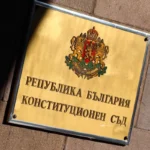
In November last year, the ruling majority was forced to rethink their choice of Veneta Markovska as a member of the Constitutional Court. This happened after a quarrel on whether voting is necessary for the cancellation. Before deciding to remove their support for their applicant, Interior Minister Tsvetanov and top officials diligently defended former vice president of the Supreme Administrative Court against the attacks of the media and the European Commission.
Often in the GERB parliamentary group there is unrest against Deputy Prime Minister Simeon Dyankov. The majority of MPs sometimes dares to express opposition, albeit in more subtle forms. This impression was confirmed in November when voting on the budget, lawmakers rejected the text, providing fiscal repression for the Commission for Protection of Competition and the Commission for the Conflict of Interests. Incidentally, this is one of the best known examples of the way in which the Finance Ministry is trying to press oponents against the wall. Dyankov was annoyed that junior experts at the CPC get salaries equal to his those of deputies, and without much explanation decided to cut its budget in 2013 to 400,000 levs. Lawmakers, however, did not comply with his wishes.
The BANKER