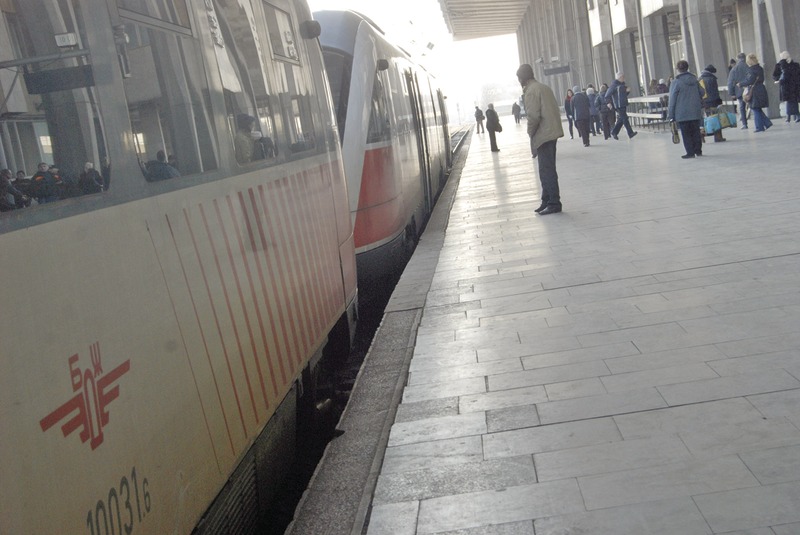
There’s hardly anyone in the country who does not know that the Bulgarian railways have been in need of urgent reforms for years. What’s worse is that the changes are only done on paper. A lot of money for plans and programmes is spent and then the plans are abandoned. Analysis of the institutional framework in the railway sector in Bulgaria, including the legal aspects of a project for the purchase and modernization of passenger rail vehicles It is obviously well known to the new Transport Minister Daniel Papazov after he signed a decision to extend the deadline for submission of bids by potential candidates.
This procedure is for
the decent amount of 840,000 levs
which is provided by the Technical Assistance Axis of the EU’s Operational Programme Transport. Against the money the contractor has to choose the most suitable option for the purchase of new trains with EU money in the next programming period: 2014-2020.
Ex-transport Minister Ivaylo Moscovski, repeatedly said that they are rules now under which BDZ Public Transportation can now receive funds from the same programme, and the goal is on January 1 2014, the company to have 600 million levs on new trains. Plans are to buy about 100 new trains Siemens. But now, it seems that the ministry cannot itself with the task of searching for a consultant. The contractor is expected to submit a comprehensive multi-criteria analysis to select the most applicable model for the Bulgarian context to identify the risks involved in its implementation and to prepare relevant reports. All this must be done by a team of at least six key experts – one in railway carriages, who will be the project manager, a coordinator and two lawyers and economists. At the same time, the transport ministry has a department called European Coordination and International Cooperation, which according to the administrative register employs 23 people. Among its functions is to organize and coordinate the implementation of the tasks associated with the European Union funds, and manage the activities in the sector Transport Policy, as well as participate in the preparation of opinions, positions, analyzes and information.
The ministry has also a separate directorate called Coordination of Programmes and Projects employing 61 people. It would also have to be concerned with the management of all these initiatives, co-financed by the European Commission in the Transport chapter.
Separately, the Executive Agency Railway Administration has a staff of 50 people, some of whom are also involved in the development and implementation of concepts, programmes and projects related to the restructuring of the railways and the development of rail infrastructure to be provided with money by Bulgarian or international financial institutions.
The BANKER