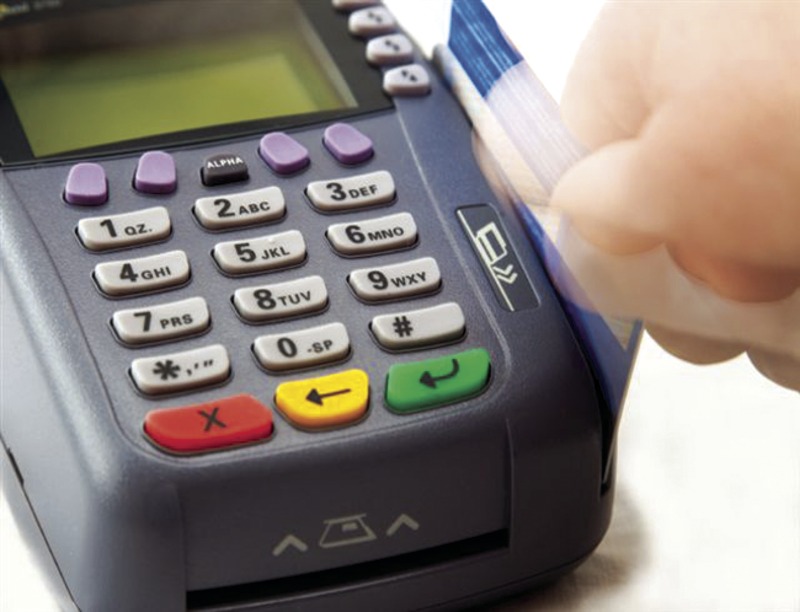
Bulgarian banks suffer, if not great, but from a fundamental standpoint of view – important losses because of former Finance Minister Dyankov. The question is about a scheme for the payment of taxes, fines and fees in bank sales terminals (POS) at the central and local administrations. According to this scheme, the transaction costs are borne by the exchequer, to which, previously, all debtors had to pay in the bank servicing revenue agencies. An update of the transfer costs, the Treasury pays to banks has long been a pressing problem to solve, but for now this is the lowest priority of the ministry. Thus, despite the commitment to fully cover the transaction costs from the budget, government officials turn a blind eye and part of the sum is paid by the banks. Meanwhile, bankers complain that they lose thousands of euros from incomplete coverage of the price and because of the unfavourable ratio of POS terminals to the number of cardholders, which is in favour of terminals.
Dyankov is no longer a minister – but transfers are ruled in Dyankov’s way.
In mid-2011 was born an initiative to put POS (trade) terminals in public administration for citizens to pay taxes to the budget, fines and fees by credit cards (with no fees). That means – for free. Minister Dyankov could boast with few achievements but this measure combined a fiscal concern for the greater collection of debts from citizens with a care for the people to save bank charges for transfers to the treasury, which in turn appeared to be a moral correction of a vibrant injustice.
The system became operational from March 2012 with 29 commercial terminals installed. Ministry of Finance prepared a type, uniform contract and invited banks that serve the budget, to get involved. Practically all banks responded that had dealings with the Treasury and 16 out of total 30 banks signed agreements with the Ministry of Finance. Meanwhile, the number of POS terminals swelled to 610 at the end of the year, which was a growth of about 2100%. As leaders in this respect were UBB – with 180 devices and Unicredit Bulbank – with 109.
The BANKER asked Lubomir Tsekov, CEO of BORIKA – BANKSERVICE AD to remind the principles that were set and met in offering this service. The first was, after MF sign a contract with the commercial banks, the budget spenders – ministries, agencies, departments and municipalities to decide when and how many POS terminals to place, explained Tsekov.
The second principle was prompted by the Treasury and its intention to equalize conditions in cash payments and a bank card transfers, i.e. no fees for cash payments to be applied on transactions with bank cards. This caused the next problem which was successfully resolved. In this situation, the Ministry of Finance is in essence a retailer (as if a big retail chain). Upon card transactions the rules are the following: there is an interchange fee (interbank fees) when via a bank card of one bank a custommer wants to pay through a POS terminal of another bank. The reason for the MF to cover these fees is in the fact that for a merchant to process cash is much more expensive, more labour intensive and more risky than the processing of cashless money (card transactions), said Tsekov.
International card organizations have a rule – the trader pay a fee to the bank that issued the card in order to encourage it to issue as many cards as possible. Hence the stems the need for the Ministry of Finance to not just cover the cost of the transaction, but also to recover the costs of interchange fees.
This led to the historic agreement between the Ministry of Finance and the Association of Commercial Banks, which came into force in February 2012. Both sides agreed to a uniform size of the transaction from 65 lev cents. It includes the cost of the transaction and interchange fees. It was clarified also how to identify the two components of this price. Bank fee is a constant number while interbank fee is a percentage of the amount paid. It should be noted that the two sides agreed in a year to gather again to consider the results and, more importantly, to adjust the price. It must be mentioned that in 2012, before signing banks insisted that the price paid by the Ministry of Finance shoul be in the range of BGN1.00 to BGN1.20, but this was never accepted.
According to BORIKA-BANKSERVICE last year saw 32,500 such transactions totaling 4.660 million levs. A simple calculation shows that the average price of a transaction was 143.24 levs at an average interbank fee of 57 cents. To this amount one should add the transaction price of 15 cents, to form an overall cost of 72 cents.
Let’s take a look at the important question of how much money the Treasury spends to pay the fees instead of citizens, stimulating them in this way to pay through a POS terminal. Multiplying the number of 32 500 transactions by 65 cents, one gets 21,125 levs. For the scale of the budget this is a ridiculously small amount, so the question of the update, i.e. lifting the price to its real level, should not be felt as any burden by the Treasury.
Against the backdrop of social and political chaos, the silence of the Treasury is more than justified, though. It is unlikely that this question can find place in the agenda of the Finance Ministry, although public interest in this type of transactions is increasing exponentially. For example – from the beginning of the year until the end of May the country have registered 74,500 transactions totaling 7.320 million levs. The first five months of the year, compared with last year’s corresponding period shows thus a double growth. Despite the insistence of servicing banks for an update of the price, the latter will probably not take place soon. The contract between the banks and MF was unfair for the industry. Once because the state does not pay the real cost. Secondly, because of the serious disparity between banks. Those with very small number of cardholders and POS terminals installed, earn at the expense of those with smaller number of card customers, but with a larger total network of sales terminals. In this case, the latter lose from non-transferred interchange fees. This way tension has been created between banks. The most obvious examples of losses are generated by Municipal Bank, Tokuda and CIBank who have significant numbers of POS terminals with relatively fewer cardholders. Major beneficiaries of the system are Unicredit Bulbank, UBB, and DSK.
The BANKER