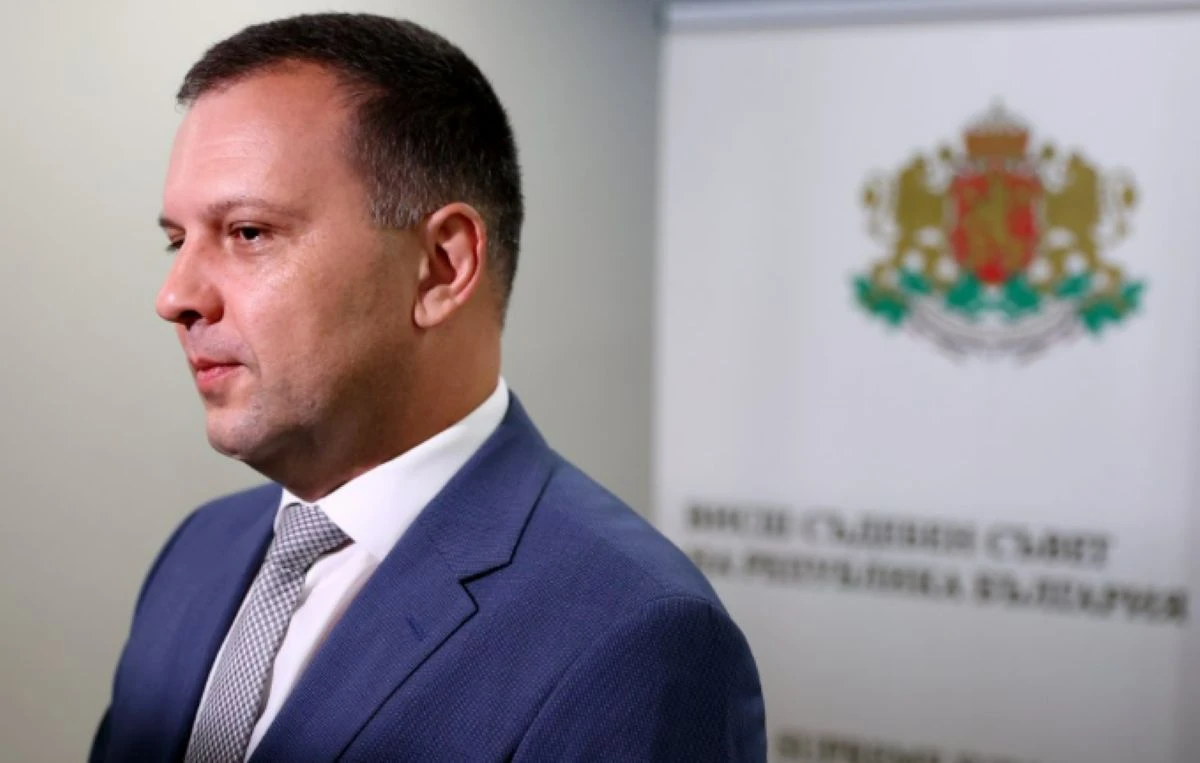
In its report for the 100 days in office Minister of Education Prof. Aneliya Klisarova said she had received a very bad legacy. According to her, this is manifested in unspent money from European funds, poor preparation for the operational programme Science and Education for Smart Growth, many complaints under the Academic Staff Act and lack of resources for Bulgarian Academy of Sciences.
Besides being committed to address these urgent cases, Klisarova promised to prioritize the completion and submission of the Strategy for Development of Higher Education, which will eventually bring some order into the system. This is the cornerstone for her success as a minister, because despite repeated changes the current Higher Education Act
does not guarantee even minimal control
on the huge financial flows pouring into universities. Nobody can track whether the millions are being spent efficiently, since the public universities receive accreditation pro forma and the relevant institution credits their requests for money that would be allegedly vital for the maintenance of multiplying specialties. Because of the lack of effectiveness in regulating the spending universities undisturbedly accept almost everybody to enroll. Logically after graduation they create highly qualified experts that end up behind a counter of a grocery store or even worse – young unemployed queuing at the employment office.
Facts out of the long-awaited report of the Supreme Audit Office on how graduates find professional realisation in the period 2009-2012, suggest an even more startling conclusions. It turns out that for the last four years in the 37 state universities
a total sum of over 1.34 billion levs was poured
in budget subsidies, but the result is frustrating. Only a quarter of their graduates are working at positions with the required education.
Of course, there are other worrying figures: on the small Bulgarian educational market coexist 51 accredited institutions of higher education, including 37 public and 14 private universities, working with 185 faculties, 15 branches, 20 colleges, 55 departments, 8 academic areas, 13 centers and five institutes. Obviously, this swarm of higher education institutions can not guarantee the quality of education not least because of the lack of trained teachers. The trick with visiting professors, signing four or five contracts, works well only for universities to meet these educational standards. Thereafter they admitted students without anyone caring what they may be looking for on the labour market after five years. The result is an oversaturation with specialists in some fields and a total lack in others. More than half of universities are accredited to train students in economics, administration and management. In these areas the number of students has grown in four years by more than 17 thousand people, although employers obviously do not need that many people. The result is that out of the 55,000 graduates in economics, only 22.4% of them work in positions for which the graduates had been prepared.
Undoubtedly the state regulations for determining the costs per student in the 52 professional fields, are crying for an update. It is outright insane for the state to pay the most – 7,350 levs year for graduate training in Military Science, given that Bulgaria has almost no army and the government are wondering how to reduce the number of payroll staff at the defense ministry. The public spending for doctors, dentists and pharmacists is funded by over 6500 levs. However, most of the graduates, immediately after graduation pack their suitcases for working abroad. There is also no logic why the
subsidy for pedagogic sciences stays the lowest
(693 levs per year) since teachers and decision-makers in education are scarce personnel in the country’s educational system.
In 2012 the state introduced additional funding system for public universities based on the quality of education, calculated according to 11 indicators of the learning process, research and realization and connection to the labour market. After its entry into force 33 universities received an additional subsidy of 15 million levs.
This scheme is a step forward, but clearly needs further development as it favours the largest universities. Three universities: Medical University, Sofia University and the Technical University in Sofia, received half of the money.
The BANKER