It has become clear that the government and the ruling majority in the National Assembly of Bulgaria did not intend to change the tax status quo and will preserve it – at least as far as the direct taxes are concerned – the same as they were adopted under the government of Sergey Stanishev. Adjustments will be minor. People familiar with the current Prime Minister Oresharski’s views on fiscal policy can hardly imagine that the statements made by the socialist party for the introduction of higher tax-free threshold and progressive taxation will become a reality.
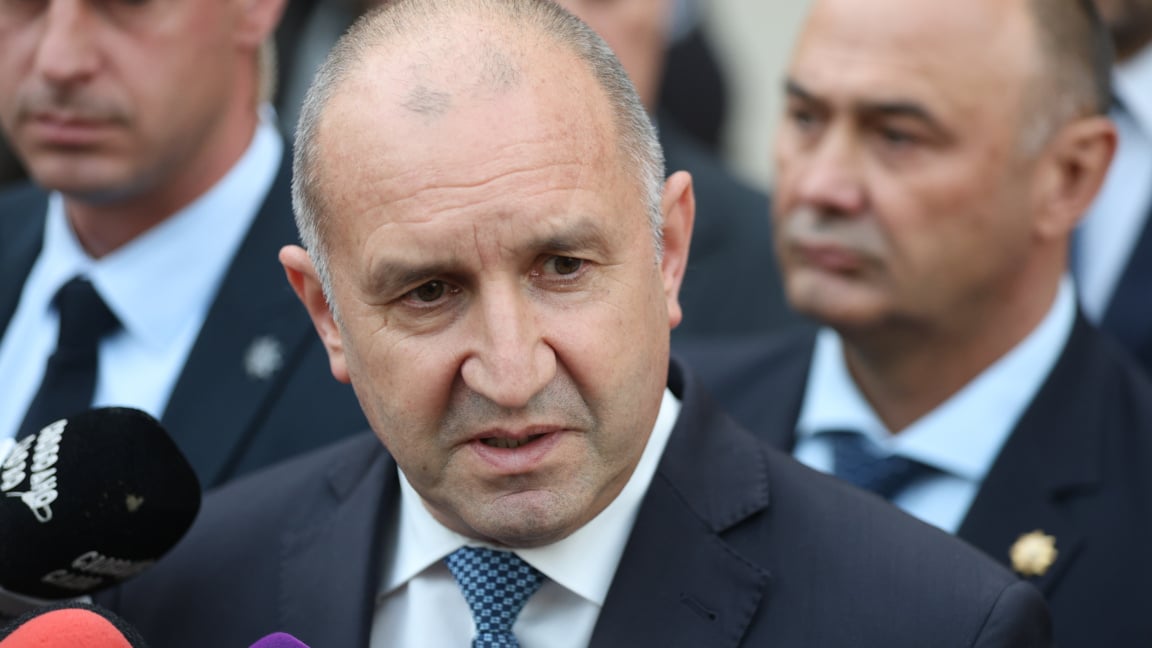
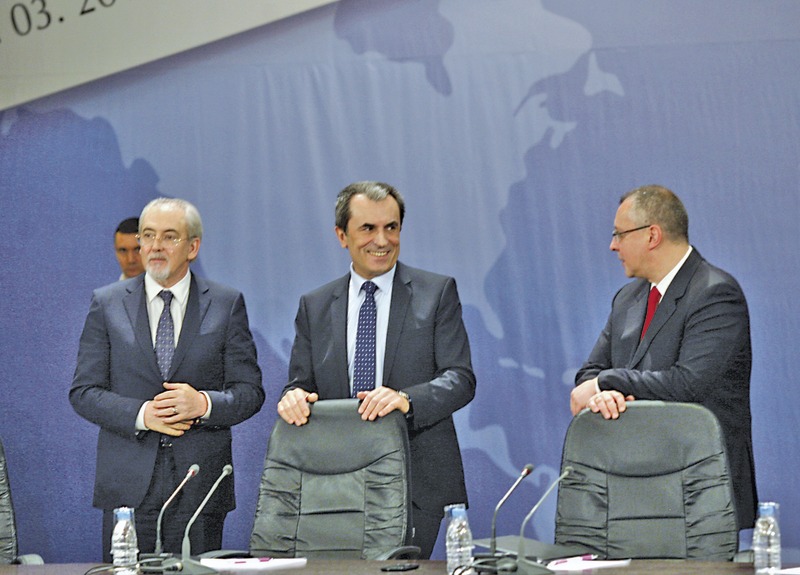
But the socialists continue to argue that in the name of social justice that the poorest sections of the population should receive additional tax relieves. They excuse all idleness in this regard with their coalition partner, the Movement for Rights and Freedoms (MRF), which was strongly opposed to the repeal of the flat tax. This was the verbal vaudeville that took place on Monday at the meeting between Prime Minister Oresharski, socialist leader Sergey Stanishev and MRF chairman Lutfi Mestan with the heads of the media in Bulgaria. Mr. Mestan stated that his party is really prone to keep the flat tax because it has many advantages, but at the same time his party has not turned its back on the most vulnerable social groups. „It is a great achievement that we managed to find a way to help low-income people without touching the flat tax. This is the mechanism that will be used in 2014 for people with minimum wage to get refunded what they paid in taxes for 2013,“ said Mestan.
Oresharski you once again stated that he liked the tax system in the most general form. And this is understandable, because in the end he was the person who created it as finance minister in the cabinet of Sergey Stanishev. Prime Minister stated categorically that there is no possibility of further reductions or increases in tax rates. And stressed that the stability of the tax system creates transparency and predictability for investors, which is essential for attracting foreign capital to Bulgaria. „The current system of taxation is one of the key competitive advantages of Bulgaria, which we should not lose in the foreseeable future,“ said the Prime Minister.
In fact, when it comes to the tax system, the rates are not the only important thing. They can stay untouched, yet the tax liabilities of people may in fact increase or decrease. And it is through the schemes which are used to form the tax base – that result from the income figure minus eligible costs, on which final sum tax is calculated and collected. In this respect, there may be many good surprises and also bad ones for citizens and businesses. It will be enough if the law raises or decreases depreciation rate and tax burden for businesses will significantly reduce or increase.
Drastic changes in taxation without touching the rates can be obtained with an increase or contraction of eligible costs or insertion and removal of new types of costs that are recognizable for tax purposes.
Adjustments can be made with the introduction of new taxes, such as the one on income from interests on deposits of individuals, introduced by former GERB government. When it came into force, there was no change in the flat tax rate, but the tax burden for the population increased.
One should not forget the different types of incentives, the government and the ruling majority can give or withdraw, for different industries, regions or population groups. If all the tax breaks for farmers get canceled, for example, this can be seen as increasing the tax burden, even though no one will have touched the flat rate. On the contrary, if the Cabinet introduces additional relief schemes, such as a full refund of all taxes for companies that operate in areas of high unemployment, this is can be considered tax preference, even though the general tax rate remains the same; leaving aside the fact that in addition to taxes citizens and companies pay a lot more in additional charges, taxes and indirect fees to the state. For example – social insurance contributions: if they are raised even by 1 percentage point, this will dig deep into the pockets of citizens and businesses that pay for their employees.
In short, the fact that tax rates will remain unchanged is a nice political statement. But those who made it did not anyhow guarantee that the current tax burden will remain unchanged.
The BANKER