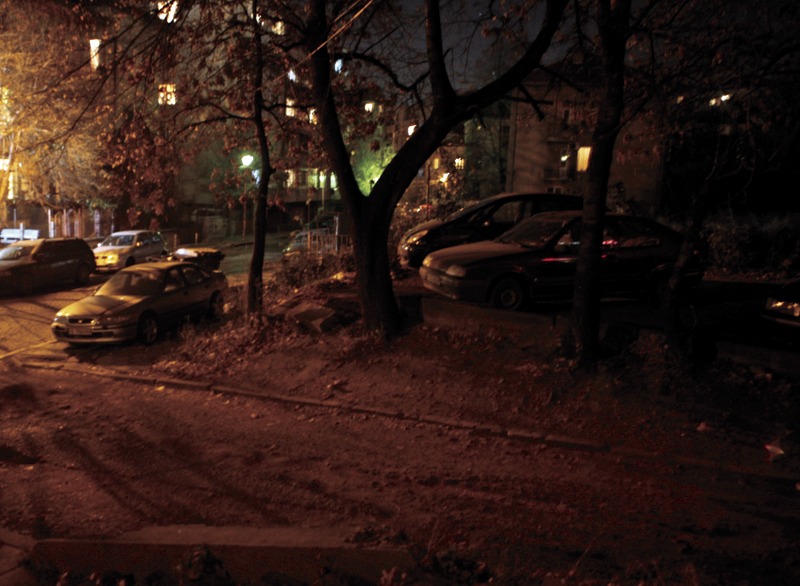
With the idea to improve the urban environment in 1887, Sofia rulers discussed various options for street lighting and one of the official proposals was the whole city to be illuminated with a single powerful lamp, suspended from a balloon over Sofia. This idea may seem queer from today’s perspective, but present absurdities unfortunately are still abundant. A typical example is the view of the lights on streets and even whole neighborhoods on during the day and off at night. In the parks there is no lighting at all, so after sunset, most people do not dare to walk there. But the downside is that local governments don’t seem to be seriously committed to tackling this problem, although it is scientifically proven that light increases economic activity and drastically reduces crime incidence.
Indicative of the quality of street lighting in the capital are the results of the November survey of Association for the Advancement of Sofia. Only 9 percent of respondents believe that the city is well lit and in specific districts the rate of satisfaction drops to 3 percent..
Deputy Mayor for Transport Lubomir Hristov said the city has a good level of illumination of the main roads and of its centre but in the neighborhoods it is weak, most significantly so – in parks. Every year we invest BGN15 million in this direction. We have placed 500 new lightposts along the ring road, the central Tzarigradsko Chaussee Avenue Botevgradsko Chaussee road, we have replaced the whole lightning system in 30 street blocks, and more than 300 traffic lights are now with LEDs. More than 200 walkways are already lit and on a total of 300 we have installed new materials for better visibility throughout the day and night, he explained. According to Christov the city of Sofia now has about 60 thousand street posts with more than 83 thousand lights, and in parks only the lights are 18,000.
However, this is not a reason for boasting. For comparison, in Western Europe the number of lamps average 110 per 1,000 people, which means that if we follow this standard in Sofia people should have about 150 thousand lamps. Not to mention that most of their bulbs are old, poorly lit and in yellow-orange hues as decades ago. The power of street lighting in our capital is small – 3.5 watts per resident for over 13 watts per inhabitant in Germany, for example. However, total spending on electricity is very high due to the low efficiency of the lamps. Data on energy consumption show that street lighting consumes almost 39 million kilowatt hours per year. Calculated on the tariffs paid the City Hall (daily – 0215 BGN / kWh and nightly – 0125 BGN / kWh) that makes more than 6 million BGN a year.
The truth is that in recent years lighting technology made substantial evolution and now it offers much better and effective options. Investments in new cost-saving lighting can cut on these expenses between 30 and 50 percent of the cost of electricity, which is extremely beneficial in the long run. But Sofia has not carried out any significant project in this area. Everything remains to be done without vision, strategy and implementation of modern technologies. The good news is that all this may change with the new directive on energy efficiency, which is now being discussed within the EU Council. It introduces a very stringent requirements in terms of public infrastructure, according to which municipal buildings will be modernized every year and will have to buy only products with very high energy efficiency ratio. Once this directive is adopted in the EU and transposed into our legislation, municipalities will be obliged to put energy efficient lighting. Otherwise Brussels can open penal proceedings against our country, said Deputy Minister of Economy and Energy Delian Dobrev.