In an effort to meet the requirements of the European Union, the government is about to engage itself in another venture, which will cost tens of millions to the budget and will bring no benefits to the country.
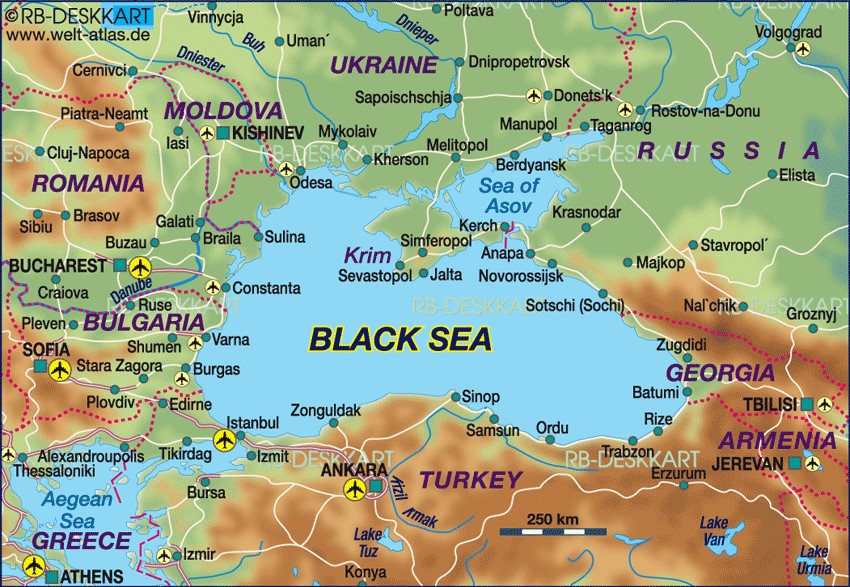
In mid-February, the government approved an agreement between Bulgaria and Romania signed in December last year to establish a functional block of airspace DANUBE FAB and proposed the National Assembly to ratify it. The main goal that is achieved with the agreement, is an optimum air traffic management and air navigation services in the areas of safety, environmental protection, sustainable development, capacity, cost effectiveness and civil-military cooperation, the agreement says, which is already being reviewed by Parliamentary committees.
In EU regulation №1070 of October 21, 2009, also known as a Single European Sky II, Brussels set December 4, 2012 as the deadline for the establishment of the functional blocks of airspace.
Now, each country depending on its resources and expected benefits, makes its own network of corridors in which the planes pass over its territory. That means, the national borders are observed. Gradually, however, that must be changed by the so-called straightening of routes by mapping out the shortest routes for flights. This will save fuel, and will emit less greenhouse gases.
The specific problem with the DANUBE FAB block is that the country has not made key analysis to give a clear picture of the pros and cons of such a project, sources involved in negotiating the agreement told the Banker. Namely, this should very seriously interest Bulgaria since in the last five years about 80% of the total served traffic in our area falls to overflights. The main directions are east-west: to and from Turkey, Asia, and the Middle East as well as north-south: from Scandinavia to Greece and vice versa. International takeoffs and landings account for around 13% of air traffic and domestic flights account for about 7 percent.
According to information provided by the Air Traffic state enterprise the number of planes serviced in the past five years ranged between 1.74 million and 1.96 million annually, 95% of revenue being generated by overflights. Since 2007 the amounts each year have been exceeding BGN160 million. Air Traffic Directorate is entirely self-supporting due to this revenue. With the establishment of a common block, however, navigation services will now be performed by several independent national providers and the fee rate will be equalized. Experienced representatives of the industry claim that in this situation most of the airlines now flying over our country because of our lower than Romanian aeronautical charges, will prefer to pass over our northern neighbor because then the routes will be financially more beneficial to them. ATC’s revenues will surely fall by at least several million levs per year.
Moreover, from the current version of the single sky with Romania. Bulgaria will not gain anything in purely organizational or technical terms. To make this happen the states need to make a division of airspace – for example giving green light to dispatchers from Sofia to control an overflying aircraft in southwestern Romania, because they see it better on the radars than the air traffic authority in Bucharest, experts, suggest.