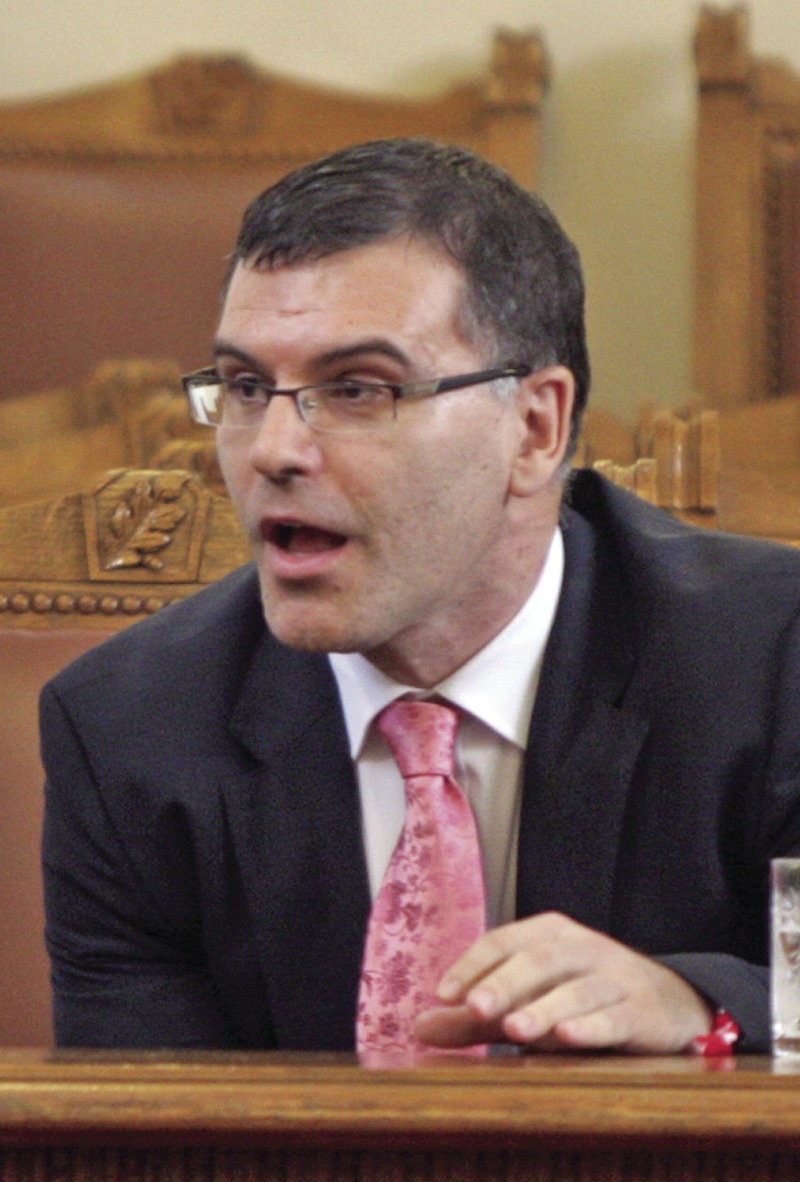
After two months of fruitless discussions about the country’s Silver Fund, it finally became clear that the Premier has left the initiative to Finance Minister Simeon Dyankov whether to experiment with the reserves of the pension fund.
In an interview for the bTV channel, Prime Minister Boyko Borissov said he was willing to see what happens when 10 to 15 percent of the 2-billion fund are taken and invested to generate possibly higher yield.
The big news is that Finance Minister will not be allowed to handle with more than 20 percent of the Silver Fund.
A project for draft amendments to the Silver Fund ACT was published on the website of the Finance Ministry a month ago. In this sense, members of the ruling GERB party and the government should not deviate questions on the subject, arguing that it is still not known how the proposed changes will actually be introduced in parliament.
The draft changes as published do not envisage that 20% of the money of the Silver Fund may be invested in government debt. There is no such limit stated.
Rather, the proposal says that the money from the pension fund may be invested in Bulgarian government securities, which means that an indefinite proportion of them may be used this way.
Leaving aside the question that all funds from the sale of state assets should not go to repay debt but to accumulate in this particular Silver Fund. This inconvenient obstacle the government removed more than a year and a half ago, when it created the State Consolidation Company and incorporated in it most of the state enterprises. This way, by all accounting rules, the company can sell its subsidiaries, accumulate money and them paying them off in dividend to the state budget.
Minister Dyankov cannot count on the investment community can not rely. Although banks and pension funds have increased liquidity and thanks to them the Treasury has been posting in the past two years successful placement of its government securities at historically low yield levels. Investors – banks, pension funds and insurance companies are simply forced to buy these emissions with a low yield because of their legal obligations to do so. Auctions of government securities are unlikely to be that successful if the emission was higher then for BGN100 million – for example for BGN400 or BGN500 million. This is especially true when it comes to securities with a maturity of less than 10 years.
Member of the Board of Directors of the Bulgarian Association of Supplementary Pension Insurance Companies (BASPIC) and CEO of Doverie pension insurance company Daniela Petkova told the BANKER: We are long-term and institutionally oriented investors and show a specific interest in Eurobonds. If the financial Ministry issues only government bonds, whose yield is about 3%, we would most probably have no interest to participate.
According to Petkova, there is another obstacle to investment in government securities. This is the requirement to buy bonds that have investment grades. She is very worried that the Fitch agency has lowered the credit rating of Bulgaria and another downgrade would deprive the country of an investment rating. If this happens, private pension funds will have to come to the market and sell the Bulgarian government bonds.
This is case of government bonds with a total face value of BGN1 billion.