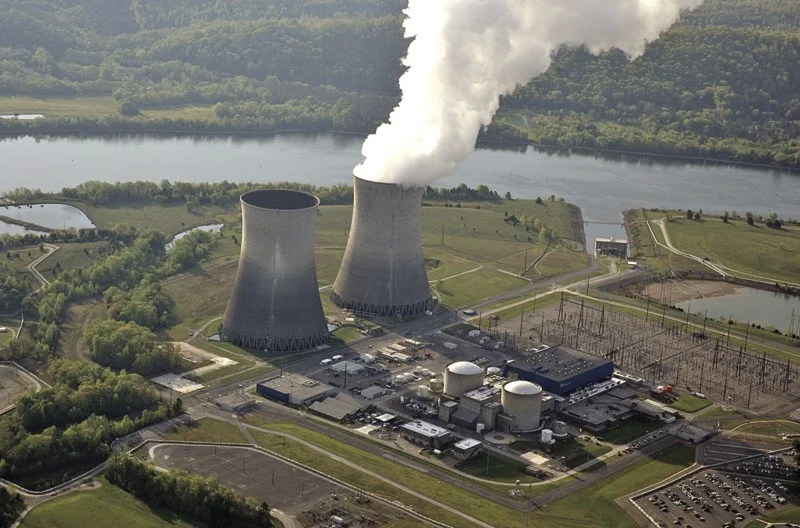
From a major player in the elite club of countries operating nuclear power plants, the country is heading confidently towards leaving the group. A series of blunders made by several governments led to the current situation where we have only two operating nuclear reactors. At the beginning was the cabinet of Ivan Kostov and the signing of the Memorandum for closure of the small units of NPP Kozloduy. Then Simeon Saxe-Cobourg-Gotha and his ministers recklessly restarted the frozen Belene project, which was continued by the next tripartite coalition, but the high price and the many questions about the initiative undermined its credibility. Its contribution had also the current government – especially through the appointment of strange people, in terms of their education and career, to key positions in nuclear power. These same experts would lightly neglect the new Generation IV nuclear reactors. Although they are cheaper, more reliable than the current ones, built more rapidly and already developed worldwide.
For example, the U.S. are paying close attention to the development of small modular nuclear reactors – SMRs, being built faster and at a faster return on investment. Many companies have already developed them, and the American Congress is expected to approve the allocation of 67 million dollars in 2020 to finance such developments.
Until recently, these modular reactors have been used mainly for research purposes – but the beginning of this century, marled a gradual expansion of their use.
According to energy expert Yordan Yankov these are reactors in the range of 2 to 200 megawatts. Their main advantage is that are far easier to produce – their components are assembled into a monoblock that can be transported in a large truck with nine axes. The entire structure of the plant is simplified because the module is serially produced in a factory, then delivered ready for operation at the site. Here the block is placed in underground silos, thus avoiding the construction of expensive and sophisticated sheaths that are made for large reactors. Passive safety systems available, do ensure that accidents such as Fukushima are entirely excluded.
Even in the most ferocious natural disasters or direct impact on the plant, they protect without any consequences for humans and the environment.
All this makes modular reactors suited for deployment to large consumers of electricity, such as factories and even near densely populated areas. Now in Bulgaria the greatest amount of energy is consumed in the capital city. At the same time, except for the turbines for combined heating near Sofia, other sources close to the city are missing. So the city imports electricity from NPP Kozloduy and Maritsa East plants but the latter leads to additional losses due to the large distances the voltage transformation that is necessary. However, one or two modular reactors of 200 MW located in or near the biggest Bulgarian city can be very appropriate in the present circumstances. The simplified design allows for the small units to be put into operation for about a year and a half after making the investment decision. In comparison, for large reactors the construction period is at least seven years, leading to the inevitable inflation indices, able to question the whole process. The latest example of this is the Belene whose price was at first 4 billion euro, then rose to 6.4 billion, and at the point the project was again frozen – it reached about 10 billion.
Another advantage of modular reactors is their far more efficient combustion of nuclear fuel, allowing them to operate without recharging for three to 30 years depending on the specific type of technology. Moreover – in some fuel can be used spent fuel from existing large reactors.
For the period of its operation Kozloduy has accumulated and will gain more spent fuel. This is a valuable resource for future small modular reactors that can be installed in Bulgaria, as well as the best solution to the problem of radioactive waste, says former Director of NPP Kozloduy and CEO of the consulting agency Nucleon Jordan Yordanov.
The BANKER