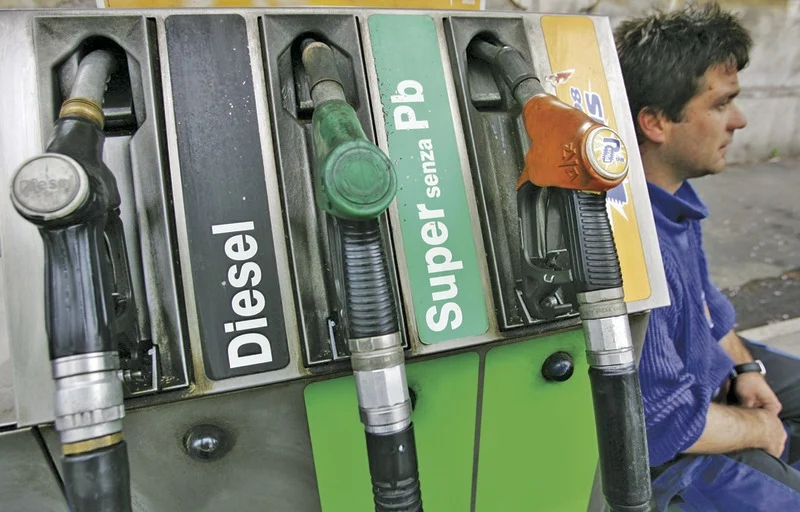
The state expects business to propose measures to deal with the informal sector in the fuel trade. This became clear during the meeting of the Minister of Economy, Energy and Tourism Delian Dobrev with representatives of big gas stations last week. It appears that rather than dealing with a complete solution, the institution is transferring the initiative to the big fish in the market. And it is foreseeable that measures and ideas will not appeal to the small fuel retailers.
The behaviour of the ministry is still more surprising amid statements that the issue of illicit fuel trade was solved. Optimism probably comes from the results reported by the National Revenue Agency in 2012, according to which the grey sector’s share fell by a third after the direct connection of fuelling stations with tax offices. At the same time, as reported by the State Agency for Metrology and Technical Surveillance, the proportion of illegal fuel sales last year was only about 3.4 per cent of all sales. The conclusion is based on 960 samples. For comparison, the number of sites involved in trading in such products in the country exceeds 2500.
It turns out that lately the situation has changed significantly. Now the share of bad fuels in the country is allegedly corresponding to that of the average European level. But unlike in other EU member states, where the percentage of defective fuels declined dramatically in the past four or five years, Bulgaria will probably need ten years for that.
Checks are being carried out in both small and large gas stations and stores, assured the agency. To maximize profits, some dealers add to gasoline and diesel water, various oils, kerosene, solvents or mixtures which can seriously damage the engines of cars or at least increase fuel consumption. The problem is that it is difficult to determine which station sells bad fuels, because the signals are usually submitted by drivers several weeks or even months after the last filling.
If the laboratory proves the fuel be poor, the fine for the station starts from 10 thousand levs for each indicator outside the norm and can reach up to 100 thousand levs. For the excise duties and tax warehouses penalties are even more severe – from 50 thousand to 500 thousand levs. Only last year the fines totalled more than 1.4 million levs. Nobody traces, however the quality of LPG, although about 1 million cars run on gas appliances. Measures will be taken as early as 2016 when it is expected the State Agency for Metrology and Technical Surveillance to furnish its laboratory. The equipment will be purchased through a grant of 1.5 million levs from the Competitiveness operational programme.
The BANKER