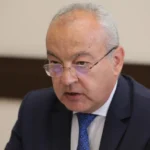
The new Government in Bulgaria intends to make an extremely sharp turn in the current policy of the Transport Operational Programme. Just days after assuming the highest position in the relevant ministry, Danail Papazov announced that the construction of highways and roads, which was top priority at the time of ex-ruling GERB party, will now remain in the background.
Efforts will be focused in several directions – the railway connection between the Serbian – Turkish and Greek borders, and in the direction of Vidin – Sofia. Also much important are the transport hubs in Varna and Ruse, that form the link between the country’s biggest river and the sea, so for the next programming period we will offer funding projects for the line that connects them. Key to the development of the country’s transport system are intermodal terminals. All analyzes show that such facilities must be present not only at major Black Sea ports, but also in Vidin, said Mr. Papazoff.
Such change of course can be defined as expected, but very risky. Even during the previous Cabinet, there were indications that
the country’s new guidelines for development
of the Transport programme will fully comply with the transport network TEN-T. As the BANKER weekly has already noted, the network is built on two levels – basic, to be completed by 2030 and supplementary broadband one, which is expected to be ready 20 years later. The implementation of the first will be facilitated by the use of so-called corridors, including at least three transport modes, three EU Member States and two cross-border sections. The aim is to focus resources on a few projects that actually boost the economy of the community. TEN-T is an important instrument of transport policy to achieve the overall goal of 60% reduction in transport harmful emissions no later than 2050. It will greatly facilitate the transfer of passengers and freight from road to rail and other modes of transport, Brussels thinks.
From this point of view it is logical to start with the Sofia-Septemvri railway stretch. The project is crucial, as it is part of the track between Sofia and Burgas. Actually, with the completion of the entire line speedy transportation of passengers and goods will be allowed not only to and from the port of Burgas, but also to and from the borders with Turkey and Greece through the railway line Plovdiv-Svilengrad, which is also being rehabilitated now. The modernization of the route Sofia – Septemvri will be extremely expensive because of the mountainous terrain and the overall investment is estimated at about 1 billion euros – an amount that swallows up a large part of the resources of the programme.
Extension of this corridor
is the route Sofia – Dragoman (Serbian border), which enters into the plans of the Cabinet Oresharsky, too. It will take about 240 million levs and when it is built, the country will have modern railroads with trains moving from Serbia through Sofia to Bourgas and the borders with Greece and Turkey at a speed of 160 km/h.
In any case, Danail Papazoff must be very careful committing to the construction of the railway line Sofia – Vidin. Political talk is one thing, but no matter how important this area is (having in mind the opening of the country’s second bridge over the Danube river), it will cost 2.6 billion euro and this is a budget that Transport OP cannot provide. It should seek funding under the new mechanism of the European Commission Connecting Europe, which will have a budget of 50 billion euros from 2014 to 2020. Nearly 32 billion of the sum will be for transport and 10 billion will be specifically set aside for the less developed countries.
The intentions of the new minister include also construction of the railroad between Ruse and Varna, which need 300 million euros. On the other side of the coin are the road projects that are waiting to be completed.
First comes the Struma highway. The preliminary estimates for its most difficult stretch above the Kresna gorge over 900 million euros will be needed. Hemus highway, connecting Sofia and Varna will be ready for actual construction by early 2015. A Previous study estimated that only the building the stretch from Yablanitsa to the town of Veliko Tarnovo will take about 750 million euros.
Meanwhile, Minister of Regional Development Desislava Terzieva made it clear that her ministry does not intend to waive the launched project for a tunnel under the Shipka peak which will link the North and South Central Bulgaria.
The BANKER