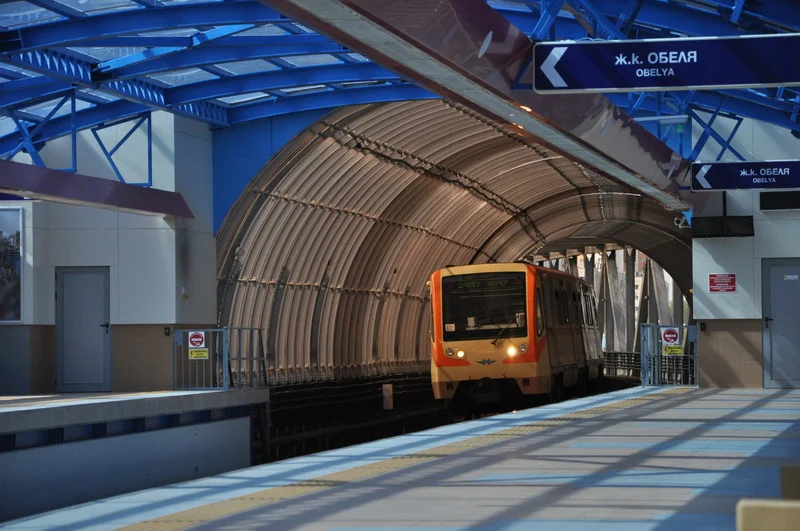
Undoubtedly the Transport OP is the most successful of Bulgarian operational programs financed by Brussels. So far, thanks to it the country managed to build the second stretch of the subway in the capital city Sofia, finish Trakia highway and a number of railway lines. In the next programming period, however (2014-2020) Bulgaria will have to implement some mandatory, but extremely expensive projects that will cut the funding options for other nationally important infrastructure initiatives. Virtually, there is no alternative, because the Cabinet decides to postponed them and redirect money to other axes, Bulgaria will be imposed huge sanctions.
Most worrying in the whole situation is that the Government has still
not given a clear answer
what the priorities for the new period of the operational programme will be and in particular – which specific projects will be proposed for funding by the European Commission. Indeed, since its first days as Transport Minister Daniel Papazov announced that he will focus on railroads, while highways will remain in the background. Logically in the draft for the Transport Operational Programme and its focus in transport infrastructure 2014 – 2020, the updated version of August 20 states on the first place railway lines, part of the European transport infrastructure TEN-T, such as Vidin – Sofia – Kulata; Dragoman ( Serbian border) – Sofia – Plovdiv – Burgas/Svilengrad (Turkish/Greek border); Sofia – Radomir – Gueshevo (Macedonian border); Sofia – Serbian border, Sofia – Macedonian border, and also part of the extended TEN- T network: Ruse – Varna; Gorna Oryahovitsa – Varna, Bourgas – Sindel. All rail lines that will be upgraded are to be equipped with advanced communications and radar equipment (the ERTMS standard – European Rail Traffic Management System), which means additional costs.
The same document says that another priority in the sector will be the completion of the highways Struma and Hemus; the highway Kalotina – Sofia, the road Ruse – Byala – Veliko Tarnovo – Gabrovo – Stara Zagora; the Sofia ring road; as well as the stretch Botewgrad – Mezdra – Vratsa – Montana, plus the third subway line in Sofia.
What is clear, however, is that
money will not be enough for everything
A month ago the government of Plamen Oresharsky officially unveiled a fiscal framework in which in the period 2014-2020 for the Transport Bulgaria will have 1.207 billion euro, compared to 1.624 billion euro allocated in the current period. Subsequently, it turned out this amount does not include 5 percent, intended to be used only if the country achieves certain indicators by 2019. This means, in the best of circumstances, there will be another 60 million over the said 1.207 billion euro. The problem is that the vast majority of that money will be swallowed by the third lot of highway Struma. It will pass through the Kresna gorge and, in order to preserve valuable animal and plant species, Bulgaria will have to build two tunnels, connected by a bridge. For this reason, the indicative cost of the project is approximately 910 million euro and in the case there is no room for retreat. If the third section of the highway is not completed by 2020 the country will have to refund money provided by Brussels for the construction of the remaining sections of the Struma.
While rulers have not commented on the issue,
the same is the status of the tunnel under Shipka
Bulgaria has committed in connection with its accession to the EU to build this facility and if its fails to do so, it will be sanctioned, said the former minister in charge of EU funds and current MP of GERB, Tomislav Donchev.
The tunnel under Shipka will cost another 120 million euros (preliminary estimates) . In other words, more than 1 billion of the resource for the new programming period have already been reserved for the two big projects.
It is true that the railway sections can rely on funding and the new mechanism of Brussels – Connected Europe is about to start working. Through it the country will have the opportunity to make use of another 325 million euros, which could be swallowed entirely by a single stretch: Varna – Rousse, for example. Even if one takes into account this reserve, plus national co-financing and possible savings from tenders, the calculations still show that for the construction of two other key sites – the third subway and highway Hemus there will be no money.
The project for the extension of the subway from Ovcha Kupel to Botevgradsko Shosse was released in early August. Ideally it will be implemented as a light metro construction with a length of 15.5 km and 19 stations. The portion of the route in the city centre, 7.8 km, will be underground and will have nine stations, while the remaining 8.7 km in both suburban directions will be entirely above ground. Besides the project envisages the construction of a depot and delivery of new generation engine units. However, the construction will cost 680 million euros, or about 1.4 billion levs.
Very minimal are the chances that Hemus highway may be proposed for funding from Brussels as a priority. In late August, the Minister of Regional Development Desislava Terzieva admitted that EU funds certainly will not suffice for Hemus and other sources will have to be sought after, including public-private partnerships. After an acute response of President Rosen Plevneliev Mrs Terzieva softened her stance. According to her, it is too early to comment on the method of funding before feasibility studies are made.
The BANKER