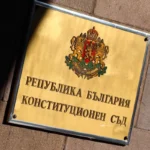

The blissfully basking offshore business is now starting preparation for a major transformation in Bulgaria. The aim will be to circumvent the draft law adopted last week at first reading by the National Assembly that regulates the economic and financial relationships with companies registered in jurisdictions with low tax regimes, and their actual owners. To avoid restrictions and hefty sanctions thousand of Bulgarian companies whose owners are hiding in the shadow of some of the tax havens in the world will need to re-register if they want to continue working in the country. Though no one has publicly acknowledged it, big shots are now considering possible schemes in which offshore firms formally come out of the game, but their privileges will continue to benefit actual owners. The implementation of this so-called transformation will be seen by 30 June 2014, when the grace period to implement the provisions of the new regulations expires.
If all goes according to the plan of the ruling majority, after 1 January 2014 Bulgaria will introduce a ban on companies registered in jurisdictions with preferential tax regime to engage directly or indirectly in twenty of the local economy’s sectors. It comes to banking and finance, insurance, pension and health funds, public offering of securities, concessions, public procurement, privatization, acquisition of state or municipal property, the granting of a license under the Excise Duties and Tax Warehouses Act; establishment, acquisition or participation in professional sports club, applying for priority investment projects, energy, gambling, trade in dual-use goods, mobile communications, water and sewage networks, collection, transportation and disposal of waste, as well as the media, but with exception of websites.
Bans are one thing, but more important here is how they will regulate the status quo with offshore companies already operating in the country that have received licenses or are already working under public contracts. Three options have been discussed so far – for withdrawal of the licence, replacement of the company with another one owned by a known individual or request by the authorities towards the respective jurisdiction for disclosure of individuals behind the company. But the latter is virtually impossible for most areas, so what remains are only the first two options. One has to be very naive, however, to believe that any of them will be implemented in reality. Neither will anybody see a withdrawal of licenses or permits, nor a termination of contracts, let alone total expulsion of offshore companies from the country. The reason is that in the very short text of the draft law, which contains only 7 articles, whose authors are Yordan Tsonev and Delyan Peevski, there are enough loopholes or, in legal parlance – exceptions. Thanks to these, businesses will be able to safely transform themselves into a form consistent with the new requirements.
For example, there will be no barriers to offshore companies if their shares are traded on any stock exchange in a country of the European Union, such as the company Stara Planina Hold, part of whose securities are held by Lichtenstein’s Potbul Invest Foundation. Furthermore, any shady company will be able to do business in Bulgaria if an authorized investment fund or other similar structure is part of an economic group whose parent company is tax resident in a country with which Bulgaria has signed an agreement for avoidance of double taxation or agreement for the exchange of information. The third exception is for companies that are part of an economic group whose parent or subsidiary is registered in the country and its actual owners – individuals – are known .
There are, of course, other possibilities to which many will probably resort. In place of the offshore company, a fictitious owner, a Bulgarian citizen, may be inscribed. This person will have nothing to do with the real owners of capital, but will be able to show purely past and will be ready to receive a good salary for his silence (similar to the case with the last buyer of Kremikovtzi – Eltrade Company). Then the owner makes a general letter of attorney to a person who will actually run the company and things return to their origin. Or as people say – you can eat your cake and have it. Undoubtedly, such an outcome from the situation is now being searched for by a number of companies that are currently working under contracts with the state.
The BANKER