Will Bulgaria lose 385 million euros by the end of the year if the rulers don’t get down to work and organize their absorption, warned earlier this week spokesman for the European Commission on Agriculture and Rural Areas Roger White. A day later it became clear that nearly 250 million euro of the money under the programme for rural areas may have slipped away if farmers do not focus on organic farming. This was admitted by Minister of Agriculture and Food Miroslav Naydenov. But after the speech of the speaker White the country’s Agriculture Ministry said it is working on a special plan for rapid absorption. However, as there was not enough people, according to Mr. Naydenov that want to become bio farmers and prepare projects under the Agroecology, for which the EU funding in question is secured. For the past six years the State Agriculture Fund was in position to distribute 279 million euros, but has so far allocated only 22 million of that sum. The Minister said that farmers abstained from switching to organic farming because they have to commit to maintain it for five years.
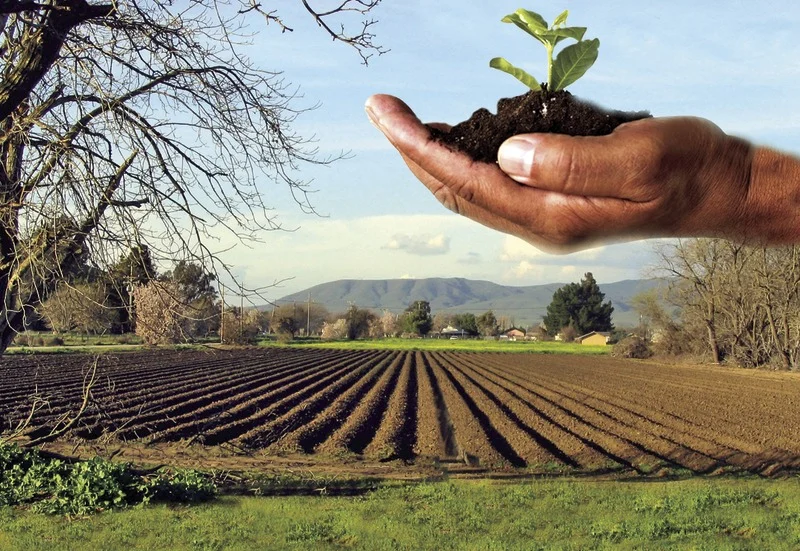
The bad thing is that according to the European rules the money under the measure for rural areas can not be diverted. And a quarter of its budget must be put in agroecology. According to experts, the fund utilization under this measure is weak, due to its delayed start, poor planning and lack of information among farmers.
When the estimates were made, the content and financing of development programmes for rural development, was adopted on the base of about 40,000 farmers who would use these funds. But at this stage from European funding benefited only 2,000 people.
Financial assistance under Measure 214 is in the form of annual payments over an area, or per animal or per bee family. Little known fact is that in addition to these measures more money is given to pastoralism. This means that breeders are entitled to assistance if cattle is grazing in national parks Central Balkan and Pirin. Starting next year, the framework will include also Rila and Strandja mountains, explained representatives of the Ministry of Agriculture. Right to agro-environmental payments have also those who work lands with high natural value. These are mainly pastures where there are protected plant and animal species.
For assistance may be eligible natural and legal persons registered in the Integrated Administration and Control System. Candidates submit applications during the campaign for direct payments. Once they apply, farmers should be eligible and receive appropriate notice. During the first two years, while qualifying for aid, all beneficiaries must undergo training or demonstrate their experiences in activities that they apply for. Mandatory requirement is that the agricultural activity should be carried out on the same land for five years. Otherwise, benefits will have to be returned.
When combining different agro-ecological activities, the maximum amount of financial aid can reach up to 900 euros per hectare for perennial crops. If the land is treated in another way, using up to 450 euros per hectare. Endangered native breeds get up to 200 euros per animal.
Minister Naydenov mentioned that there are attempts to save this money. Since June, negotiations with the European Commission have been under way to transfer funds to other financial measures, but at this stage no final decision has been taken yet. However, he believes that in recent years Sofia achieved much better results in the use of these funds. In 2009, it only used 2 million levs, in 2010 and this sum has grown to 14 million levs, and in 2011 the state spent some 18 million levs.