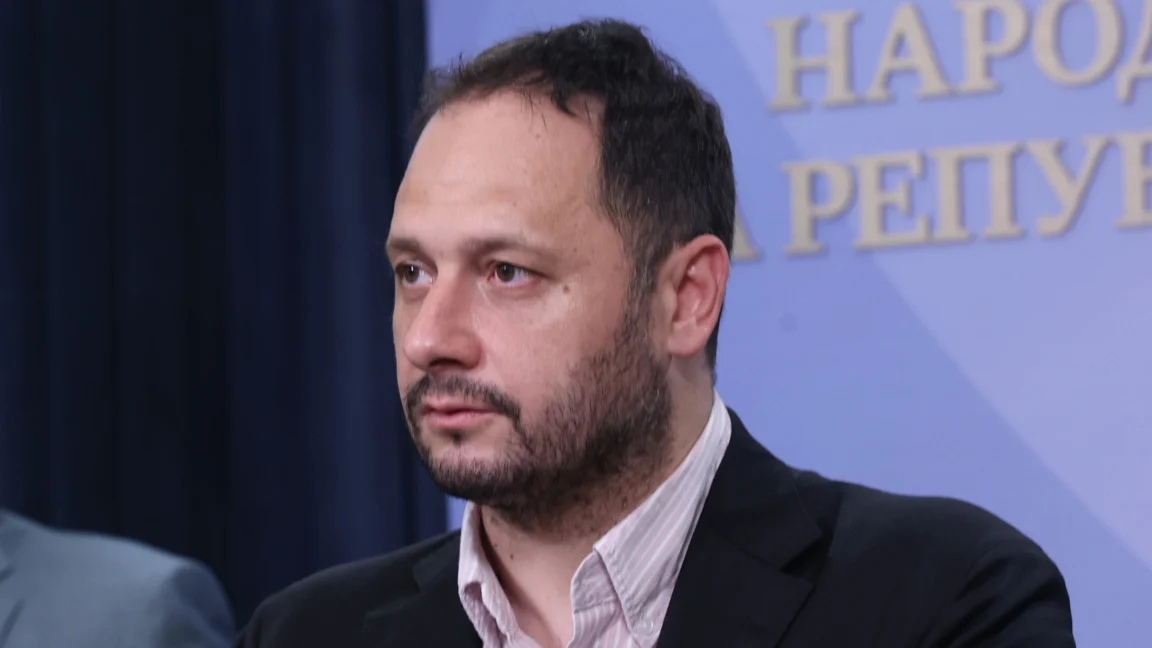
Bulgaria finished 2012 with a gap of nearly 1 billion lev in local budgets, Emil Savov, the deputy executive director of the National Association of Municipalities in the Republic of Bulgaria (NAMB) said exclusively for the BANKER. The information is preliminary data, while the official statistics will be announced in about a month.
The breakdown of this impressive figure shows that the largest share of the deficit comes from delegated activities from the central to local government, in their own revenue and investment – or a total of about 540 million levs. Next, as a factor in the deficit is the necessary but unavailable funds on financing contracts in progress. It amounts to 280 million levs. Less than 170 million is the sum of arrears to the businesses and 60 million levs are due to financial corrections on EU projects in whichq due to errors, municipalities will not receive the pre-spent money on their behalf.
More worrying, however, is another thing: the growing dependence on municipal budgets on government transfers, which now reach nearly 60% of all. This value is high because there were years in the recent historywhen the government intervention was allowed to about 40 percent. Fatal is that 90% of the transfers were targeted, said Savov. This means that the state has decided on what the money should be spent. Municipalities have no room to show signs of independence.
The process of decentralization of local government stopped in 2010, said Savov. A year pefore that it had started well.
As with the three previous governments NAMB sat down to negotiate with that of GERD, too, in the first days of its term in 2009. Both governments – central and local, shook hands and agreed to work on strategy and a decentralization programme in the medium term. Among the most important points that had to be covered were to make a change in the law on local finances, so that part of the taxes collected from individuals to become local taxes with the revenue remaining within the community where the person lives or works. Consensus among other things was achieved on the intention to assist municipalities in severe financial condition.
An authority to manage the process was created and – the Council on decentralization in which on a par basis participated central institutions, on the one hand and delegates of NAMB, on the other.
In October 2011, the former Finance Minister Simeon Dyankov put a cross to the council. The body was unilaterally shut down, and its functions were transferred to the Council for Administrative Reform. Since then, here have been no working session on decentralization, and the prospects are there will be none soon. The reason for this is the draft law on public finances, which in the view of mayors is in complete contrast to the Decentralization Programme.
The Arbitrariness of Mr. Dyankov’s decidion also has a European dimension. In 2011 the second monitoring report of the Council of Europe for the implementation of the European Charter of Local Self-Government was published. This Charter has been introduced and nas been a part of the domestic law since 1995. The most explicit requirement it is to break the link between the municipal budget process and that of the state budget. The process of making local budgets should not depend to any extent by the central budgeting except for same articles of the State Budget Act. The idea is that there is should be no pressure and endless guidance and intervention as well as to reduce the dependence of municipalities on targeted transfers with their endless requirements on how and on what to spend the money. This was particularly important for delegated budgets, where instructions and limitations have come to manual to municipalities by the Ministry of Education and Science.
Absolutely contrary to what is stated in the Charter, according to which the municipalities are given general transfers and it is up to them to decide on what to use them.
That the things are in a stalemate is evident from the fact that Emil Savov is currently editing a Handbook of decentralization, for the new members of the Parliament. Municipalities will acquaint prospective MPs with something that has long been a practice in the developed democratic world, but has still not been developped in Bulgaria.
Although in the 2012 law the specified volume of activities and services of the municipalities remained unchanged, the shortage of funds continues to increase as a result of the constant rise in basic foods and fuels that form the 10% of total costs and 27% of maintenance costs .
Bulgaria is lagging far behind the average level in the European Union share of municipal revenues in GDP. Average for the 27 EU countries, the share of municipal revenues in GDP is 11.8 percent. In Bulgaria it is twice lower and the downward trend continued in 2012, when this share fell by another 0.3%.
nbsp;
Arrears of the municipalities at the end of March 2013 reached 156.6 million levs, a decrease of 40 million lev in comparison with the same period of 2012. This showed the assessment of the financial stability of local authorities, prepared by the Ministry of Finance.
At the end of the first quarter of 2013, arrears were generated from 111 municipalities (42% of the total). For a period of one year 106 municipalities have achieved a reduction of their arrears of 57 million lev, and 67 increased them by more than 18 million lev.
At the end of March with the most indebted was Kardzhali municipality – about 15 million lev. Pernik Municipality had arrears of nearly 14. 9 million levs. Pazardzhik municipality owes 14.7 million levs, and Smolyan – 14.4 million lev.
The BANKER