Telecom and cable operators may have forgotten about the big profits from previous years, but the distributors of the Internet are only now beginning to feel the taste of millions. Business in the digital network continues to gain momentum and shows very good results. Expert projections are for accelerated positive trends in the future. No wonder if in a few years, this becomes the segment carrying the most robust revenues from the whole electronic communications sector.
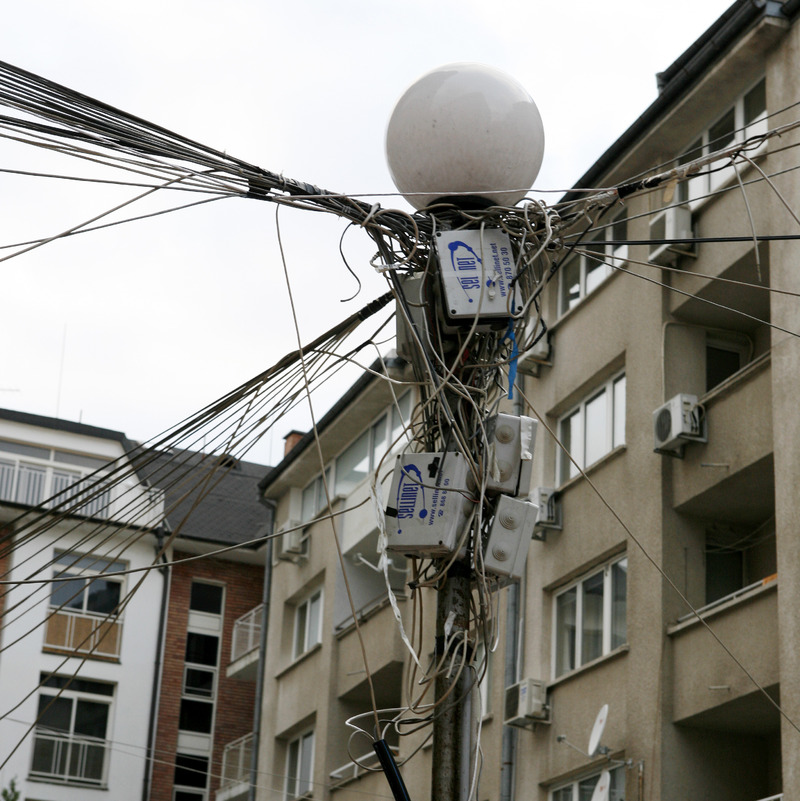
Rapid increase in the number of users and stable revenues, despite the serious reduction of tariffs has been noted. This is how one could generally describe Internet market in Bulgaria in 2012. According to Communications Regulation Commission (CRC) active firms in the country, providing services for Internet access to end customers last year were six hundred thirty-three. A sure signal for the development of this field is given by the constantly growing number of Internet users (fixed and mobile). According to the suppliers by the end of 2012 they were 1,904,934, or 18.7 percent more than at end-2011 when there was also a double-digit annual growth. But in 2011 the increase was mainly due to the increase in the number of customers of bundled services that included internet access, now the reason is the significant increase in active subscribers of mobile network access (via 3G), as explained by the CRC. For 12 months their number increased by a whopping 68.6 percent. However, their share is still less than one third of the total number of users, or about 532,000.
Otherwise, under in the segment of the fixed access BTC again maintained its leadership position by number of subscribers. The share of the former state monopoly, however, continues to fall and is now just over 22 percent. According to this indicator the country is significantly different from other European countries where historic companies have a very strong presence.
According to the regulatory commission, the top 10 suppliers (based on number of subscribers) hold only 66.5 percent of the sector. Second, after Vivacom, ranks Blizoo and the third place was occupied by climbed Mobiltel (because of the acquisition of Megalan Network and Spectrum Net). The bronze medalist from 2011, Bulsatcom, went down to the fourth position in 2012.
It is interesting that from a technological point of view the fixed Internet access has also saw migration of users – the proportion of optical and coaxial networks is increasing at the expense of traditional LAN and ADSL. This inevitably leads to quality improvement. According to the CRC 35.6 percent of consumers use services with speeds above 30 Mbps. And according to a number of international studies Bulgaria ranks among the leaders in quality of access to the global network, while in the same time offering some of the lowest prices. This fact, of course, is due to the fall of the licensing requirements for distribution of Internet ten years ago what created increasingly fierce competition in the industry. Something that can easily happen in other areas, too.
It is difficult to say exactly how much money flow into the sector of Internet supply, despite numerous data. Revenues from individual services increased by 9.78 percent and reached 345 million levs. An impressive increase was shown by the proceeds from packaged services, including internet access, which reached 250 million levs. One should not miss the fact that in the battle for customers most suppliers significantly reduced prices so that comparisons with previous years are not quite possible.
Experts predict that these trends will continue in the future. The implementation of the measures of the national programme Digital Bulgaria 2015 will inevitably contribute to the development of the Internet market. According to it, after two and a half years at least 75 percent of Bulgarians will be using the internet. Around 20 million euro will be provided to build infrastructure for broadband access to the global network in remote rural areas, under the EU Operational Programme Regional Development. The money must be spent to the construction of fiber optic networks to all schools and healthcare facilities. Additionally there are 7.5 million euro to build centres for information and communication services under the Program for Rural Development.
The BANKER