After a substantial period of stagnation in the investment programme of the gas operator Bulgartransgas the coming years may turn out to be extremely intense and dynamic for the enterprise. Over one billion levs will be poured into the modernization of its network and into the building of new stretches to establish it firmly on the regional markets and to promote domestic gas in the country. These are the objectives set out in the development plan of the transmission system operator for the next ten years, which is currently being discussed between the different institutions in the country.
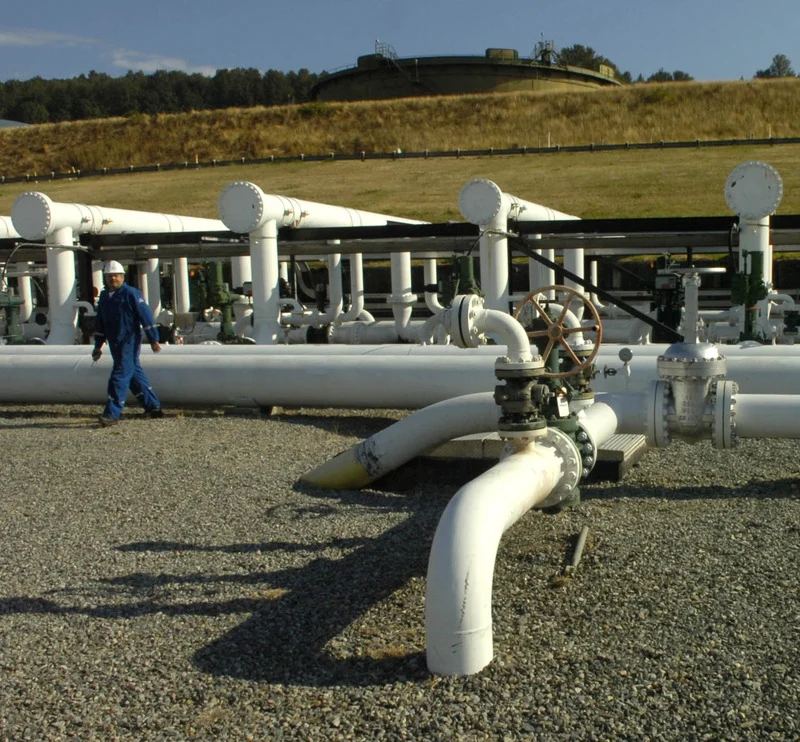
Eye-catching are the investments the company intends to make over the next three years. For this year it plans to spend 114.5 million levs, while in 2014 the sum jumps to 150 million levs, and for 2015 another 109 million levs will be invested. By the end of the tenth year investments will exceed 1 billion levs. The largest portion of these funds – 240 million levs, will go to the reconstruction of compressor stations Ichtiman, Petrich, Lozenets, and Strandzha. These facilities provide a key to the transit of natural gas in the country to Turkey, Greece and Macedonia. After a long procedure, lasting several years, the contractor of these activities was selected to be Glavbolgarstroy.
Another 32.6 million levs will go to the construction of the loop of the gas pipeline to Turkey near the compressor station Lozenets. Nearly 10 million levs will cost the gas interconnection with Romania at Ruse – Giurgiu. The reverse tube has a total length of 25 km, 15 km of which in Bulgarian territory, 7.5 km in Romanian and 2.5 km are to be laid on the bottom of the river. The maximum capacity of the interconnector is 1.5 billion cubic metres. It should be completed by the end of 2013 and be operational by early 2014.
The gas business is cyclical in nature
– there are periods of rapid growth and periods of stagnation. The years 1998 to 2003 were very strong for the country’s network – more than 400 kilometres of pipes were built. Then again until 2011, the progress has been very little. Now again the country is entering a stage of an extraordinarily high gas pipeline construction. We are able to optimize in a very good way our networks in the coming years. We have the resources to execute the plan as we have introduced it, says Cyril Temelkov, Bulgartransgas CEO.
It is logical that every transit country wants its pipes to carry as much natural gas as possible due to the increasing income from fees it receives. The situation, however, is far more complicated and the usability of networks is influenced by other factors. These include competition from various international projects for the supply of gas from the Caspian region to Europe, the prices of natural gas, as well as the dynamics of gas demand in the region.
Potentially the biggest customer here is Turkey. Its consumption now exceeds 40 billion cubic meters (about 14 billion cubic metres come from Russia via Bulgaria) and in 2020 the consumption there is expected to exceed 60 billion cubic metres. Natural gas formed over 30% of total energy consumption in the neighboring country, and the demand will continue to increase in the future as Turkey plans to develop more gas power plants. Consumption in its industry and in households is also expected to increase given plans for the expansion of existing distribution networks after the privatization of state companies that manage them.
The other big market, to which Bulgaria may transit natural gas is Greece. Currently, about 3 billion cubic meters of Russian fuel per year pass through Bulgaria on their way to Greece. It is very likely, however, that things can turn the other way around in the coming years and
Bulgaria may start receiving gas from Greece.
The reason is that at the end of June, Greece signed an agreement to build the Trans-Adriatic Pipeline, which was chosen for the supply of Caspian gas instead of Nabucco.
Modest are the possibilities for Bulgaria to supply gas to its western neighbours – to Macedonia and Serbia. The market for natural gas in Macedonia is still evolving and only the northern part of the country has gas connections. Significantly, the only gas intersystem connection site is the one with Bulgartransgas. The tube has a design capacity of 1 billion cubic metres per year, but is now used at only about 15 percent. Natural gas is used primarily in industry and district heating companies to produce heat. So far in Macedonia there is not even a single gas distribution network for households. The most optimistic forecasts show a demand for natural gas for the period 2015-2020 reaching about 1 billion cubic metres – i.e. equal to the current capacity of the pipe.
Serbia is emerging as having a stronger market, which, however, has yet to build interconnecting link to Bulgaria. To ensure security of supply, Belgrade relies heavily on the implementation of the gas pipeline South Stream, which will pass through Bulgaria.
The BANKER