The stability of the Bulgarian financial legislation is „illustrated“ at its best two of the unrecognized genius discoveries of former financial minister Simeon Dyankov. The author of the world famous Bulgarian fiscal stability in the third year of his rule introduced revolutionary changes: unified payment order and an „interest“ tax that existed unchanged exactly for one year.
The unified payment order that the BANKER weekly called a unified payment oversight brought a payment turmoil in the first days of the expiring year. Companies started to transfer their obligations to the Treasury on a single account without being able to specify what period and what exactly they pay for. The main problem was the logic of Minister Dyankov, according to which irrespective of the payer’s will and intention the transferred money that is received is redirected automatically by the tax authorities to cover the earliest-date liability.
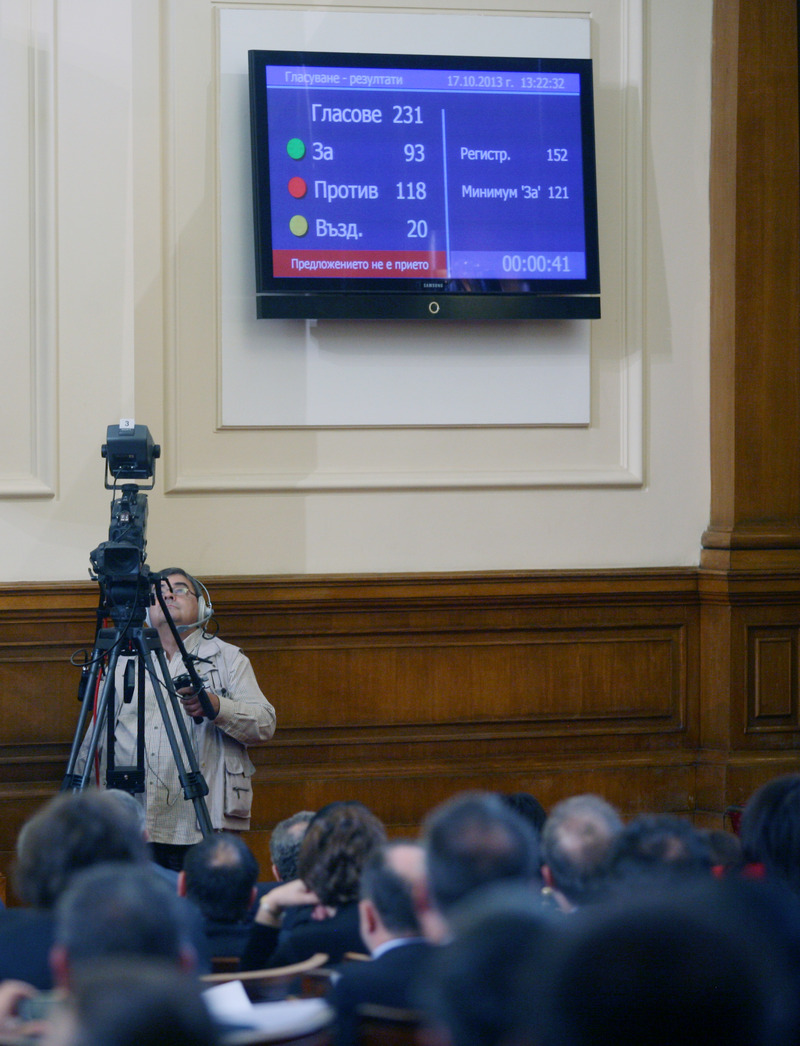
Yes at the voting of the measure – in the autumn of 2012, rightist DSB party gathered signatures in parliament to refer the matter to the Constitutional Court for unconstitutional mixing of tax and insurance payments. Things went to the point that the Constitutional Court accepted the appeal to be heard, but has not yet ruled whether to cover old debts with priority irrespective of the payer’s will is lawful.
The new tripartite coalition in Parliament, however, overtook the Constitutional Court and partially fixed things. The single account payment is now forked into two. Primacy is given to the repayment of the principal before interest. This way, debtors avoid further indebtedness in case interests are withheld first. Businesses asked each of the already approved two bills (principal and interest) to be forked into two more branches – for taxes and insurance payments. This however solidified the position of Deputy Minister of Finance Lyudmila Petkova who said that such segmentation would undermine the single payment idea as a whole.
Another relief for taxpayers as of September was the introduction of a new electronic service at the expense of the treasury. In each transfer to the single account payer receives information (with an automated message) specifying where in the complex maze of obligations his money is received. That email is vital for taxpayers because they were completely lost in the large cave labyrinth of the obligations to the state budget – they pay for one thing, but the money goes to something they haven’t even suspected.
The unified account regime may be circumvented and the money can go to what the company wants to pay, but in this case it has to ask for an enforcement action. In this case, in fact the debtor himself should call the tax authorities. „This is undoubtedly a legal loophole, but we do not advise companies to use it,“ said Rosen Buchvarov, a spokesman for the National Revenue Agency. By law such cases can end up in seizure of the company’s property, through the sale of which the state has to satisfy their claims. By law it has to dispose of it within six months, and this can block and put an end to the business as a whole, explained Buchvarov for the BANKER.
So, the unified account forked but remained. In contrast, however, to the situation with tax on interests that was been doomed to a slow death. The fiscal experiment of Mr. Dyankov, which entered into force at the beginning of the current year, faces early end in 2014 and onwards.
The rate of the tax will be decreasing by 2 percentage points each year an by 2017 the rate will be zero, decided Parliament in early November. Now the final charge, which is levied on the gross amount of income acquired by local individuals from interests on deposit accounts in commercial banks is 10%. By its decision the Parliament provided the tax rate on interests to be 8 % in 2014, 6 % for income received in 2015 and 4% – for 2016.
The change in the tax rate has first political reasons – to keep the consistent position of the leftists, who in the previous National Assembly were against this tax, said Cornelia Ninova, President of the social committee.
The economic argument was protected with quotes from transcripts of the previous Parliament, where GERB party members explained the need to introduce the tax with expectations that people would withdraw their money from the banks and invest it in production. One year later, though this did not happen, said the chairman of the social committee, there has been no economic growth, the time has rejected these motives and the country had to rethink its position, Ninova added.
So the revenue side of the budget parted with about 18 million levs for next year. From this tax Dyankov expected at first 150 million levs in annual income, then he shrunk his expectations to 120 million levs, and the budget for that year has recorded 90 million levs, of which it will probably collect no more than 75 million levs.
This happened thanks to the pure market reaction to the banks that offered new products to their savers, allowing them to avoid the tax. Much of the deposits went to the newly built ‘safe havens’.
The BANKER