The gas connections to neighboring countries in order to reduce Bulgaria’s energy dependence on Russian natural gas are an important thing, but having in mind the speed with which projects are carried out, there will be no wonder that the frozen South Stream will be ready before them. Yet after the gas crisis in 2009 Sofia was pressed by Brussels in the shortest possible time to install the gas pipes first to Romania and Greece that are part of the EU and then to Serbia and Turkey. They become especially urgent now that the Ukrainian Parliament finally adopted the law allowing authorities in Kiev to fully or partially terminate the transit of Russian resources through their territory. This means there is a danger of stopping the deliveries to Sofia.
In the most advanced stage is the connection between Romania, at the pint between Ruse and Giurgiu, which according to all the assurances will be opened in a few days. In principle, it should have been in operation in early 2014 and, but construction slowed recently due to a broken pipe lying on the bottom of the river and the finalization of project was repeatedly delayed. But even with the ready pipeline it will be able to carry only 500 million cubic meters of fuel per year to Bulgaria. However, in the opposite direction will be transported 1.5 billion cubic meters of gas. The reason for this disparity is that Bulgaria’s northern neighbors saved the money for construction of a new compressor station on their territory. So, if it comes to the most negative scenario for the country, these amounts will not be enough to compensate for our internal consumption of about 3 billion cubic meters per year.
Another option for additional supplies of natural gas is Greece. For the construction of the interconnector in this direction Brussels earmarked financing of 45 million euros under the European Energy Programme for Recovery. The track starts from the village of Zagore, south of the town of Stara Zagora, passes through the municipalities of Stara Zagora, Haskovo and Kardzhali through Makaza Passage and reaches the Greek city of Komotini. The project is implemented by joint investment company ICGB AD, registered in Sofia in which participants with 50% of the capital are Bulgarian Energy Holding and the Greek-Italian company Poseidon (owned equally by state DEPA and Italian private energy company Edison). At the time of the GERB-led government, the plans were that the pipe would be able to begin regular deliveries from mid-2014, including gas from Algeria, but all schedules and deadlines have been broken.
The latest data from the Ministry of Economy and Energy environmental assessment has been prepared and adopted for the facility under the Act for the Protection of the Environment. In the process of adoption are the detailed master plan and the detailed working design required by the Law on Spatial Planning. It was yet at the beginning of August 2014 that the councilors in Kardzhali managed to give support to the proposal of the Mayor Hasan Azis that the Interconnector Pipeline may pass through the territory of the municipality. Before them so did the councilors of Kirkovo and Momchilovgrad, but the deadline for putting the facility into exploitation is already the second half of 2016, and this is in case of absence of other complications.
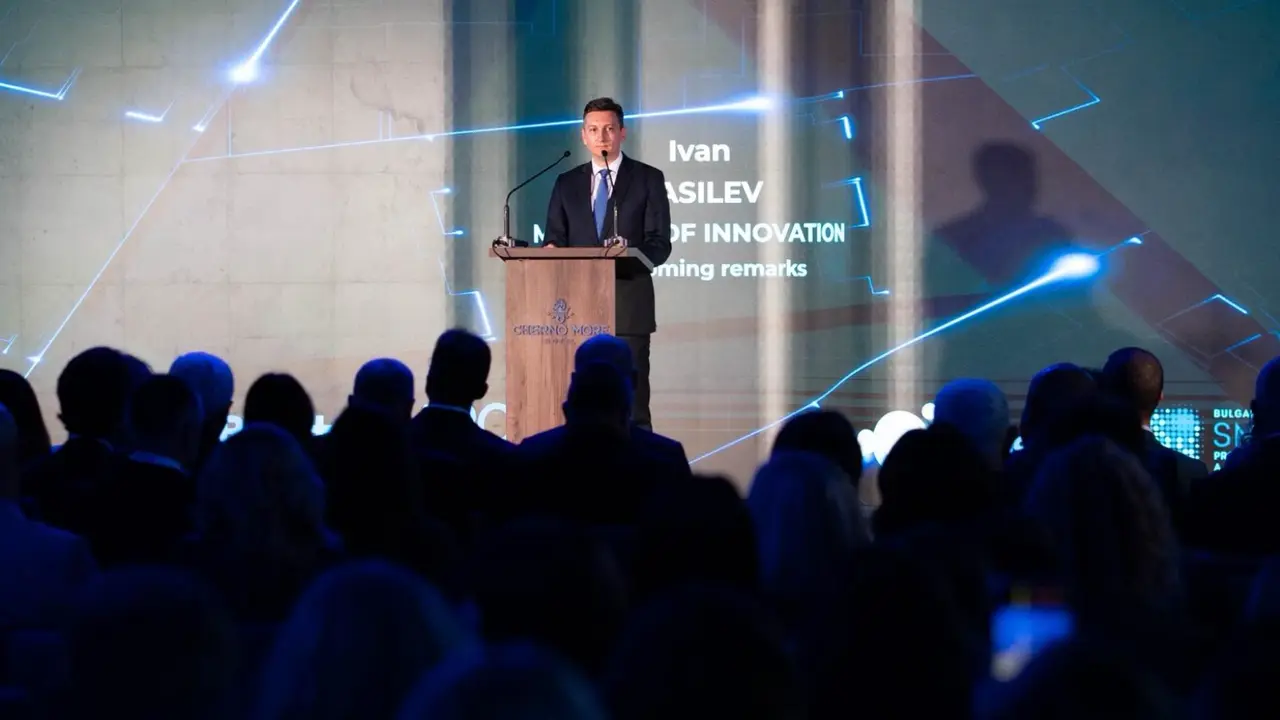
Even more annoying is that this tube can also be non-practical. Basically it was seen as an integral part of the ITGI (a pipeline through Turkey, Greece and Italy), designed to carry 8-10 billion cubic meters of gas annually from Azerbaijan to Europe and there is no coincidence that the companies moving this project are DEPA and Edison. In 2013 it became clear that the consortium Shah Deniz developing one of the largest deposits of natural gas in the Caspian Republic has chosen to partner the alternative project TAP (Trans Adriatic Pipeline). It also focused on the transport of gas from the Caspian Basin and possibly to the Middle East in the Adriatic, but through the areas of northern Greece and southern Albania and is implemented by completely different companies. In this situation, the relationship with the Greeks will be almost dysfunctional. The only possibility in the future to load its capacity more seriously are the liquefied gas terminals at the Greek Aegean coast. Energy expert Ilian Vassilev focuses on this very option. According to him Bulgaria could fully compensate the fuel quantities of Gazprom through swaps and supply of liquefied natural gas from terminals in Marmara and Revitousa and Greece. Swaps are available for at least four years, but the lack of will and desire of the Bulgarian country prevent them from happening. Today they are ignored in key documents – such as energy strategy, the declarations of parties and the National Assembly and in the decisions of the Advisory Council on National Security, says Vassilev.
Either way, the key for Bulgaria could be the interconnector with Turkey. This is the shortest delivery way for the 1 billion cubic meters of natural gas per year agreed between the Bulgarian government and Azerbaijan. But judging by the current progress of this project, there’s not much reason for optimism. It was as late as 28 March 2014, that after many political disagreements, a Memorandum of Understanding was signed between the relevant ministries of the two countries. A joint Bulgarian-Turkish working group was created with the participation of Bulgartransgas, Bulgarian Energy Holding, Bulgargaz EAD and representatives of the Economy Ministry. Its task is yet to prepare a pre-feasibility study within which to specify the technical and financial parameters of the project. Days ago it held its second meeting, which discussed the design issues and opportunities for funding. It is envisaged that the next meeting be held in late September in Turkey.
Although it was back in 1998 that the politicians started to speak about connecting the gas networks of Bulgaria and Serbia, the project still remains on the shelf. Originally it was to be financed under the operational program Regional Development, but later it was considered that there is a risk the money provided for it (about 60 million euros) not to be used by 2013 and it was transferred to the program Competitiveness. According to estimates of the ministry of economy, the construction itself will cost 67.7 million levs, the supervision coming to 300,000 levs and consulting services – 200,000 levs. According to the plan, the facility needs to be operational by the end of 2017, but it in no way will help to diversify Bulgaria’s gas supplies. Serbia receives mainly Russian gas (through Hungary) and does not have a terminal for liquefied natural gas. Therefore, this connection will actually work one-way – from Bulgaria to its western neighbors and it will carry natural gas from Gazprom. Interestingly enough, long before it was clear whether there will be funding for it, the Energy Ministry ordered a feasibility study to Gastec BG AD. Majority shareholder of the company is Overgas Holding, behind which stands the Russian Gazprom.
The BANKER