Although in the last two years almost all major political forces regularly made statements on energy problems, there are few valuable ideas listed in their ruling programmes for the upcoming parliamentary elections. Messages of the parties to the sector are extremely diverse and quite controversial, suggesting that in the absence of single-party government after October 5 is very difficult to find a consensus solution to the current predicament in which Bulgaria’s energy sector has fallen.
The most extensive coverage of the energy sector is in the programme of GERB. While extending their energy horizon until 2030, in the document that is over 60 pages long, the GERB party did not spend a single line to define a long-term strategy to ensure continuity in the policies pursued. People of ex-PM Boyko Borissov only stated as a main goal to ensure energy and national independence and reduce the potential risks of destabilization of the foreign environment and energy supply to a minimum.
In itself
such a task seems too ambitious
because at the moment the country is almost entirely dependent on imports of Russian natural gas and nuclear fuel. For the solution the idea is that the country should continue with the study of the Black Sea’s deep shelf. It was during GERB government that company Total won the rights to seek gas in the sea block Asparouh. In case of success at the elections, the other two units – Silistar and Teres will also be slated for concession by GERB. Representatives of the party led by Boyko Borissov believe this way gas prices in the country will decrease by 35% and this will lead to significant revenue for the national budget from royalties.
It all may sound really well, but no one can say exactly what the deposits will be, what the depth will be and how much the extraction may cost. Critics put another question: what will future generations do after 30 or 40 years if the country now depletes the natural resources that it has?
The programme does not say anything also on the extremely
sensitive issue of shale gas
activated, but then stopped by Boyko Borissov. The wording they used that the ensuring a high degree of energy independence requires diversification of sources, including searching, development and exploitation of indigenous energy sources, however, may be a door re-opened for these studies.
Another big gap that is striking is the NPP Belene project. It was GERB party that put it on the shelf and now the country is in arbitration procedure for over 1 billion euros with the Russian company ASE. What will the outcome be is not yet clear, but even in the most positive developments we will end up with equipment for a nuclear power plant, which will not be usable, because there will be no plant. In a negative development the country may even need to find 1 billion euros to pay in fines.
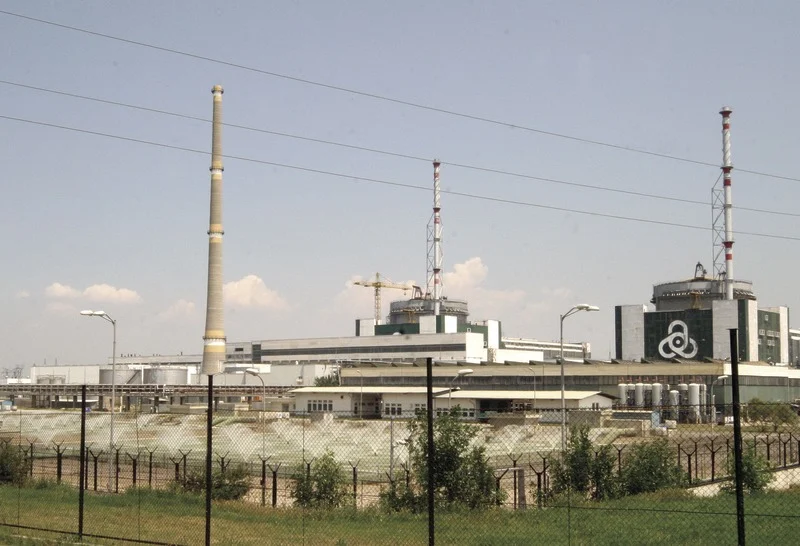
Otherwise, one of the priorities of GERB in the nuclear field is the extension of the life of V and VI units of NPP Kozloduy. It will analyze the shareholders’ agreement with the American company Westinghouse to build VII block for financial commitments and risks for Bulgaria. As far as the South Stream project is concerned, the promise is short – the party will „restore the dialogue with the European Commission on the implementation of European legislation in the construction and operation of the pipeline.“
Party members of GERB expect also
major institutional changes
Firtsly, they will separate an individual ministry of energy, as it was during the Cabinet of Simeon Saxe-Cobourg-Gotha. In such a move there is sense, as the newly established mega-ministry responsible also for the economy and tourism, did not lead to anything good. But far more important for the whole system is to create a competent and independent regulator and continue with the market liberalization, as promised by GERB. This will happen if the regulation of water and sewerage services gets separated from the regulation in energy and the selection of the specialists engaged in this activity is done not by the Council of Ministers but by the National Assembly, which should ensure their competence and independence. At the end of the previous term GERB offered the composition of the Regulatory Commission to be determined by the votes of two thirds of the MPs, but it will be interesting to see whether this criterion will not be lowered if they come to power again.
A good one is also the idea for introduction of legal texts according to which
the members of the regulator will bear personal liability for
taking the decisions they take. GERB are planning also regulatory adjustments for constant monitoring of the effectiveness and cost efficiency of all energy companies in the public interest.
GERB intend to implement a large-scale energy efficiency programme in multi-residential buildings in the country. However, it sounds as if some populist promises are included in it – such as a granting scheme in the amount of 100% of the expenses for the first two years of its launch, and a priority in the approval of projects for pre-fabricated buildings. After this period, the aid intensity will decrease to 75% and will also allow for funding of single-family residential buildings.
Against this background, the management programme of the socialists (BSP) in the segment of energy is almost non-existent.
It is summarized
in twenty lines of a booklet of six pages
entitled „BEP and Left Bulgaria – Decent Living in a Fair Country.“ There several ideas are presented more or less as if on a party meeting, ad not as specific management priorities. The latter is not surprising, since at the time being, the energy specialists of the party are Dragomir Stoinev, Yavor Kuyumdjiev and Tasko Ermenkov. Without underestimating them, they are far from having proved their capacities in the field. Anyway, the Socialists now are against a sharp and significant increase in the price of electricity and insist on renegotiation of unfavourable conditions for the production and purchase of electricity. Exactly in this direction is one of the few matches of their energy strategy with the views of GERB, which are also for revision of long-term contracts to purchase power by the regulator and the Agency for State Financial Control. The other is in the request of BSP for introduction of clear criteria for the expansion of the pool of poor people who can apply for energy assistance. The economic team of Boyko Borissov recorded in their programme a threefold increase in funds for this purpose in the budget to ensure the support of over 500,000 households, or more than double the previous number. The socialists are also for strengthening the capacity of regulatory bodies and those of the competition watchdogs, but insist on the introduction of public control over their activities, rather than only administrative legal measures.
As purely populist can be determined the points providing the
busting of artificial monopolies
and prevention of cartels in fuel as well as protecting the public interest in the concession contracts. Similar efforts existed also during the cabinet of GERB, and also during the tripartite coalition, but they never produced any practical results.
What is strange, or quite natural, in the programme of the BSP is that it omits major energy projects. Only at the opening of their campaign the party said they were for reindustrialization of the country and announced their readiness to continue the construction of the South Stream. Days ago at a meeting with representatives of Bourgas Chamber of Commerce, Chairman of the socialist party Mihail Mihov entered the clich? of rehabilitation of V and VI units in NPP Kozloduy and added the country was looking to build a seventh reactor. „We will work to find an investor for NPP Belene and will insist on the development of nuclear energy in Bulgaria,“ said Mihov.
The extension of the operation of 1000 MW reactors of the first atomic plant in the country overlap also with the promises in the election platform of the ethnic Turk Movement for Rights and Freedom. They declared the building of block VII could be done with the highest possible technology in the world, guaranteeing the safety of nuclear energy and the low cost of electricity for Bulgarian citizens. But on the topic South Stream MRF are clear it can only be realized in total accordance with the legislation of the European Union.
The BANKER