Kerry Is Pushing for Agreement in Iran Nuclear Talks
By MICHAEL R. GORDONMARCH 1, 2015
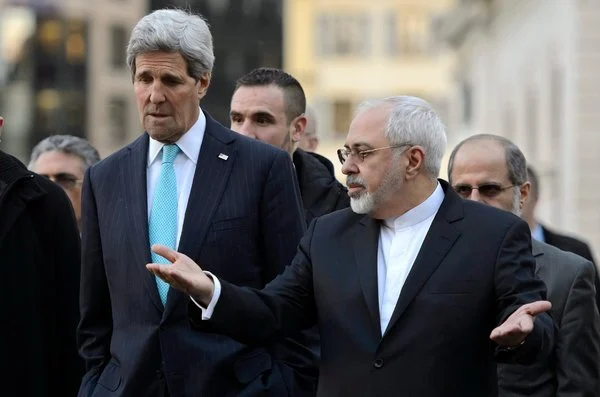
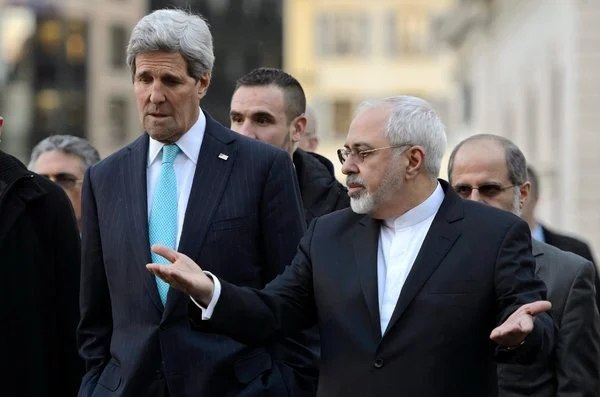
Secretary of State John Kerry, left, spoke with Mohammad Javad Zarif, the Iranian foreign minister, during a walk in Geneva on Jan. 14. The pair have had a series of one-on-one meetings. Credit Martial Trezzini/European Pressphoto Agency
“He has made a huge investment of his time and energy in the talks, and his personal, hands-on involvement in recent months has been crucial to building momentum toward a deal,” said Robert Einhorn, a senior fellow at the Brookings Institution who served on the American negotiating team on the Iran talks from 2009 to 2013.
To critics, Mr. Kerry’s eagerness is an open invitation for the Iranians to press for concessions as the talks enter the final stage.
Ray Takeyh, a senior fellow at the Council on Foreign Relations and a former State Department expert on Iran, said that given Mr. Kerry’s “inordinate attention to this issue, there is an impression that he wants this agreement more so than the Iranians.”
When Mr. Kerry recently warned that the United States was prepared to walk away from the talks if the Iranians refused to compromise, “that was not a claim that was taken with much seriousness in Tehran,” Mr. Takeyh said.
Mr. Kerry’s meeting with the Iranians on Monday in the Swiss lakeside town of Montreux will be his eighth negotiating session with them this year. It follows meetings in Geneva, Munich, Paris and Davos, Switzerland, which also had one-on-one sessions in which Mr. Kerry and Mr. Zarif, who call each other John and Javad, left their negotiating teams behind to convene alone.
An agreement on Iran’s nuclear program would be a momentous event in American-Iranian relations, and one that White House officials insist is the best hope for constraining Tehran’s nuclear ambitions and easing decades of animosity between Iran and the United States. But critics fear a deal will merely defer the day when Iran becomes a nuclear weapons state, while prompting Arab nations to consider developing their own nuclear deterrent.
An accord could also be a major accomplishment for Mr. Kerry, 71, who has logged more than 309 travel days in the past two years, but whose major achievement to date is an agreement that required President Bashar al-Assad of Syria to give up his chemical arms — and left him ensconced in Damascus while the casualty toll from the conflict has continued to soar. Mr. Kerry’s intensive pursuit of a Middle East peace agreement ended in bitter recriminations between Israeli and Palestinian leaders, and he has little to show for his push to end the civil war in Syria.
Continue reading the main story
In Ukraine, it is the Germans and French who have the lead: No American officials were present when a shaky cease-fire was reached in talks with President Vladimir V. Putin of Russia last month, and which Russia-backed separatists ignored by taking the town of Debaltseve.
Mr. Kerry’s relationship with Mr. Zarif is not unique. Mr. Kerry has invested heavily in his relationships with other foreign figures, such as Mr. Netanyahu and Sergey V. Lavrov, the Russian foreign minister, even when the payoff has not always been obvious.
But Mr. Kerry clearly sees Mr. Zarif as a promising interlocutor at a time when conditions for a deal are better than they have been in years. Plummeting oil prices, economic sanctions and the Obama administration’s willingness to allow Iran to retain a limited capability to enrich uranium have provided Tehran with an incentive to negotiate.
Mr. Kerry’s diplomatic efforts with Mr. Zarif began at the United Nations in September 2013, when an introductory meeting scheduled for five minutes lasted for half an hour and ended with the diplomats exchanging email addresses and phone numbers.
The relationship, however, has not always been harmonious. There were angry voices in a meeting in Muscat, Oman, last November, when the American side became frustrated by Mr. Zarif’s reluctance — or inability, given his tight negotiating instructions — to make important concessions. When the two sides were unable to surmount their differences later that month in Vienna, Mr. Kerry proclaimed that they had been brainstorming about new ideas and would seek a framework agreement by the end of March.
In recent months, the pace, intensity and stakes of the talks have increased. After Mr. Zarif was criticized by the Iranian lawmakers for his stroll with Mr. Kerry in Geneva, he appeared to be taking no chances when the two sides reconvened in Munich in February and photographers were not permitted to record the traditional handshake and greetings at the start of the session.
In an apparent effort to demonstrate his toughness to his Iranian critics, Mr. Zarif also told Iran’s state-controlled media that he had been instructed by Iran’s supreme leader, Ayatollah Ali Khamenei, to stop shouting at Mr. Kerry.
At the last round of talks, however, the two sides appeared to get down to business. As that negotiating session approached, the Iranians informed the United States that Mr. Zarif would be accompanied in Geneva by Ali Akbar Salehi, the director of Iran’s Atomic Energy Organization, who also served as foreign minister under Iran’s former president, Mahmoud Ahmadinejad. That prompted the United States to include Ernest J. Moniz, the secretary of energy, in the talks.
Mr. Salehi and Mr. Moniz are also expected to be at the Montreux negotiations with the two foreign ministers.
In the meantime, Mr. Kerry’s laserlike focus on getting an accord has unnerved Israel and prompted concerns in Saudi Arabia and other Arab foes of Tehran, anxieties Mr. Kerry is trying to quell even before an agreement has been forged.
Mr. Kerry talked to Mr. Netanyahu by phone on Saturday, and discussed the Iran negotiations, the prime minister’s visit to Washington and the United States’ concern about the financial plight of the Palestinian Authority, even after criticizing him in public. (Mr. Kerry recently told Congress that the Israeli prime minister’s support for the George W. Bush administration’s effort to topple Saddam Hussein showed his judgment could not always been trusted. Mr. Kerry did not mention that he himself voted for a 2002 Senate resolution authorizing military action against Iraq if diplomatic efforts to eliminate its suspected weapons of mass destruction failed.)
Mr. Kerry has also made plans to try to ease Arab anxieties about the potential accord with Iran. After leaving Montreux, Mr. Kerry plans to head to Riyadh to meet on Thursday with the new Saudi king, Salman. His next step will be London, where he will meet with foreign ministers from Arab nations in the Persian Gulf.
A European diplomat whose country is participating in the negotiations with Iran questioned last week whether Mr. Kerry was too involved. “You want to bring in the secretary of state at the end, to resolve the last differences, as a closer,” said the official who spoke on the condition of anonymity because he was not authorized to speak publicly about the talks. “He should not be involved in the day-to-day technical negotiations.”
The Obama administration has sent Mr. Moniz and a team of experts to work on the technical issues with their Iranian counterparts in Montreux. But the next few weeks are expected to see a series of marathon meetings between the two foreign ministers, and with a deadline fast approaching, nobody is expecting Mr. Kerry to hold back now.
Can Obama's Iran Deal Outlive His Presidency?

Feb 27, 2015 6:00 AM EST
With the White House reportedly trying to negotiate a 10- or 15-year deal on Iran's nuclear program, Republican leaders in Congress are threatening to unravel the agreement much sooner – during President Barack Obama’s final months or soon after he leaves office.
According to several news reports based on leaks from inside the negotiations, the pact being offered to Iran eases restrictions on its nuclear program and relaxes sanctions on its economy in several phases over at least a decade. Since Obama does not intend to seek the Republican Congress's approval for any deal, fearing it would be rejected, he would instead use executive actions, national security waivers and his powers to suspend any sanctions that Congress won't repeal.
QuickTake Iran's Uranium Enrichment
While Obama could possibly run out the clock until 2017 in this way, the next president may not be able or willing to use these tools. And if that next president is a Republican, he or she likely will have run a presidential campaign based on opposing the deal.
This puts the White House negotiators in a bind: Unless the administration can make a convincing case that any deal Obama offers can survive well past his time in office, the regime of Supreme Leader Ayatollah Ali Khamenei is unlikely to buy into the phased approach being offered by the so-called P5+1 countries.
“The supreme leader has said publicly that he is concerned that if he enters into an agreement that the very next president is going to change that agreement,” Senate Foreign Relations Committee Chairman Bob Corker told Bloomberg reporters at a breakfast on Thursday.
How, then, can the White House possibly persuade Tehran that this deal can outlast his presidency? Corker said he thinks the administration will likely make the case that by the time Obama is gone, the momentum of the deal will have set in and the international sanctions regime will have crumbled beyond repair, tying the next administration’s hands.
“They believe everything falls apart at that time. I think that’s what they are selling to the Iranians,” said Corker, who is working on a bill with Senator Lindsey Graham to mandate a Congressional vote on any nuclear deal with Iran.
While it's unclear whether the Iranians will buy that argument, Corker certainly doesn't: “If they went through this process where they actually brought it to Congress and Congress passed muster on it, it really would be a much more settled issue.”
Most Republican congressional leaders, and some Democrats, agree that Obama is making a mistake by avoiding Congressional participation. John McCain, chairman of the Senate Armed Services Committee, told me the administration is leaving itself and its successor open to several actions by trying to skirt Congressional oversight.
“I don’t think the next president is bound by it if it is only an agreement and not a formal treaty,” McCain said of any nuclear pact. “To allege that this doesn’t have all of the marks of a treaty is an insult to everybody’s intelligence.”
Graham told me that he preferred working to push the administration to negotiate a better pact now as opposed to working to change it after it is signed. “To begin a bad deal is a nightmare. Once you set the process in motion it’s very hard to change it,” Graham said. "I don’t like the idea of managing a bad deal, I want to stop it. And I have no desire to stop a deal that achieves the objectives.”
Other congressional Republicans, however, have little interest in cooperating with the White House, even to the point of telegraphing to Iran their hopes to scuttle any pact sooner or later.
"If the deal is not submitted to Congress, I and many others will make clear that Barack Obama will be in office for 23 months and I will be in office for 6 years. And the Iranians should take that into their calculation as they negotiate with Barack Obama's team,” one Republican lawmaker told a group of reporters Wednesday in a roundtable discussion held on a background basis.
Experts who support the White House’s Iran negotiations say such threats are largely bluster, and that if the Obama administration is able to reach a deal with Iran now, it will be very hard for the next president to stand against it.
“If you are planning something two years down the road, you can do all the planning you want, but it means very little because who knows what the situation will be then,” said John Isaacs, executive director of the Council for a Livable World.
After all, said Isaacs, the next president wouldn’t just be derailing a U.S.-Iran agreement, but undoing the work of seven countries, including close U.S. allies such as the U.K. and Germany. If a deal is working at least reasonably well until 2017, and the Iranians are mostly complying, efforts to change or repeal it would risk putting the U.S. and Iran back on a path to war – or at least that is the argument the pact's supporters will make.
Mark Dubowitz, the executive director of the Foundation for the Defense of Democracies and a skeptic of the nuclear negotiations, said he thinks Congress probably won’t even wait for the next administration to try to thwart any Iran deal.
“The Obama administration is badly miscalculating in believing that it can unilaterally provide durable sanctions relief without congressional buy-in," he said. "There are many ways that a creative Congress can make it difficult to implement a bad agreement on which they were sidelined."
Along these lines, some Republican House leaders, including Foreign Affairs Committee Chairman Ed Royce, are working on a new Iran-related bill crafted to thwart Obama’s implementation of any deal this year and next. Among other things, the legislation could take away the executive branch’s national security waiver authority, remove the Treasury Department’s flexibility to issue licenses for companies to do business with Iran, and make it harder to undo sanctions designations now on Iranian banks.
The Senate, meanwhile, is working on a new sanctions bill crafted by Republican Mark Kirk and Democrat Robert Menendez. The legislation would automatically impose new punishments on Iran if no deal is reached by this summer's deadline or if Iran is seen as not living up to its end of the bargain. The Senate is waiting to act on the Kirk-Menendez bill until after Israeli Prime Minister Benjamin Netanyahu addresses Congress next week, Corker said.
So this is where things stand now: Republican leaders such as Corker want to assert Congress's role in foreign policy while also working constructively with the administration; other Republicans simply want to kill the deal; most of the Republican presidential aspirants are certain to criticize the administration's approach; and presumptive Democratic frontrunner Hillary Clinton is likely to cautiously back any Iran deal but not claim ownership in case it smells bad by the time the election comes about.
As if getting Iran to agree on a nuclear deal wasn’t a big enough hurdle for the administration, it now seems certain that locking in a pact will simply mark the start of another battle with Congress. Obama can probably keep Republican efforts against him in check while he is still president, but after that, all bets are off.
To contact the author on this story:
Josh Rogin at [email protected]
Saudis’ Oil Price War Is Paying Off – 27 февруари
(Bloomberg) – Three months after Saudi Arabia made clear it was going to let oil prices keep tumbling, the strategy is showing signs of working.
U.S. drillers are idling rigs at a record pace, gutting investment plans and laying off thousands of workers.
Those steps highlight how the Saudi-led OPEC decision on Nov. 27 to maintain output levels and protect its market share is having the desired effect – pushing prices down so far that they threaten to curb output in the U.S. and other non-OPEC countries. Saudi Arabia, the most powerful member of the Organization of Petroleum Exporting Countries, will maintain that tack when the group next meets in June, according to some of the world’s biggest banks.
“OPEC giving up on trying to control the price is working,” Francisco Blanch, head of commodities research at Bank of America Corp. in New York said by phone. “It is having the effect that we would expect, which is a decline in investment and ultimately supply,
and somewhat higher demand. We think this change is for good.”
The number of rigs drilling for oil in the U.S. dropped by 37 last week to 1,019, the fewest since July 2011, data from Baker Hughes Inc. showed Feb. 20. Since Dec. 5, a total of 556 have been taken out of service. Oil explorers including Royal Dutch Shell Plc and Chevron Corp. have announced spending cuts of almost $50 billion since Nov. 1.
Transocean Ratings
Transocean Ltd., the world’s largest offshore driller, had its credit rating cut to junk Feb. 25 by Moody’s Investor Service on concern the company will increase debt levels while the drilling market deteriorates. It has about $9 billion of borrowings.
Oil has rebounded 13 percent in New York since Jan. 29, following a drop of more than 50 percent since June, in part because of the decline in drilling, which signaled supply growth will slow. Lower prices also spurred demand from bargain hunters, putting European benchmark Brent crude on track for its first monthly gain since June.
U.S. benchmark West Texas Intermediate for April delivery gained $1 to $49.17 a barrel in electronic trading on the New York Mercantile Exchange at 8:03 a.m. local time. Brent added $1.35 to $61.40 on the ICE Futures Europe exchange in London.
Demand is growing and markets are “calm,” Saudi Arabian Oil Minister Ali Al-Naimi said Feb. 25 in the Red Sea city of Jazan in the nation’s southwest.
U.S. oil production will cease its month-on-month growth in April because of the drop in the rig count, Marios Maratheftis, the Dubai-based global head of research for Standard Chartered Plc, said in Dubai on Feb. 23.
Slowing Output
The U.S. Energy Information Administration reduced its 2015 U.S. crude production forecast to 9.3 million barrels a day in February from 9.42 million in November. The EIA projects output will fall in the third quarter for the first time in four years.
“OPEC’s long-game strategy is on track,” Harry Tchilinguirian, head of commodity markets strategy at BNP Paribas SA in London, said by e-mail. “It’s suffering short-term financial pain for long-term gain.”
There is a cost to OPEC, of course.
Oil’s plunge will reduce the group’s revenue by about 37 percent this year, according to the U.S. Energy Information Administration. Export revenues for 11 of OPEC’s 12 members, excluding Iran, will shrink to $446 billion in 2015 from $703 billion in 2014, the EIA estimates.
Saudi Arabia’s government said Dec. 25 that it expects a budget deficit in 2015 of 145 billion riyals ($38.7 billion), up from 54 billion in 2014.
Criticizing Saudis
The Saudi strategy has been criticized by Venezuela, which the International Monetary Fund estimates will suffer an economic contraction of 7 percent this year, and Iran, which the IMF says will be deprived of $48 billion of revenues over two years. The Nigerian oil minister and current OPEC president, Diezani Alison-Madueke, said she may convene an emergency meeting of the group, the Financial Times reported Feb. 23.
There’s no plan for such a gathering, according to a delegate who asked not to be named. OPEC’s financially vulnerable members have little sway over policy because they’re unwilling to cut production, leaving decision-making power with Saudi Arabia, according to Mike Wittner, head of oil markets research at Societe Generale in New York.
Even having its own way, Saudi Arabia isn’t guaranteed success, according to Barclays Plc. Global markets remain oversupplied, prices haven’t fallen enough to press OPEC’s rivals into cutting sufficiently and increasingly efficient shale producers could restore output, said Miswin Mahesh, an analyst at Barclays in London.
‘Hard Road’
“It’s still a very hard road,” said Mahesh. “We haven’t really seen an outright chunk of U.S. shale or any other high-cost production falling.”
The U.S. pumped 9.29 million barrels a day in the week ended Feb. 20, the most in three decades, according to the EIA.
On the other hand, the International Energy Agency, a Paris-based adviser on energy policy to 29 developed nations, boosted its estimate of the world’s dependence on OPEC in a Feb. 10 report, citing lower forecasts for other nations. OPEC will need to provide 600,000 barrels a day more in 2019 than the IEA predicted in its previous long-term outlook.
“If I’m sitting in Saudi Arabia, I’d say it looks like the plan is on its way to working,” Wittner said. “It does need to be reflected in real supply. But all the signs are pointing in the right direction.”
To contact the reporters on this story: Grant Smith in London at [email protected]; Anthony DiPaola in Dubai at [email protected]