След като на 15 ноември военните поеха властта и поставиха президента на страната под домашен арест, Bitcoin скочи до 13499 щ. долара в столицата Хараре – почти двойно над цената на дигиталните пари на международните пазари, по данни от уебсайта Golix.
The price of the cryptocurrency in the Southern African nation jumped as high as $13,499, almost double the rate at which it trades in international markets, according to prices cited on Golix’s website. It traded at $13,010 by 3:34 p.m. in Harare, the Zimbabwean capital.
The Race to Replace Dijsselbloem Is Heating Up
ByViktoria Dendrinou
@v_dendrinouMore stories by Viktoria Dendrinou
November 6, 2017 4:49 PM EET Updated on November 6, 2017 8:34 PM EET
-
Euro-area finance ministers to elect group chair in December
-
Likely candidates include Centeno, Gramegna, Le Maire, Padoan
With less than two months to go until Jeroen Dijsselbloem, the head of the group of euro-area finance ministers, steps down, the race for who succeeds him is heating up, as France’s Bruno Le Maire, who was the favorite, is said to have second thoughts.
While no ministers have officially thrown their hats into the ring ahead of the December elections, some have already expressed interest or started lobbying their counterparts. Finding a successor to Dijsselbloem could prove hard, given the candidate needs to strike a fine balance both geographically and politically – between North and South, East and West, big and small countries, and between conservatives, Social Democrats and Liberals.
And the race appears to be wide open as some of the favorite candidates are pulling their names from contention. In addition to Le Maire, Spain’s finance minister Luis de Guindos, who was seen by almost all of his colleagues as the most qualified for the job, isn’t interested in taking over Dijsselbloem’s role, a spokesman said.
The job is not an easy one either: It requires putting national interests aside, standing up for often-unpopular decisions, moderating contentious discussions and working to accommodate clashing interests. Still, the position is one of the most coveted roles in the EU, both for the power and prestige but also for the global recognition it brings to its occupier. Here are some of the likely candidates:
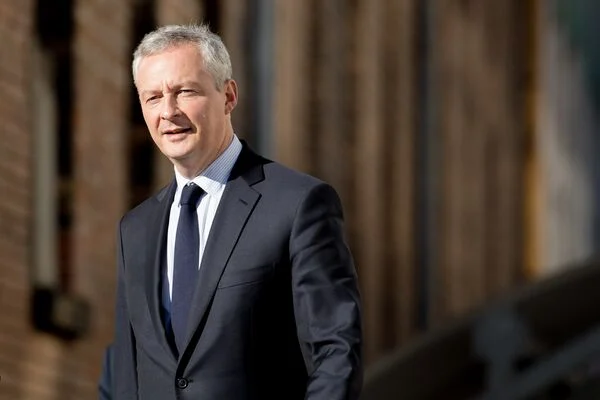
Bruno Le Maire – The Heavyweight
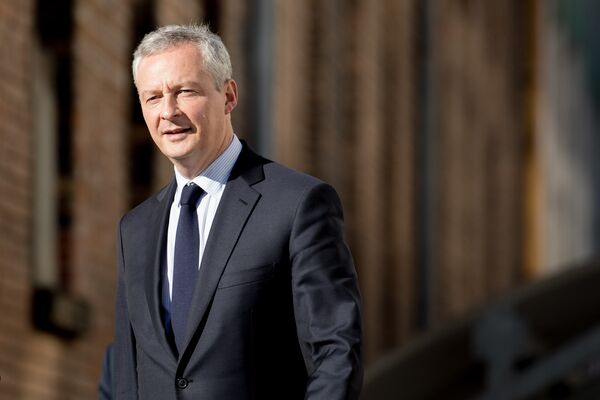
Bruno Le Maire
Photographer: Christophe Morin/Bloomberg
While only less than a year on the job, the Frenchman has already established a strong presence among his counterparts, leading discussions on topics such as taxation for digital companies and euro-area reform and helping strike a compromise on Greek debt in the summer. A fluent German speaker, Le Maire has also struck a closer rapport with Berlin than his recent predecessors, and helped reinvigorate a Franco-German coordination on economic issues. EU diplomats say he is seen as confident and skilled for the job, as well as able to engage in the diplomacy required to reach difficult compromises.
Still, there are a few factors that could hold him back. For starters his nationality doesn’t help, with France already occupying the top economic post at the European Commission and other key financial jobs. Another issue is his political affiliation. His former time with France’s conservative party could be seen as a red flag for a post that the socialists are eager to keep. And while in the most recent elections he was a candidate with En Marche, Emmanuel Macron’s party, that group has so far not joined any pan-European political party.
Crucially though, his limitations may be domestic: with so many controversial economic overhauls ahead, some EU officials say it may not be prudent for Macron to appoint Le Maire in a job that would shield him from future government reshuffles. What’s more, his appointment as Eurogroup president would preclude the country from occupying other key posts, such as that of the head of the Euro-Working group, the powerful assembly of finance ministry deputies that coordinate the bloc’s policies behind the scenes. France’s representative, Odile Renaud-Basso, is seen by many of her colleagues as the strongest candidate to succeed Austria’s Thomas Wieser, whose term at the help of the so-called EWG expires in January.
A European diplomat familiar with Le Maire’s thinking said the Frenchman is backing off the idea because it makes more sense for a small country to act as a moderator, while Paris – which has to push a strong policy agenda – isn’t necessarily suited to the role. Le Maire, who is trying to push through reforms in France, feels that he already has a lot on his plate, the official said, asking not to be named as no final decision has been made.
Pierre Gramegna – The Dark Horse
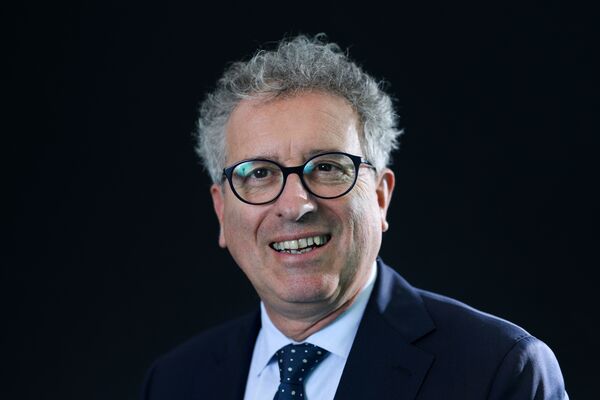
Pierre Gramegna
Photographer: Chris Ratcliffe/Bloomberg
The former diplomat has a few things going for him, and is in the eyes of euro-area officials the dark horse of this race. Coming from a small country but with a long tradition of EU leadership, the Luxembourger is seem as having the institutional and managerial know-how as well as the diplomatic prowess to do the job. Plus he is in a coalition government, meaning he has experience in striking deals that require balancing conflicting interests.
Politically, Gramegna is also on good footing as a member of a liberal-led government, which puts him in a better position than Le Maire, but perhaps not as good as another socialist. His main problem however, is that he is from Luxembourg. The country already occupies the post of European Commission president – the EU’s most coveted role. Giving another key role to a country representing 0.1 percent of the EU’s population could raise eyebrows, especially among smaller countries that are not occupying any top post.
Still, Gramegna could be the dark horse of the race, officials say, since a process of elimination taking into account geographical and political considerations leaves him as the leading candidate for the job.
Mario Centeno – The Southerner
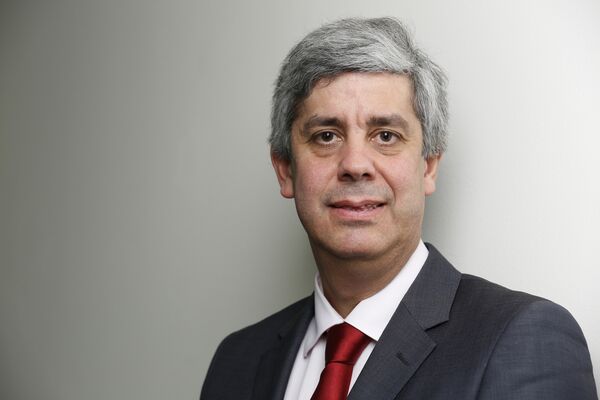
Mario Centeno
Photographer: Luke MacGregor/Bloomberg
The Portuguese finance minister is one of the socialists eyeing the post, giving him an edge over other candidates. Centeno has overseen the Portuguese economy as it has been strengthening in the years after its bailout, and has brought the country’s deficit within EU limits. He has also been finance chief in a coalition government, balancing out different priorities while trying to keep the budget in check.
While Centeno’s politics are an asset, the former central banker could still be held back by the stigma attached to a post-bailout country. Crucially, officials say Mr. Centeno doesn’t have the experience or authority over his counterparts needed for the job, and hasn’t assumed a leading role in any of the group’s past discussions.
Peter Kazimir – The Socialist
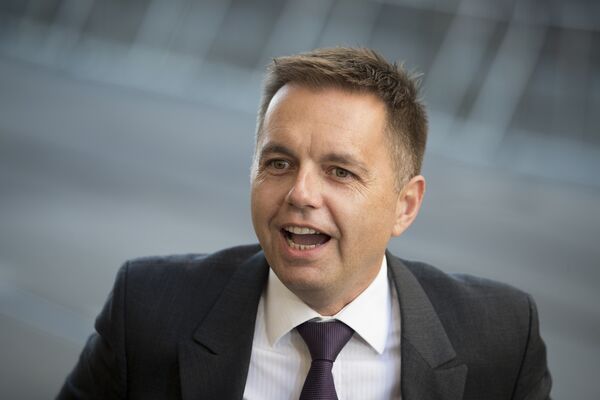
Peter Kazimir
Photographer: Jasper Juinen/Bloomberg
Another socialist entertaining the thought of being a candidate is Slovak Finance Minister Peter Kazimir. The politician gained notoriety in 2015 with his sometimes controversial statements on the Greek crisis and his tough stance toward then-Finance Minister Yanis Varoufakis.
While a socialist, Kazimir has been more hawkish on economic issues, and often sided with former German Finance Minister Wolfgang Schaeuble’s tough lines. While coming from a small and relatively new EU member, Kazimir is one of the longest-standing members of the group. He has also gained some experience in consensus-building and moderating when he served as president of the group of EU finance ministers during the six months when his country held the rotating presidency of the bloc.
Still, even though Kazimir is one of the few candidates from the center-left who meet the fiscal hawkishness profile to be acceptable by the center-right, some EU officials question whether the Slovak finance chief has the clout and diplomatic flair needed to take on the job.
Pier Carlo Padoan – The Outsider
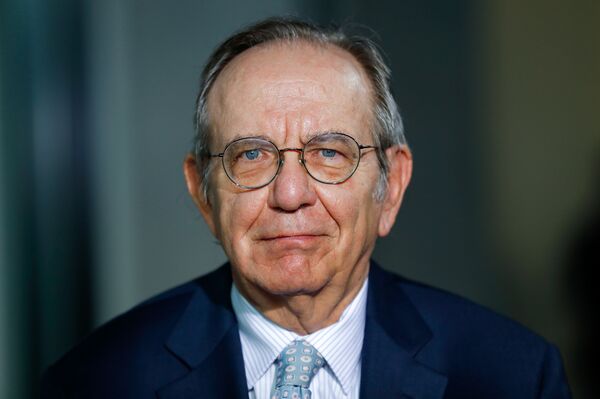
Pier Carlo Padoan
Photographer: Stefan Wermuth/Bloomberg
The Italian finance chief is a respected and powerful member of the group, seen as having the required economic expertise and political clout. He has often opposed Germany on its strict interpretation of fiscal rules and fought for more risk sharing in the euro area. His socialist credentials are also a plus for some, as is his support of stronger integration in the bloc.
But the Italian finance chief has two key drawbacks that make it all but impossible for him to land the job. First, Italy already occupies the top euro-area financial post, that of the European Central Bank president, while an Italian is also the top civil servant in the European Commission’s economic department, and another one heads the European Banking Authority in London.
Crucially, the country is holding an election next spring, meaning Padoan could just have a few months left in his job. This would mean this whole process of selecting a president risks starting all over in the spring, leaving the group leaderless when discussions on the future of the euro area will be at their most critical stage.
— With assistance by Nikos Chrysoloras, Zoe Schneeweiss, Mark Deen, and Maria Tadeo
Here Are the Big Names Who Are Backing and Slamming Bitcoin
ByEric Lam
@ericlamTOMore stories by Eric Lam
November 3, 2017 8:09 AM EET Updated on November 3, 2017 3:38 PM EET
-
Credit Suisse’s Thiam says currency fits bubble definition
-
The cryptocurrency has Goldman’s Blankfein on the fence
Is bitcoin a legitimate asset, or a super-bubble waiting to implode? As prices for the cryptocurrency skyrocket, investors and pundits are increasingly taking sides.
Whether you’re a backer or a detractor, what’s not in doubt is bitcoin’s dizzying rally this year. The most widely used digital currency crossed the $7,000 mark on Thursday and is up more than 650 percent in 2017. It’s managed to whip past the $100 billion total value mark despite governmental crackdowns and mainstream market skepticism. Bitcoin was trading at $7,218 at 9:37 a.m. New York time on Friday.
With the rhetoric for and against heating up this week amid bitcoin’s barreling gains, here’s a look at where some big names in finance stand – from those who see it as the natural evolution of money, to the naysayers waiting for the asset to crash and burn.
Bitcoin’s Backers
- The digital currency’s evangelists are led by Roger Ver, known in the industry as “Bitcoin Jesus.” Ver remains optimistic about bitcoin’s sustainability amid attempts from governments like China to curb some of the more speculative elements of trading. “The only way to stop (bitcoin) is to turn off the entire Internet in the entire world and keep it turned off,” he said in a September interview with Bloomberg News.
- Some countries are jumping on the bitcoin bandwagon, with Argentina’s most important futures market considering offering services to investors in digital currencies, while Turkish Central Bank Governor Murat Cetinkaya said digital currencies may contribute to financial stability if designed well.
- Ronnie Moas, who for the past 13 years has made more than 900 stock recommendations via his one-man show at Standpoint Research, upped his 2018 price forecast to $11,000 from $7,500 on Friday. He maintained his $50,000 target for 2027, though he said it was conservative.
Bitcoin’s Detractors
- Severin Cabannes, deputy chief executive officer at Societe Generale SA, was the latest big bank official to weigh in, saying that “Bitcoin today is in my view very clearly in a bubble,” in a Bloomberg Television interview Friday.
- Speculation around bitcoin is the “very definition of a bubble,” Credit Suisse Group AG CEO Tidjane Thiam told reporters in Zurich on Thursday. “The only reason today to buy or sell bitcoin is to make money,” and such speculation “has rarely led to a happy end,” Thiam said.
- Themis Trading LLC raised a red flag this week after CME Group Inc. announced plans to introduce bitcoin futures, saying the world’s largest exchange owner appeared to have “caved in” to pressure from clients. “A bitcoin future would be placing a seal of approval around a very risky, unregulated instrument that has a history of fraud and manipulation,” the firm said in a blog post.
- JPMorgan Chase & Co. CEO Jamie Dimon remains one of Wall Street’s most strident bitcoin opponents, saying in October that people who buy the currency are “stupid” and that governments will eventually crush it.
On the Fence
- While CME’s decision to offer bitcoin futures by the end of the year appears to be an endorsement of the currency’s viability, CEO Terry Duffy demurred when asked whether he’s concerned about a potential bubble. “I’ve seen a lot of different bubbles over the last 37 years,” he said on Bloomberg TV. “It’s not up to me to predict if it’s a bubble or not – what I’m here to do is to help people manage risk.”
- Goldman Sachs Group Inc. CEO Lloyd Blankfein isn’t sure what to make of bitcoin and is unwilling to reject the digital currency just yet. “I know that once upon a time, a coin was worth $5 if it had $5 worth of gold in it,” Blankfein said in another Bloomberg TV interview. “Now we have paper that is just backed by fiat … maybe in the new world, something gets backed by consensus.”
- While Thomas J. Lee of Fundstrat Global Advisors has turned cautious on bitcoin in the short term because of its big gains, he remains a long-term bull on the digital currency – maintaining a 2022 price target of $25,000.
Diary of an African Cryptocurrency Miner
A young Kenyan goes from doing odd jobs on the farm to growing virtual coins, as cryptocurrencies spread across the continent.
ByCamila Russo
@CamiRussoMore stories by Camila Russo
andSamuel Gebre
November 3, 2017 10:00 AM EET
Bitcoin: What’s Coming in the Year Ahead
Eugene Mutai’s Nairobi apartment is filled with the sound of money: That would be the hum of a phalanx of fans cooling the computers he’s programmed to mine cryptocurrencies around the clock.
The 28-year-old has given up a chunk of his living quarters to the enterprise. What’s more, he invests every spare cent in initial-coin offerings: fundraising tools some startups are using to crowdsource capital. He’s a proud citizen of a strange and controversial new world — and a rather rare breed, with just a high-school education and no formal training as a coder. That’s one thing he holds up as proof that cryptofinance isn’t the scam that a diversity of critics, from Jamie Dimon of JPMorgan Chase & Co. to Saudi Arabian Prince Alwaleed bin Talal, have suggested it is.
“The entire ecosystem could be the biggest wealth-distribution system ever,” Mutai said as his 2-year old daughter, Xena, named after the warrior princess, played with a tablet, swiping from app to app. In the world of internet-based currencies traded without interference from banks or regulators, “big players can’t deny anyone from participating in the financial system.”

Cables and electronics components that make up one of Mutai’s mining machines.
Photographer: Luis Tato/Bloomberg
For Mutai, the appeal is simple: It levels the playing field in global markets that don’t give people like him many breaks.
An opposing view is that what this young man is doing is wrong or stupid, sucking up massive amounts of electricity to create a software-fabricated asset that’s traded anonymously in a lottery criminals find irresistible.
So Mutai is either in the middle of a fraud, or a revolution. Whichever, the market has exploded — growing to $190 billion from just $17 billion at the start of the year. Hundreds of new digital tokens have sprung up as entrepreneurs started projects based on blockchain, the public bookkeeping technology that supports digital currencies, raising millions and even hundreds of millions of dollars in minutes. The value of bitcoin, the biggest of them all, has increased six-fold. And it’s about to go mainstream, with CME Group Inc. in Chicago planning to introduce bitcoin-futures trading contracts by the end of the year.
Cryptocurrencies are especially attractive in economies where there are restrictions on taking cash abroad, or people don’t have bank accounts, or the local currency is being trampled by inflation. That’s the case in Zimbabwe, for example, which is facing a liquidity crisis as inflation spirals: Bitcoin in the local Golix exchange has soared to more than $10,000, a 75 percent premium on global prices, as locals rush to it to protect savings.
In six of the largest African nations for which there is trading data in the online exchange Local Bitcoins, the average premium to the Bloomberg bitcoin index is 7 percent; the gap in major bitcoin trading hubs such as China, South Korea, Germany and the U.K. doesn’t surpass 3 percent. Mutai said he sees cryptocurrencies as safe because “local political issues don’t affect them” — something of note in Kenya, where after two elections within three months there’s still a stalemate over who is the rightful leader.
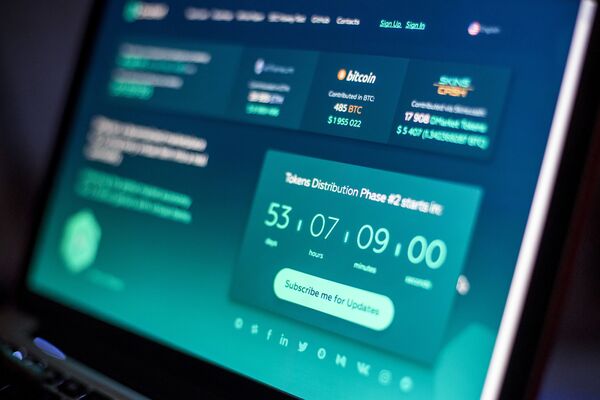
A bitcoin web trading screen.
Photographer: Luis Tato/Bloomberg
Just last year, Mutai hadn’t heard of bitcoin, which hardly makes him unusual. Neither does the fact that a decade ago he didn’t have access to a computer. He was interested in technology, though, and borrowed a friend’s Nokia Symbian S40, one of the first non-smartphones that could download apps. In between odd jobs in farming, herding sheep and ferrying people on his motorcycle, he taught himself the basics of HTML and CSS coding languages.
He was living at the time in his mother’s home village — they moved there from the city for his last year of high school, after his twin brother died and his mom lost her job — and was barely earning enough to survive. So he decided to move in with his uncle in Nairobi, who happened to have a desktop computer and a WiFi connection. “It was do or die,” he said.
Mutai spent four months glued to the computer, worrying his uncle, who at one point took the machine away. After mastering the mysteries of code, he landed a job as a programmer. He also became a consultant for the technology incubator iHub and for the Nairobi County government. By 2016, he was named Kenya’s top-ranked software developer by Git Awards, which bases its rankings on data from GitHub, a site where coders store and share their work.
Now Mutai works for Andela, which trains developers and engineers throughout Africa and connects them with companies including Microsoft Corp. His current contract is with Restaurant Brands International Inc., building an ordering app for Tim Hortons. He’s in the Kenyan middle class, a feat for a guy without a college degree.
But his opportunity for real wealth, Mutai figures, is in cryptocurrencies, which he can exchange for dollars or hold as an investment. His mining rig runs six 1080 Ti graphics cards. Maintenance is pretty low, as he wrote on his Facebook page: “It sits in my living room doing its thing all day every day with little or no supervision.”
At the moment, the rig churns out mainly digital coins called Zcash and LBRY Credits. Mutai said he’d like to increase production by plugging in two more graphics cards, but that will have to wait until he can upgrade the power supply to his apartment. As it is, his monthly electric bill is about $200, steep for a residence in Nairobi.
His initial-coin offerings investing takes more personal energy. “I do a lot of research,” Mutai said. “I feel like a small VC.”
Is he treading dangerous waters? Possibly, but he’s up for the gamble. “They say no-risk, no-return, and I’m willing to take the risk.”