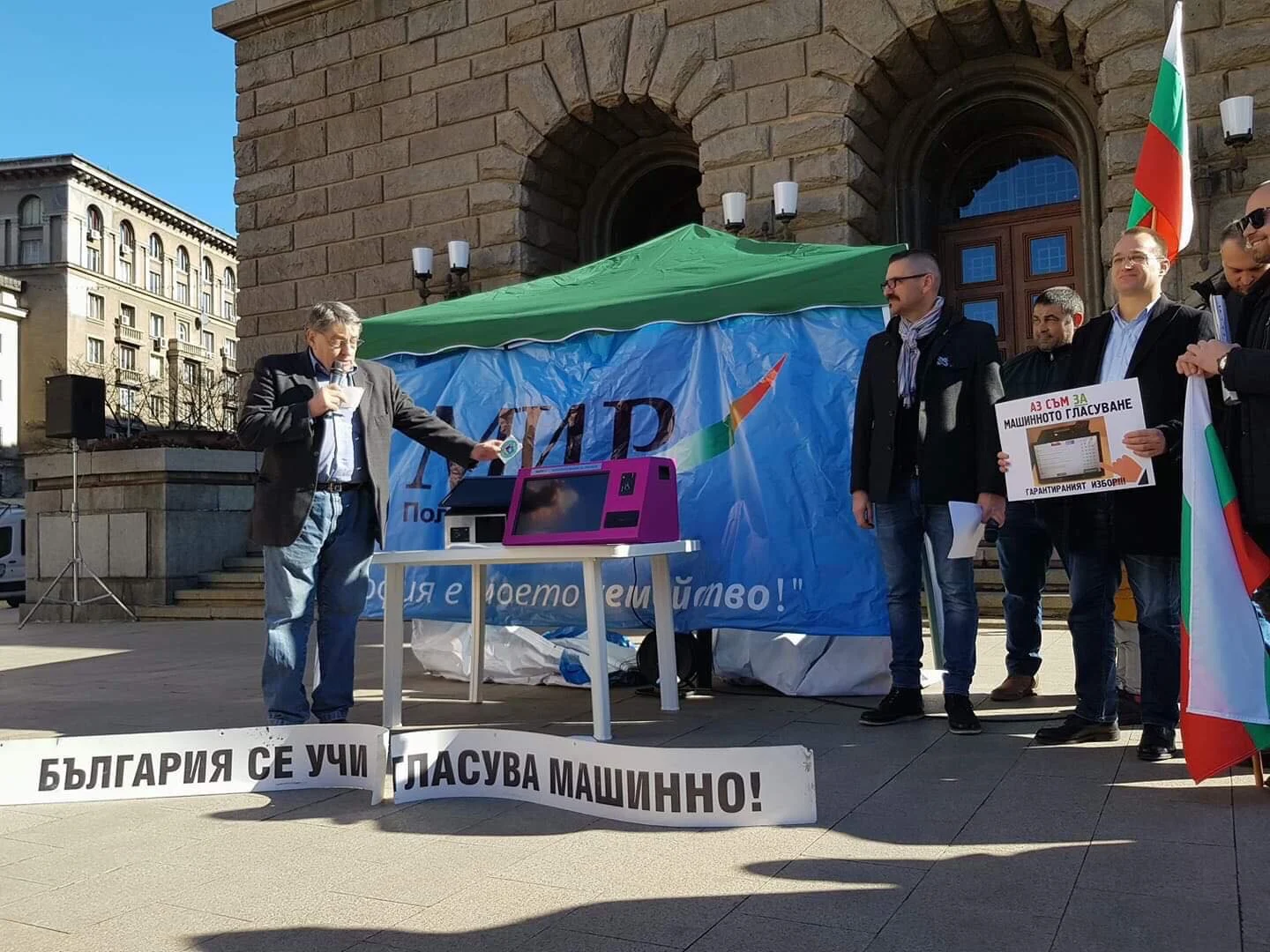
In his typical impulsive decision-making style, Prime Minister Boyko Borisov suddenly declared he was in favour of machine voting and his words were transformed into a government decision for the next parliamentary elections. And the fact that the decision to buy the machines was not laid down while adopting the budget for this year, despite the insistence of the opposition, shows that the decision is ad hoc.
"We are in favor of machine voting," Borisov said at the beginning of the Council of Ministers meeting on February 12. We are obliged to fulfill what the Election Code says. Today we’ll adopt that item and join the general choir of the supporters. I am not convinced that this will solve something, but let Tomislav Donchev and the CEC do it. I propose to adopt the item, spend tens of millions and see what the results will be. I do not want any doubt hanging over the government that we do not want it."
Still
the Prime Minister did not fail to indicate
that we would be the only EU country to practice such a vote. Then he hinted that the last election cost us BGN 70 million, and the machine voting would make it more expensive.
Deputy Prime Minister Tomislav Donchev, on the other hand, said that preparations were already underway and that at the next parliamentary elections each polling station would be provided with a voting machine. He calculated that 15,000 machines would be needed together with some spare ones. Now, however, it has to be decided which of the three types to choose. "It is nonsense for me to support two parallel systems – machine and paper voting, this makes the elections insanely expensive and I see no reason for the paper voting," Donchev comments.
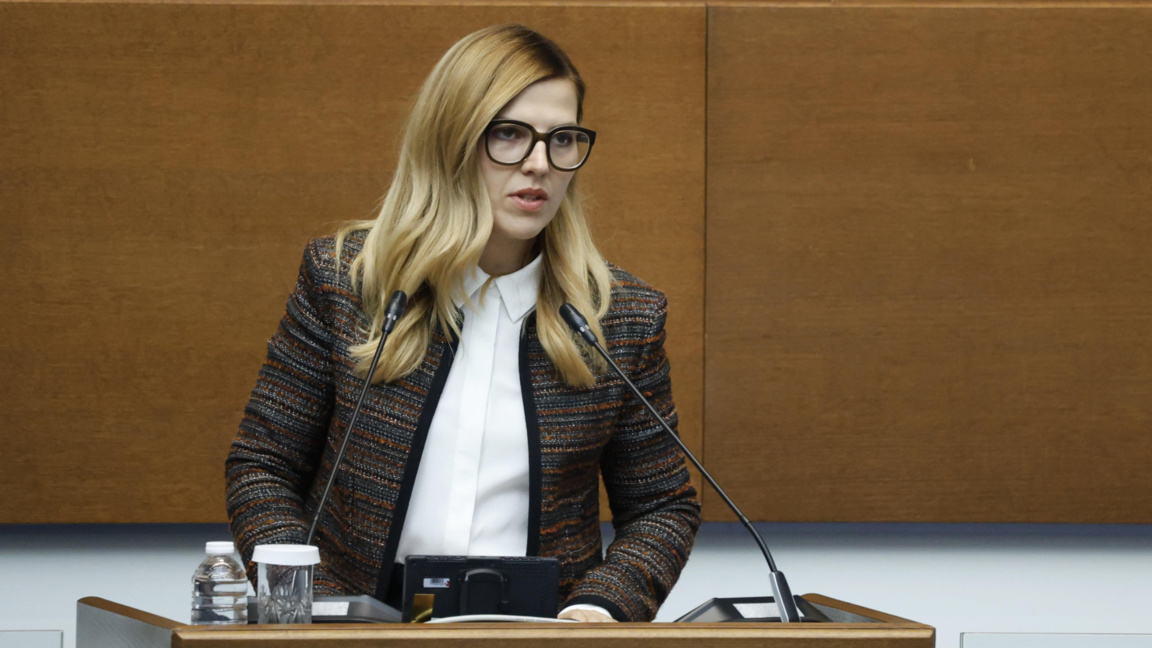
The cabinet decision was favorably accepted by parliament parties. "Everybody wanted a machine vote – the Prime Minister complied with this and we willdo it," the head of the Committee for legal affairs in the Parliament Anna Alexandrova from GERB immediately replied. She recalled that a working group of three representatives from all political forces had already been set up to prepare the changes to the electoral legislation and had already started its work.
"One of the topics we agreed on was machine voting. The way machines will be voted with, certified and stored is yet to be accepted. Where will they be stored from election to election, "Alexandrova said. She stated that at the first meeting of the group
five topics had been determined and agreed on by all MPs.
In her words, "the first topic are election lists, everything connected with them. The second topic are machines themselves and everything related to machine voting: scanners, electronic protocols." What everyone wants was also discussed, namely – no human intervention while counting the ballots.
“The third topic,” continued Anna Alexandrova,” is the possibility to publish the results of the sociological agencies on election day. The next one are the protocols and their simplification. In this case, perhaps, the topic will be omitted if we unite around machine voting.
The last topic is vote buying." The head of the parliamentary legal committee recalled that the previous opening of the Electoral Code had increased the sanctions for this crime and that it would be debated again.
Unlike Tomislav Donchev, Alexandrova believes that
the sections must have both machines and paper bulletins:
"Not only if there is a power cut, but with the view of voters who do not want to vote through machines."
The left opposition accepted the news with restraint. "There is no need for enormous enthusiasm due to this decision, as this is the law at the moment. Mr Borisov is simply enforcing the law. The law states that there will be machine voting. Their mistake was that they did not listen to us and the 2020 budget didn’t include funds for these machines. Now PM is correcting this mistake by extra-parliamentary means, by the Council of Ministers decision, as he usually does, "said BSP leader Cornelia Ninova. She said the country needs machine voting because it is a "red line for fair elections".
MRF President Mustafa Carradayi believes that as soon as the Council of Ministers deals with the topic of machine voting, the likelihood of it happening now is slightly higher. The most important question for Carradayi is what kind of machine voting will be applied. He offered assistance to the government, as the MRF had the necessary expertise in this area.
The political flair of Boyko Borisov
prompted him that he still had to merge with the people and their opinion, so as to prevent another problem from arising against the background of all the other crises pending to be solved. MIR Party of the former municipal councilor Simeon Slavchev put up a tent in front of the Council of Ministers ten days ago, demanding the introduction of machine voting and its activists initiated collecting subscriptions. The weather is getting better, people are waking up to protest and Borisov clearly does not want to cause himself such emotions. In addition, his decisions are often the last but one and he has a full year ahead until the regular parliamentary elections.
The most recent example of the Prime Minister's variability is the story of party subsidies. Last summer, amid a scandal involving state aid overtaken by parties, Borisov surprisingly came to the Parliament and proposed cutting the subsidies from BGN 11 to BGN 1 for a real vote. He then warned that, as a result, "billionaires and oligarchs will rule, and parties will become the property of businessmen," but it should not appear that GERB was against the will of the people, expressed in the referendum, initiated by Slavi Trifonov and his show.
The proposal was brought to the plenary by GERB and accepted lightning-fast. During the turmoil, the idea of Delyan Peevski and the MRF to introduce unlimited financing of parties from the businesses passed unnoticed. The BSP then suspected it was being done to "kill the opposition" just before the local vote. But just a few months later, with the adoption of the 2020 budget, under unclear circumstances, out of the blue and with a pinch of racket by GERB's coalition partners – the United Patriots, the subsidy was increased to BGN 8 for a real vote. However, the funding of the parties by individuals remained, although most Parties in Parliament swore that it would be abolished.