The Bulgarian Government is about to shoot the ball in its own goal through the preferred financing scheme of the South Stream pipeline. The country would not actually receive any income from transit fees for the next 15 years, it will give some of its gas network to a foreign company for the first time, with the launch of the new pipeline undermining around 90 kilometres from the existing gas transit facilities in the country. Despite the promises of the ruling GERB party for transparency in the energy sector, these key for the state decisions, are taken without presenting the audience with clear financial estimates and arguments in their favour.
The rumours about how we will finance the construction of the section of South Stream passing through Bulgarian territory finally started to gain some real shape last week. According to some publications, Bulgaria will not take part with money in the construction of the pipeline, while the project financing of the route in the country will be borne by the Russians. For the first 15 years after the facility becomes operational (expected to happen as early as 2017) Sofia will not receive transit fees. Only in 2032 will the state begin receiving 50 percent of them endash just as much as it has to get in line with its share in the project company jointly held with Gazprom.
Minister Delian Dobrev said the same thing but in a slightly different way. According to him since the start of operation of the South Stream pipeline, Bulgaria will start receiving transit fees for each cubic metre of gas that passes through the territory of the country, but the revenue would go to pay for the construction financing of the pipeline that is to be provided by Gazprom.
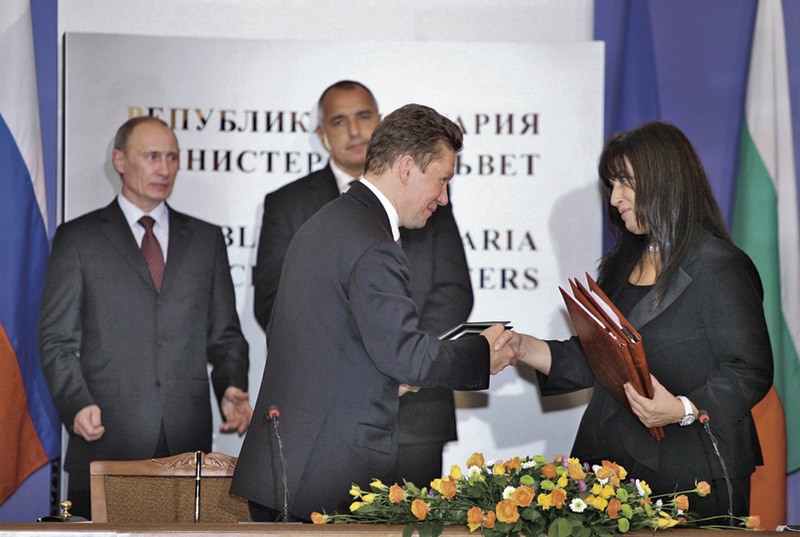
Under the Intergovernmental Agreement on the South Stream from 2008, the project must be repaid for 15 years. According to the shareholders’ agreement of 2010, 30 percent of the funding has to be covered by Bulgariarquote s own funds, which makes more than BGN1 billion. What is now agreed is South Stream to be built through project financing. But in any case the money spent on it will have to be refunded.
In any case the current situation is not favourable for Bulgaria and is hiding too many risks because it leaves all the cards in the hands of Gazprom. What is not guaranteed is that Sofia will get long and permanent enough orders, nor big enough income in order to repay the debt. Dobrev says that the deadline for repayment of the investment is 15 years and the next 20 to 30 years of the functional life of this tube Bulgaria will be earning from the facility. This scenario, however, will take place if the forecasts of the Russian company for the transited through Bulgaria quantities of natural gas come true. And if they donrquote t?
Letrquote s not forget that besides the South Stream, other countries are working on a few other competitive European projects whose goal is to carry Azeri natural gas to the Old Continent. And while they are now behind schedule compared to the Russian initiative, sooner or later one of them will be completed and will start carrying gas.
In fact at present we do not even know what the amount of fees for the Russian gas transit will be for the new pipeline? Currently the passage of gas through the countryrquote s gas transmission system costs 1.73 US dollars for the transportation of 1,000 cubic metres of fuel per 100 kilometers. Or endash the revenue for the country for 2011 was BGN312 million from just over 15 billion cubic metres of gas transported.