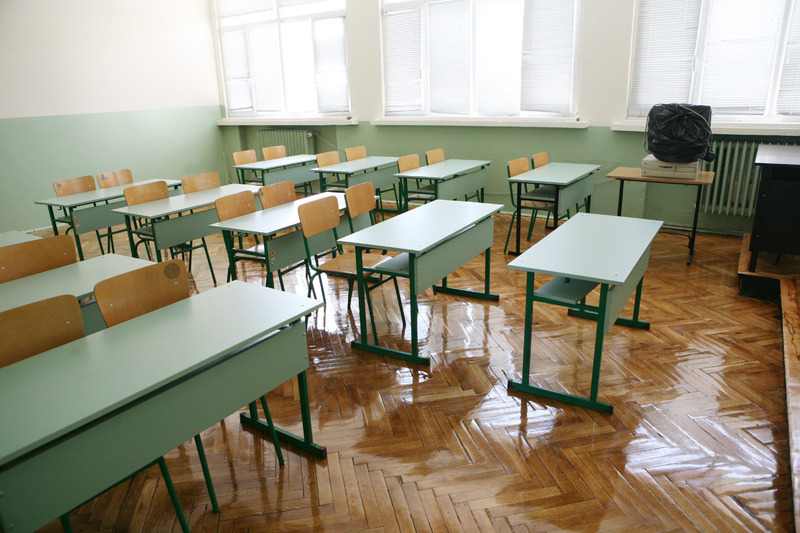
The closing down of hundreds of schools and kindergartens from the map of the country, mass dropouts, closure of private colleges and boom of doctoral students. This is the conclusion of the last four years of boiling reforms in Bulgaria’s educational system. Apart from being made apiece – the innovations wasted a lot of of state money, and the result is still lamentable. This conclusion emerges from the survey of the National Statistical Institute on the state of education in the school year 2012/2013 year. The development strategy Europe 2020, the main targets are set to reduce the number of early school leavers and university graduates to be increased. But we obviously are impervious to common European aspirations and move in the wrong way. It leads nowhere, but cists hundreds of millions to taxpayers.
The current Minister of Economy Nikolay Miloshev quickly learned the phrase there is no extra money. As an expert from the Bulgarain Academy of Science he directed his efforts to restructure the institute in the Academy and prepare the Law for the development of academic staff, while educational system seems to be left to the goodwill of his deputies. The picture of the country’s education system is far more dreadful than that in the idyllic farewell to report of the Deputy Minister of Education of GERB Milena Damyanova. Two months ago, the former ruling party argued that the country’s sees many new kindergartens being built and described no problems with visiting students, and also that at the end of the mandate of the previous government dropouts were only 4761. The document told the general public that only 119 schools were closed during the government of Boyko Borissov. Damyanova personally boasted the introduction of compulsory kindergarten for five-year olds, which two thirds of parents did not accept. She pointed out the state had invested 400 million levs for children in crisis.
The latter is commendable, but such a colossal state injection should report also a significant progress at least in the range of pre-school education. The problem is that the current NSI data paradoxically show that kindergarten not only failed to multiply, but fell by 221 as compared to the school year 2008/2009. Educational institutions for the smallest are being massively closed down in villages and mega-kindergartens are formed in cities that accept more than 150 children each, without having ensured that they can adequately take care for all of them. Generally the places in the gardens for the past four years increased by only 22,600 (or 10.6%), which is too sour an excuse for 400 million in expenditure. Access to municipal childcare becomes more limited, and private facilities do not solve the problem, since they are only 65 and tae care for only 2357 children across the country. And this is a direct result of the inaction of the previous government, which failed with the adoption of the pre-school and school education act providing a regulated public support for private kindergartens.
Myth is the finding that the percentage of school dropouts were almost among the best figures in Europe. It turns out that in 2012, 14 200 students left mainstream school for various reasons, most of them still in the stage of basic training. Most children quit for family reasons, which in turn is a reference to projects for the integration of ethnic minorities. Our secondary schools are now attended by about 14,000 fewer students compared to 2008, high school enrollment fell by 46,000 , while in primary education – pupils are by 8,000 fewer. Only sick minds can find in the black statistics even the rudiments of a successful reform.
Each week in the country will be closed at least one general educational, secondary, special or vocational school. This is done primarily through national programs like School Network Optimization.
The BANKER