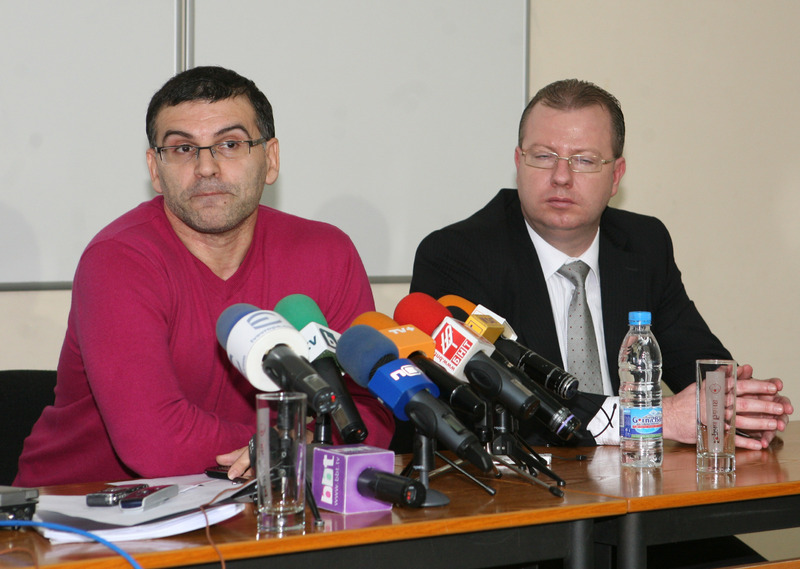
The single debt account, introduced by former Finance Minister Simeon Dyankov, that has become the administrative harassment tool for businesses, will be divided, at least into two new accounts. The account united all debts of individuals and companies to the state into a single account for each of the entities and did not leave much room for them to decide which of their debts to cover first – any sums transferred to the state thus go to cover the first debt incurred.
Now, the single payment order will bear two options – either to pay the principal, or interests accumulated on it. This is one of the points on which the working group in the Ministry of Finance has already been agreed upon, insiders said.
This working group, headed by the Deputy Minister of Finance Lyudmila Petkova, who is responsible for the revenue side of the budget, includes the Ministry, the National Revenue Agency (NRA), the Customs Agency, but also the trade unions and employers’ organizations.
More than this branching of the single payment order is unlikely to be achieved, said one source, who is a business representative in this working group. Experts from the Ministry of Finance have presented their position this way: Either we accept two separate accounts or the single account will be closed and we will return to the previous expensive and inflexible system with many payment accounts. Because businesses still consider that the unified account is a form of relieve of the administrative burden, employers’ representatives succumbed to the pressure of the ministerial group.
And that is why it was considered that the draft project for the two accounts satisfies the representatives of taxpayers in the working group, the source said. Initially, they were inclined to accept the idea to change the order of covering the sums in the single account and instead of interest preceding the principal, the other way around to be opted for. This was very important because after the decreasing of principals, this in future also would slash interest due on them. This was not agreed, but with the opening of the two accounts this issue was resolved.
Another relief for taxpayers, which was approved by the working group is the introducing of a new electronic service at the expense of the Treasury. For each transaction via automatic communication (via email so far) the payer will receive information on where in the complex maze of obligations his money is received, what is covered and what remains to be paid. This was explained exclusively to the BANKER by the Deputy Finance Minister Lyudmila Petkova. She declined to give more information about other changes that are being mulled over, saying that discussions are going in full swing.
The said email is one of the most important things for taxpayers, because at the moment they are unaware of where exactly their money goes.
Bulgarian Chamber of Commerce urges the working group to speed up the introduction of an electronic certificate of presence or absence of obligations to the state budget, said its chairman Mr. Danev. Now the ones who need such a certificate can only submit the application electronically, but in order to get it, they should wait in a queue at the National Revenue Agency, where possibly tens of thousands of such documents are issued daily.
The BANKER