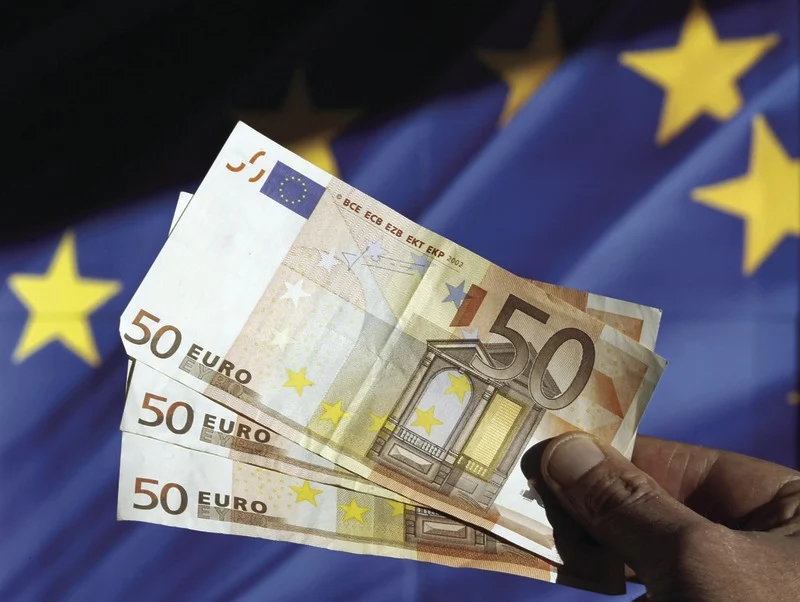
The worst happened. Unstable political situation in the country since the beginning of the year not only scared away foreign investors, but ultimately led to cuts in almost all operational programmes that will be granted by the European Commission for the next programming period.
Political strife between the former and current government led to the fact that in the next seven years, the country will have programmes worth 6,257 billion, or by 416 million euros less than in the current period. A few months ago politicians claimed that Bulgaria would take about 7.1 billion from the Cohesion and Structural Funds.
Deputy Prime Minister and Justice Minister Zinaida Zlatanova who immediately after entering into office started claiming the country would lose money from the EU because of the actions of the previous government, now hastened to call off the political agenda: I do not want European funds to be scope for political battles, because nothing good would come out of that. I would like to call on everybody who is involved: let us make sure that the little resources we have we utilize in full so that Bulgaria make the most of it, and utilize it wherever it is most needed, said Zlatanova.
She said the administration has deliberately not made public the data on the current and upcoming programming period in order not to make comparisons with the work of previous governments. The facts suggest that, particularly the work done over the recent months, and particularly the work of the current government has led to this unpleasant turn in the EU resources available to Sofia.
In February, when the multiannual financial framework was first voted, for Bulgaria were allocated 6.9 billion from the Cohesion and Structural Funds, subject to be updated for inflation to reach at least 7.1 billion. Then – in July, the budget was re-voted in the EU. Decreases for Bulgaria were never publicly announced by the new government. Then criticism from the opposition was heard.
Serious problems occur in the very Partnership Agreement with Brussels, which regulates the financial support for the country as well as its spending. Its first version was drafted by the interim government in April, but the European Commission sent it back with a bunch of notes. Current government made the necessary changes and the Council of Ministers approved the document at its meeting on Wednesday (21 August). However, it will be submitted to the Commission as early as October, and the signature can happen early in 2014 and, of course, as long as EU experts do not find new faults in it.
All this clearly shows that Bulgaria will not be able to enter with a head start in the new programming period. In the best of circumstances, including instant conformity assessment of operational programs, the first drafts can be sent for approval until the second half of next year, resulting in a vacuum of 8-10 months, during which new contracts for European funding will not be awarded.
The BANKER