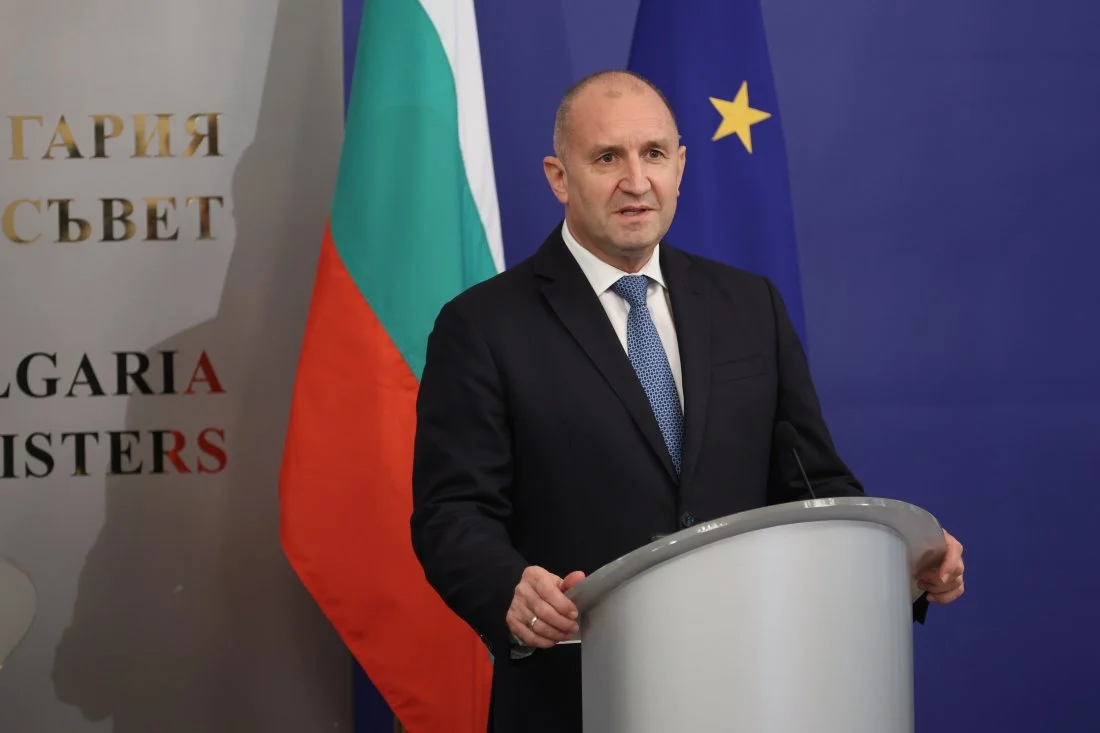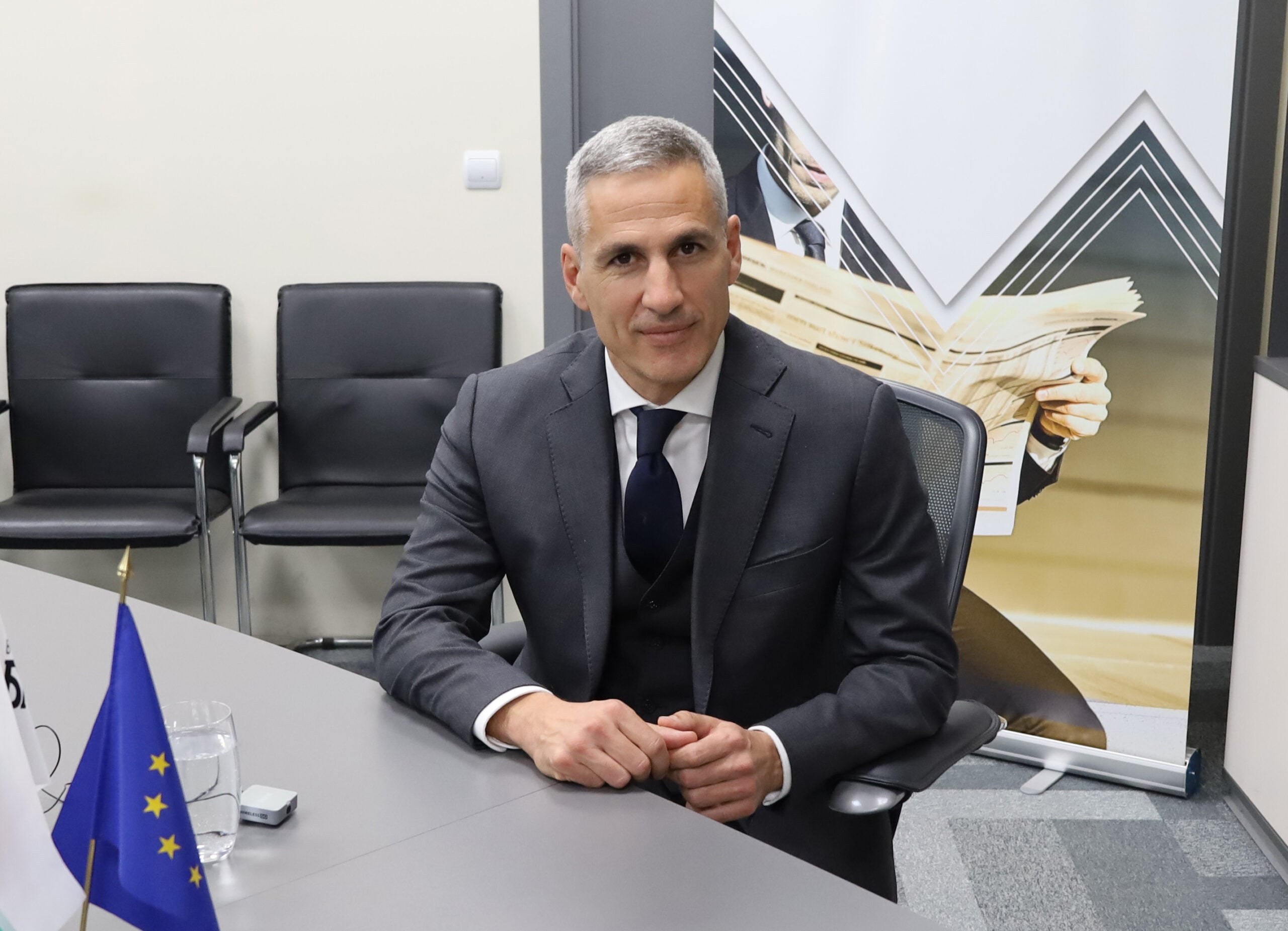
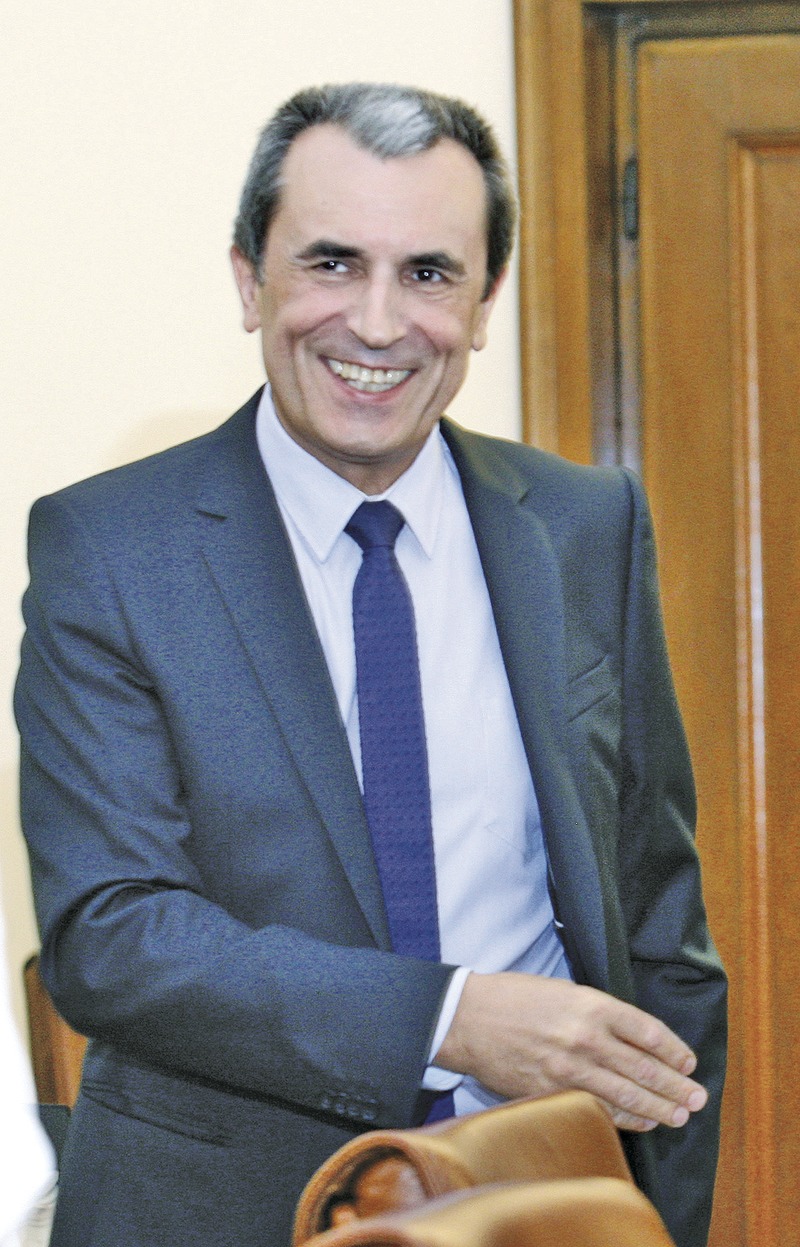
Plamen Oresharski was born on February 21, 1960 in Dupnitza, southwestern Bulgaria. He graduated from the University of National and World Economy with a Master degree in Finance and Credit, holds a PhD degree in Investments and Investment Analysis. He also has a qualification in banking management from the U.S. and a further one in the field of issuance of government securities from the UK. He was a director in the Treasury and Debt Department in the Ministry of Finances. In 1997-2001, he was Deputy Minister of Finance. At this position he was responsible for managing government debt and securities market, as well as for the preparation of legislation for the introduction of the currency board. He headed the working group on liberalizing the foreign exchange regime in Bulgaria. Mr. Oresharski authored the first publicly announced strategy for state debt management as well as the concept for creating a special law on public debt. During 2005-2009, he was Finance Minister in the tripartite coalitionrquote s cabinet.
He was elected Prime Minister of Bulgaria by the 42-nd National Assembly on May 29, 2013. He is married, and has one son.
Mr. Prime Minister, you have recently said that Bulgarian society is facing many challenges – economic, social and political ones – and a key task for all of us is to work for integrity and promote economic development. Could you tell us what specifically you planned that the government would do facilitate businesses and calm down society?
– For more than six months we have been working for an economic recovery and more integrity in our society. For the first time in four years we will enter the new year with a VAT reimbursed in full in due time. We saved almost all the EU money that the caretaker government assessed as risky ones. We have stopped the selective pressure on companies. We are trying to restore the institutional culture of communication. We are to improve the overall legal and regulatory framework for doing business, as quite a lot of proposals are already in Parliament for discussion and adoption. We will target to encourage larger investment projects of private businesses. I am convinced that an economic revival will suppress all confrontation in society.
As a matter of fact, we have the first encouraging results the countrys economic growth for the third quarter of this year was 1.5 %, which is the best result in the last two years. This takes place in spite of the efforts of dissenting groups to promote political tension that is visibly deteriorating investment climate.
You said that the draft project for a seventh unit at the NPP Kozloduy would not involve budget funds and will be long-term credited. After a meeting with the CEO of Westinghouse, Danny Roderick, you said that you were working for the parameters to be favourable enough so that in 2016 the building may be started. How will you negotiate the financial parameters and was Economy Minister Dragomir Stoynev not rushing too much with the news?
– Was recently launched the preliminary study phase and details of the parameters for a possible project. The financial conditions are still to be identified. Why should we be seen as hastening? We announced fairly and justly what stage we are at. If we were hiding something from the procedure, we would have been accused of lack of transparency. In our discussions on the financial models we will strive to achieve the best possible conditions. There are prerequisites for this endash both objective and subjective ones. Some of them I will announce when the process is completed.
The European Commission announced that the bilateral contracts for the construction of the gas pipeline South Stream are contrary to the EU law. Thus the agreements concluded between Russia and Bulgaria, Serbia, Hungary, Greece, Slovenia, Croatia and Austria must be renegotiated. What will do our country from now on, in order to comply with EU requirements?
– We, as a European country do not intend to circumvent in any way European legislation. Representatives of the countries through which the pipeline passes have already had a meeting with the Commissioner of Energy for clarification and coordination of our positions. I think the European Commission should play a more active role in this process and I do count on that.
The hard part is over. The harder one is to come. These are your words again. But how will you deter the pressure from the streets and the chaos in institutions?
– The meaning of what was said was that for the past more than six months we have proven that we can endure these difficulties and now we face greater difficulties to improve the lives of all our people – both of our supporters and of those who do not support us because they also want to live in a better country. I almost quoted an excerpt from ??a statement I already made.
How will you stimulate business entrepreneurship and how will you convince people that this time they will not be divided into “ ours“ and “ non-ours“ ?
– We are already doing it by not impeding businesses. We will continue to improve the administrative and regulatory framework to promote competition, protect consumers more effectively, the payments will be made promptly, we will improve the financial management system and the control in the public sector. I believe that efforts in these directions will be effective.
Information was leaked that the European Commission finalized a pungent report against Bulgaria. None of the important recommendations have been implemented. It comes to the effectiveness of the judiciary, fight against corruption, etc. In addition to the fact that the problems are inherited, what would the government do first to end the bad practices?
– I do not expect a flattering report, either. The year was difficult, the country was governed by the three governments and in the majority of the period the situation was not conducive to constructive work. However, one of the important criteria – development of a new Penal Code was implemented. We managed to finish the work on the preparation of this bill and in the beginning of the new year, it will be submitted to Parliament. We will continue to work in coordination with judicial authorities, respecting the distribution of responsibilities. The period of mentorship on behalf of the executive power is over. It is important that everyone focus on their range of tasks.
How to solve the refugee problem? Are we ready for Schengen?
– In recent months, we put a lot of efforts to establish a higher degree of control over migration flows. We see progress. Of course, many challenges remain, including the integration of this part of the refugees who will choose to stay with us for a longer time. For Schengen we will be ready when we win the trust of our partners.
Which sectors in the country are doing well and what still has to be done?
– I do not think there are any sectors where everything goes perfectly. Everywhere there is a need for structural adjustments. In some places – more, such as administrative services and healthcare, elsewhere – less.
In this sense, can we expect structural and personnel changes in the Cabinet?
– I do not know why in the past month, as if upon a command, I have been asked this question over and over again. The cabinet began working quite synchronously and in a style of mutual cooperation. The prerequisites that this one may become the best cabinets of the transition period that were laid at the beginning are now starting to fill with content. Coincidentally, I have followed closely the work of all governments since 1992.
What would cause you to resign?
– When I cannot do my job or when my work is done.
Can you swear to God that election for the European Parliament in May this year will be fair?
– Suspicions confirm the above. This issue became topical after the local election in 2011 and the recent election in the middle of this year [2012] reaffirmed its reasonability. Considering the fact that this Cabinet is not like the last one…
Your wish for Bulgarians for 2014…
– Let’s have a better year, and leave everything bad in the passing one. Let us believe more in our own strength and rely on ourselves, because the state relies on its citizens, not vice versa.
The BANKER