The ceiling on lending interest rates remains. This was announced after an emergency meeting of the parliamentary group of the Socialist Party of the late April 1. The decision the question not to be put for re-voting in Parliament came in spite of the fact that the discontent in the industry is significant and independent financiers are against it.
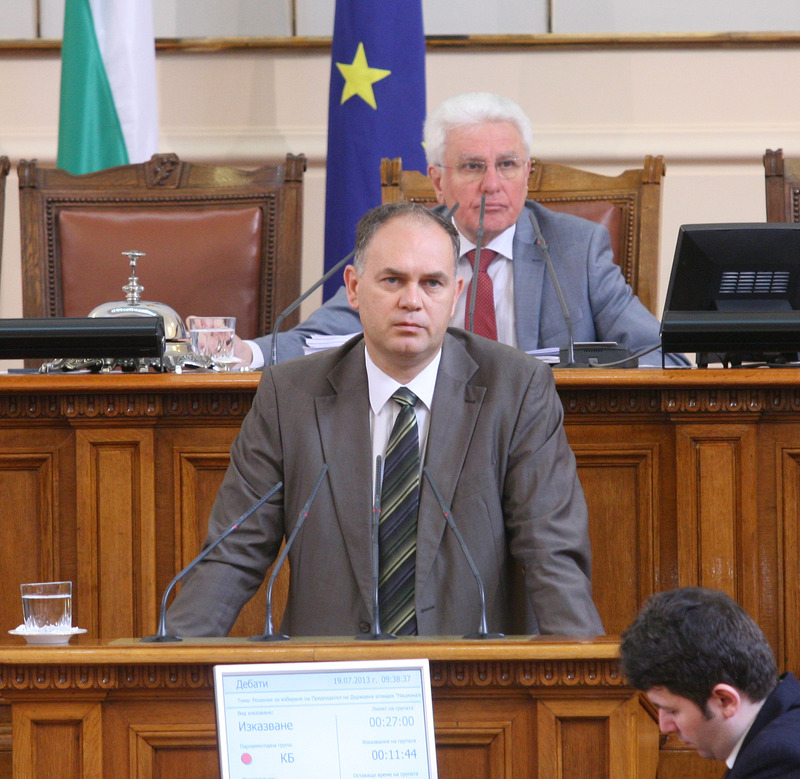
The disputed text tabled in plenary by member socialists, Georgi Kadiev, previously was not supported by any of the economic, the budgetary and the legal committees. However, it passed the second vote on the law ten days ago (28 March, Friday) with the support of GERB party. Some experts suspected political motive in the behaviour of the opposition.
Mr. Kadiev said on TV Getchev that the support for the text came after meetings with thousands of people complaining of exorbitant loans from pawn brokers, and the MPs have decided to do something to solve this problem, he said.
Deputy Parliament Chair Aliosman Imamov challenged the ceiling in an interview with a national newspaper the following day, April 2. According to him it was not permissible to determine the maximum amount of interest because the consequences will not be good for the market competition.
Meanwhile a turbulent expert discussion was sparkled in which prevailed the opinion that no ceiling should be adopted. Changes in the Consumer Credit Act, adopted at the end of last week, triggered criticism by experts who doubted that the initial intention – to limit the arbitrariness of credit institutions as to making loans more expensive with different fees – will not in fact work out as designed.
Mr. Getchev, chairman of the Parliament’s Economic Committee, said he was not happy with the sudden insertion and the adopted a text which puts a ceiling on all the costs of servicing a loan, including interest that cannot go over 50% of the loan’s amount.
Otherwise, Mr. Getchev defended most of the adopted texts of the law, arguing that it introduces a principle of banking that is valid in the EU and vouches for a balance between banks and borrowers. He even expressed the view that the mere change the law should come faster into force – one month after its publication in the Official Gazette, not three as currently envisaged.
The 50-percent ceiling on lending rates does not affect loans extended by banks. This ceiling is for a small segment of the market – the fast loans. Of course, the interest rates on bank loans is almost ten times lower than the newly voted threshold.
He finally put an order in cruel tangle of populist initiatives for quick loans. With the adoption of the Consumer Credit Act at second reading MPs put a ceiling on interest rates on fast loans and this is now valid even for the smallest sums of up to 400 levs.
The BANKER