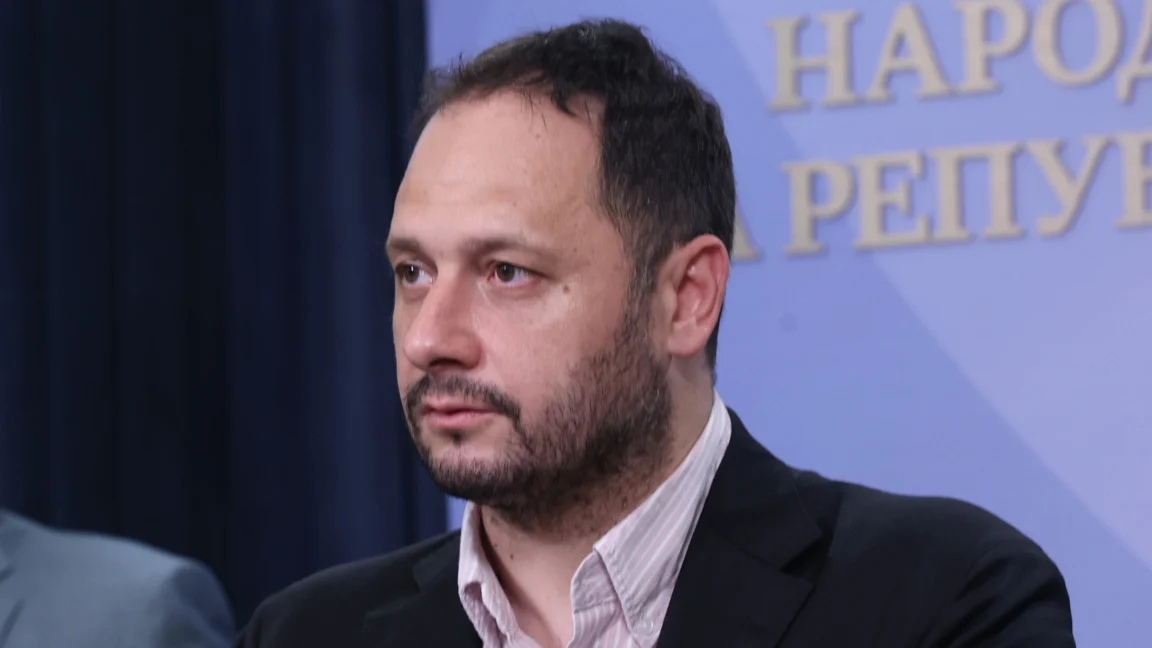
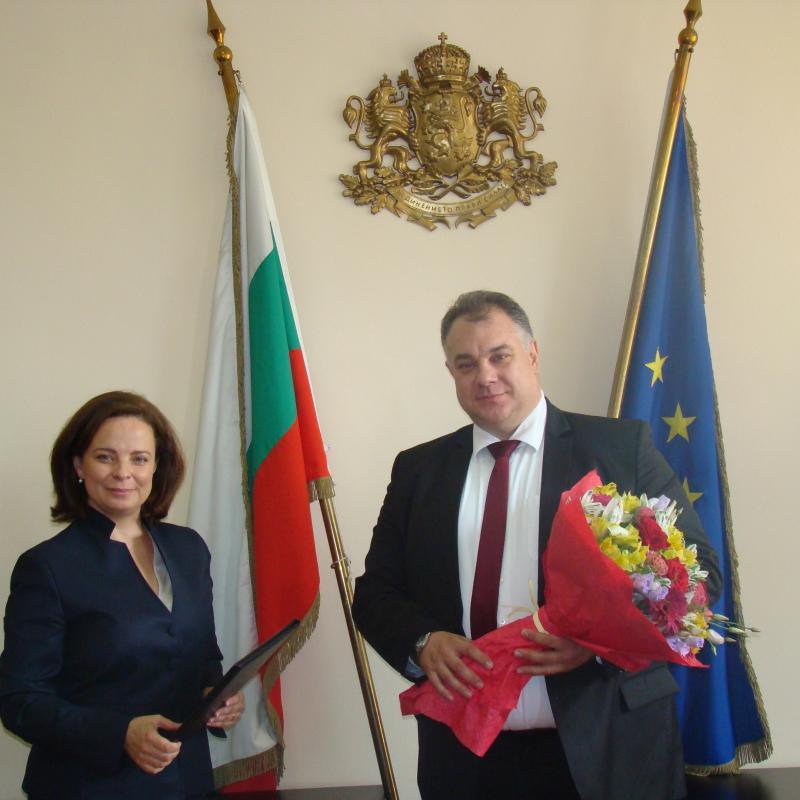
Many of the public tenders of the Ministry of Healthcare will probably be stopped. This was confirmed by the interim minister Dr. Miroslav Nenkov in response to the concerns that his predecessor, Tanya Andreeva, might have rolled out a golden carpet for certain companies literally before she left office. Nenkov said he would kmow better after thorough check which orders will be canceled and why, because the situation, according to him sounded „serious and well-argumented.“ Now it is known that the procedures launched by Andreeva in late July and early August, will be monitored and the fate of most of them is a death sentence without parole.
The question is how inexperienced minister Nenkov will be able to separate the wheat from the chaff without harming the fragile balance in the healthcare system? The last four contracts signed by Andreeva are for the supply of ambulances for emergency aid, for the purchase of drugs against AIDS, and equipment with modern equipment to dozens of hospitals across the country. For these purposes, what was provided comes to more than 15 million levs. An unjustified suspension of such large investments will surely be bad for the healthcare in at least several regions. On the other hand, the tenders show, even to the naked eye, violation of criteria for selection of a contractor, the margin calculation standards and even evoke concerns about lawlessness of the tenders as a whole.
Experts almost unanimously stood against the conditions in the procedure for selecting a supplier for 56 ambulances at an estimate value of 3.62 million levs, without VAT. According to the chairman of the National Association of workers in the emergency groups, Dr. Desislava Katelieva, the last one is fully in line with current practice existing lorries to be re-equipped as ambulances. The vehicles then satisfy neither the Bulgarian nor the European standards for security of the medical teams and patients. Katelieva explained that the standard requires the emergency vehicles to be designed and equipped to provide emergency medical care, transport, handling and monitoring of patients. A sanitary car of the type C, corresponding to the Bulgarian and EU standards, costs between 80,000 and 120,000 levs, because they include „extras“ such as standardized suspension equipment, lighting, further strengthening, apparatus and equipment. Now, the auction grants a maximum of 64,683 levs per car, which suggests that they will be adapted vans.
„Once again we and patients will endanger our and their lives during transportation in adapted cars. The apparatus fitted in cabinets with rubber bands will fall or will read incorrectly the patients’ data while moving them in a special mode,“ says Katelieva. In fact, the healthcare ministry really drew far more attention to fuel economy requirements, warranty and service and environmental features of the machines rather than the level of their medical equipment. Technical specifications, of course, have been drawn, but they did not fall within the criteria for evaluation of tenders, as if the vehicles were not for special treatment of urgent cases.
It is also not at all clear on what legal were announced the tenders for the supply of medical equipment and technological equipment in the thirty-five centres (branches) of various hospitals. This list includes the urgent medical treatment hospital in Sofia, Pirogov. No detailed programme or project documentation has been specified. Such activities have not been envisaged in the investment programme „Growth and sustainable development of the regions.“ Over 6.44 million levs is the sum granted for the entire emergency room with equipment for intensive beds panels, defibrillators, respirators, ECGs, ultrasound, X-ray, as well as specialized carts. Part of the „goodies“ will travel to the emergency departments of regional hospitals in Vidin, Vratsa, Montana, Kardzhali, Smolyan, Haskovo, Veliko Tarnovo, Razgrad, and Silistra. This could easily be considered a breach of competition law, as these clinics are independent companies. With regard to municipal hospitals, they have no emergency rooms but in the best case – branches. „It turns out that the ministry plans to invest money in repair and equipment of non-existent structures in municipal hospitals,“ experts commented.
Discussion provoked also the contract for the supply of medical equipment for the general hospitals in Blagoevgrad, Rousse, Veliko Tarnovo and Burgas, which are included in the mid-term investment program of the Ministry of Healthcare. Laparoscopic, endoscopic and angiographic equipment with other devices should cost up to 4.13 million levs without VAT. Unlike other healthcare tenders in this case the main indicator to assess the bids are the technical advantages of the apparatus offered. Listed are numerous bonus points for a range of rotation, resolution, speed, size … and some of the companies that are hardware manufacturers are already preparing to contest future results. According to them, the assignment is written so as to benefit a particular producer.
The BANKER