Narrow party interests have won over statehood in Bulgaria. Blinded by the lust for power and the fear to take responsibility for the financial stability of the country, MPs from all parties came into sharp populist collision, the end result of which is that the law on the state budget will not be changed.
Caretaker government that will rule the country over the next three months will be deprived of financial reserves on which to base a possible force majeure decisions. And it is very possible such will arise. Because on September 21, just before the election, the deadline of three months of the special supervision procedure over Corporate Commercial Bank (CCB) expires. If by then the bank is not open, or if the period of conservatorship gets expanded, the nerves of some citizens will not hold, and the government will have no funds with which to quell their panic.
Not surprisingly, the prime minister in resignation, Oresharski, said some time ago that he saw no need to update the income part of the budget the treasury, but the cabinet headed by him still submitted an update of the State Budget Act for viewing in parliament. At first glance this seems like a discrepancy between words and actions. But it is not. In this particular case this is an adequate statesmanlike solution adapted to the political realities in the country. The update of the State Budget Act is necessary, not because of the money of the National Health Insurance Fund (NHIF) but for creating opportunities for the provision of state guarantees, which are only part of the financial techniques available to ensure the solvency of the state. In the event that on September 21, the CCB fails to open its doors and the state have to pay the guaranteed deposits in it, the Deposit Guarantee Fund must have 4 billion levs, and there are only 2.1 billion levs in it now. If the fund has not received the right to issue additional domestic debt of 2 billion levs, which is provided in the plan for an update, the events that would occur would not be at all pleasant. Discussion and voting on the government’s proposed amendments to the state budget in the National Assembly, however, is politically damaging for GERB and the socialist BSP ahead of the upcoming elections. For all these reasons GERB and the Movement for Rights and Freedoms (MRF) tried on 29 July to push through parliament a change in budget parameters by putting the emphasis on spending on the healthcare fund.
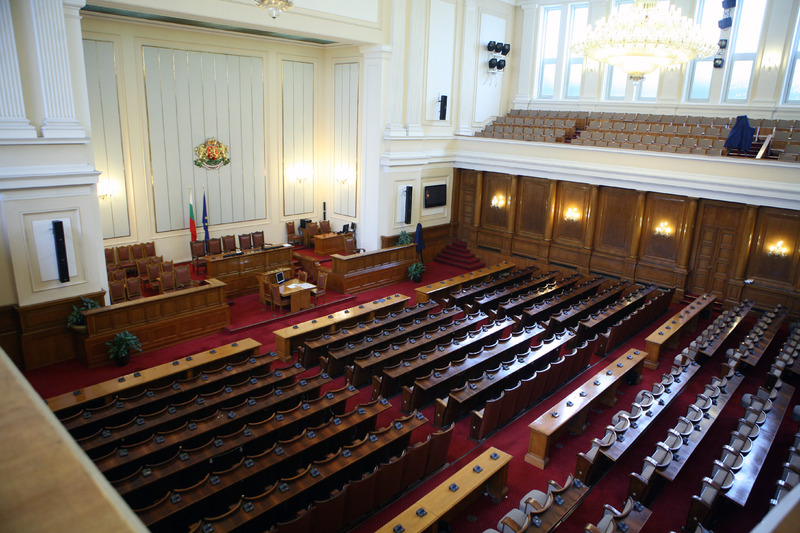
It is in this spirit that the discussions in the National Assembly began, where lawmakers first started to discuss the revised budget of the NHIF. In the discussion which lasted several hours MPs from GERB, MRF and BSP reiterated several times the numbers that require according to them the update. Some data show the shortage of funds in the treasury at the end of 2014 could reach nearly half a billion levs.
After a long and meaningless debate, MPs from all parliamentary groups supported the proposal of the outgoing government for changes to the budget of NHIF. A total of 184 MPs voted for, nobody was against, and no one abstained. Then came the amendments to the state budget and the political circus began.
Anyone who is at least partially aware of the interrelationship between the budget structures knows that when costs and the deficit of the health fund are increasing, it can not lead but to increased costs and therefore to a deficit in the state budget. It is because the additional subsidy for the NHIF comes precisely from the state budget.
The Chairman of the Committee on Budget and Finance Yordan Tsonev presented the government’s proposals for amendments to the state budget – reducing the projected revenue to 500 million levs, increase of spending in order to further finance the NHIF by 225 million levs, growth deficit of 725 million levs, raising the limit on newly issued debt to 3.4 billion levs and issuance of state guarantees for 2 billion levs. He specifically said that all these measures are proposed in order to create enough sustainable fiscal buffers that would facilitate both the caretaker and the next government. Specifically for the guarantees, Mr. Tsonev said they will enable the Deposit Guarantee Fund to raise quickly the needed additional funds. Here socialist MPs launched an attack against GERB.
„Today, the debate is unprecedented. It is unprecedented because all the three committees voted against the adoption of the revised budget,“ said chairman of the parliamentary group of the socialist and coalition Atanas Merdzhanov. All subsequent attempts of MPs from GERB and BSP to move the debate back within the professional tone did not manage to wipe out the impression of these initial statements. GERB insisted they would support the proposed amendments to the state budget in the name of national stability. But BSP nagged that this is a proof of the agreement between GERD with MRF, who were until recently opponents. This made people of Boyko Borisov nervous to the extreme. Oon July 30, he said: „The GERB parliamentary group is going to stay out of the Parliament until it mandate expires. Hereinafter BSP will have to be nice enough to take the overall responsibility for the next three months. If a cataclysm in the state happens and there are no buffers – this is entirely their responsibility,“ put an end to the dispute Mr. Borissov.
The BANKER