Bulgaria’s Commission for Protection of Competition (CPC) has found indirect evidence of cartel pricing of fuels, announced this week the chairman of the watchdog Petko Nikolov.
In early August this year the antimonopoliss began investigation against one of the largest distributors on the fuel market – Lukoil Bulgaria. Doubts have been expressed for abuse of dominant position on the Bulgarian market and signing cartel agreements with other wholesalers of gasoline and diesel. The check was actually inspired after speeches by the Minister of Economy and Energy Traycho Traykov against the market behavior of Lukoil.
Interestingly enough, such a signal was submitted in March this year by former transport minister Alexander Tsvetkov, and then the CPC ordered a sectoral analysis of the local fuel market. Four months later, Petko Nikolov announced to reporters that there are no indications of violations on behalf of Lukoil .
Strange as it may sound, evidence now turned up to be found albeit indirect. Apart from Lukoil Bulgaria under the lens of antimonopoly body now fall also three distributors of gasoline and naphtha – Rompetrol Bulgaria, Naftex Petrol and OMV Bulgaria. The four companies have over 700 stations located throughout the country.
Yet in its sector analysis tracking the chain of fuel sales in the country, trade relations and market regulations, the CPC found problems in the competitive environment of the production and sale of gasoline and diesel fuel.
On one hand there is a similar fluctuation of wholesale prices, which could be a consequence of the presence of a prohibited agreement or concerted practice between market participants. On the other hand, contractual relationship between Lukoil Bulgaria Ltd. and its partners – wholesalers were investigated and this raised concern over certain contractual terms and trading practices that can lead to foreclosure, said the CPC back then.
Despite all these considerations, it was not clear whether the anti-trust investigation agency will ever send the case to court. I hope that we will have success, but I can not afford to bring a case into court where the evidence is on the brink – 50:50, commented Petko Nikolov. He has not committed to a specific date for completion of the investigation made it clear that companies cooperate on the case.
According to the text of the Protection of Competition Act the Commission’s members may postpone the final decision as much as they themselves choose. However, if after their investigation a case of coordinated prices is demonstrated, the fine may reach up to 10% of the turnover of each of the offenders. The penalty may be appealed, a practice now widely used by companies found to have broken the rules of competition and at the end they get away with paying much smaller amounts. The law says the CPC may alleviate the punishment of a company if the latter has cooperated actively in the establishing of the violation.
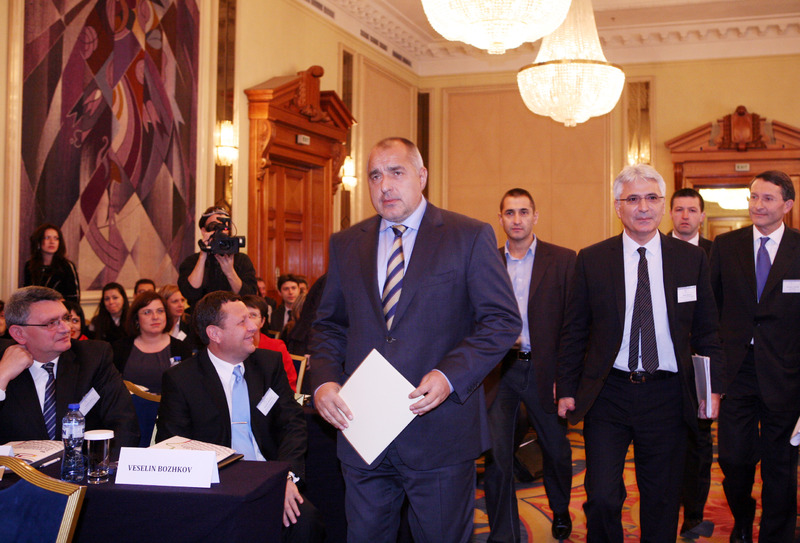
It will be interesting to see exactly when the antimonopoly watchdog will reach a decision and what it may be. However, last week during a conference marking the 20th anniversary of the Commission for Protection of Competition, Prime Minister Boyko Borisov said Bulgaria is a small market, so it can easily accommodate monopolies and cartels in the sectors of food commodities and fuels, even in big chain operators.