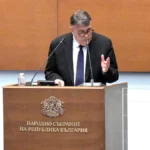
It is necessary to introduce an offshore tax because the state has the right to regulate these cash flows, depriving it from certain capital, said last week lawyer Todor Tabakov, who is also a board member of the Bulgarian Chamber of Commerce. A tax on financial transactions to offshore zones from Bulgaria was previously announced as an option by other employer organizations.
No doubt this is to the liking of the general public, which ultimately pays taxes on its modest incomes while people see wealthy businessmen getting away from the tax guillotine. But the question is about the feasibility of such measures in practice and if it is not just a populist rhetoric aimed only to divert attention from other more important issues?
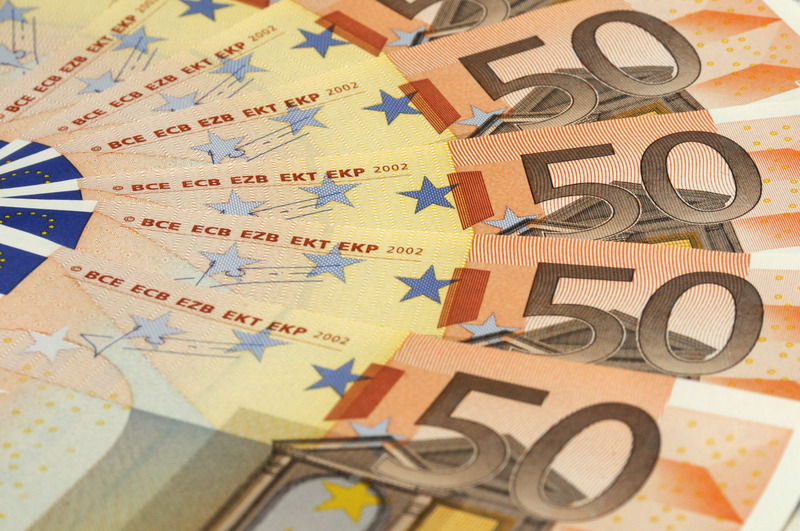
A sum of about 100 million euros is expected to enter the country if a tax on money transfers to offshore areas is introduced. This will be only the amount from direct income taxes, and if one includes the money from tax evasion, the figure will become much higher, Tabakov said. But how he came to these numbers is not known. On the one hand, it is unclear how much the eventual transaction tax can be – 10 or 15 percent. And on the other hand – no one is able to state how much money is being exported to the so-called tax havens. However, that there have been no it has such analyzes, says Tabakov himself. It is therefore absurd to foresee 100 million euros, or any other amounts.
Among other things, Todor Tabakov believes that it is necessary to monitor the cash flow out of the country and to tax only the guarantors of transfers, not the offshore companies themselves. According to him, in some countries, such as Germany, the authorities impose strict control over the cash flows that are directed to offshore areas. When there is such a transfer immediately the officials begin checking whether a service have been performed against the money. If not, then the amount is taxed immediately, explains Mr. Tabakov.
Such a practice would undoubtedly give results, but we should not underestimate the extent to which businessmen are enjoying the paradise islands as tax havens. What prevents, say, with the possible introduction of controls and taxes on the cash flows the owner of the account to include a third country in the scheme? Instead of a direct transfer to the offshore area the owner can send the money first to another non-shore country and then into, possibly, another company, which then can forward the sum to the offshore zone. This way the national authorities will have no reason to doubt and will lack reason for further investigation.
Nothing can be done to tax cash flows to EU countries such as Cyprus, Luxembourg, Netherlands and others, at least until Brussels introduces some general rules for financial transactions in the EU.
The idea of ??a offshore tax keeps yet another key problem. The fact that a businessman has decided to hide the ownership of the company through registration in any of the offshore jurisdictions in no way means that his bank accounts will be there. On the contrary – in most cases the company is registered on an island, but its money is kept in secure financial institutions in Switzerland, USA, Singapore, etc.
But the most important thing that questions the whole idea of the taxation of shady capital is the fact that in reality no one (or almost no one) just transfers money to an offshore company. Tax avoidance is done under well-proved schemes that have been working for decades and they have nothing to do with monetary transactions. For example, if an exporter produces or buy domestically produced goods for USD1,000 and sell them overseas for USD1,500, making a profit of USD500 which on its turn is subject to tax on profits or income taxes. The latter is easily avoided if the purchase of goods from the local exporter is carried out by a controlled by the exporter offshore company at the producerrquote s price of USD1,000. Then the same company sells the goods to the final consumer at the selling price abroad – USD1500 dollars. In this case the profit is formed entirely in the offshore company and there is no taxation of the income. However, this is no bank transfer to an offshore company. All these and other fine moments make the statement of the Finance Minister Peter Tchobanov that at this stage we do not engage with the promise of introducing such a tax is quite understandable.