Do you know what is common between the Bulgarian banking system and Laksmi Mittal, who is occupying the sixth place in the ranking of the world’s billionaires? No, the Bulgarian banks have not lent sums to his companies. The common thing is that his personal fortune is equal to all the savings of households and firms in the form of deposits in Bulgarian banks. According to recent data from the Central Bank from the end of January the sum amounted to a total of BGN49.34 billion, of which BGN31.23 billion came from households. Within one year only the savings of citizens have increased overally by 13.5%. December 2011 marked a record high in this respect BGN768 million deposited by households.
These rates of growth of deposits are largely driven by declining consumer spending. According to the research company GfK, the economic expectations of the Bulgarians were at their level from May 2009 when the crisis actually started to show its full effect in the country. The continuing precarious situation and frozen incomes made Bulgarian consumers unwilling to carry out larger purchases and forced them to save money for a rainy day.
According to Catherine Panayotova, of Unicredit Bulbank, some other factors also played a role. According to her, many people who had more than one home have sold one or more of them. They did not spend the money from these transactions, but invested it in bank deposits, she told the BANKER. Thus, instead of spending on housing unit’s current costs – such as property tax, garbage fee, heating, water, etc., they receive income from interest on deposits.
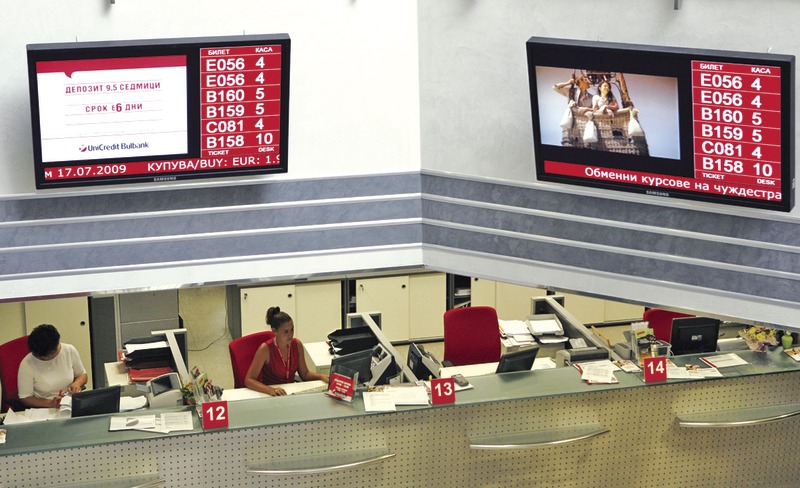
What profit would deposits have in the future is difficult to calculate because from a certain period now deposit interest rates have been going down. According to statistics of the Central Bank, in January 2012 the yield on new deposits to households in Bulgarian levs decreased by 0.33% over the same period last year, while those in euros – did so by 0.17 percent. Against December 2011 the decrease was 0.10% in BGN and 0.07% for euro denominated deposits. So now people can sign a contract for their deposits in at an average annual interest rate of about 5.58 percent for sums in local currency and about 4.9 percent for those in euros. Legal entities earn less from interest rates – 3.71% for deposits in BGN and 2.57% in euros, down by 0.84% and 0.53% from their levels in early 2011.
Analysts say that January will be remembered with the record-high number of adjustments in bank offers for their deposits.
If the growth rate of bank deposits is preserved the interest on deposits will continue to fall.
Uncertainty in income and employment, as well as expectations of a repeated recession in the euro area are the main factors that make households and companies prefer to save in bank deposits than to investment and consumption, said chief economist of Raiffeisenbank, Kaloyan Ganev.
So the question remains as to what the banks will do in this situation. The need for resources is still palpable and in the view of the forecasts for the continuing increase in the population’s savings, banks are expected to maintain their current policy on interest on deposits. In this regard tangible drop in interest rates is not expected until at least mid-2012 said Mrs. Panayotova. Otherwise, banks will continue to accumulate capital.
According to a recently submitted estimate of audit and consulting company Ernst amp; Young the trend of increased volume of deposited funds in Bulgaria will continue in the coming months. Fierce fighting between Bulgarian banks for slicing a bigger chunk from the consumer deposits will continue in 2012, said partner in the company Nikolay Garnev.