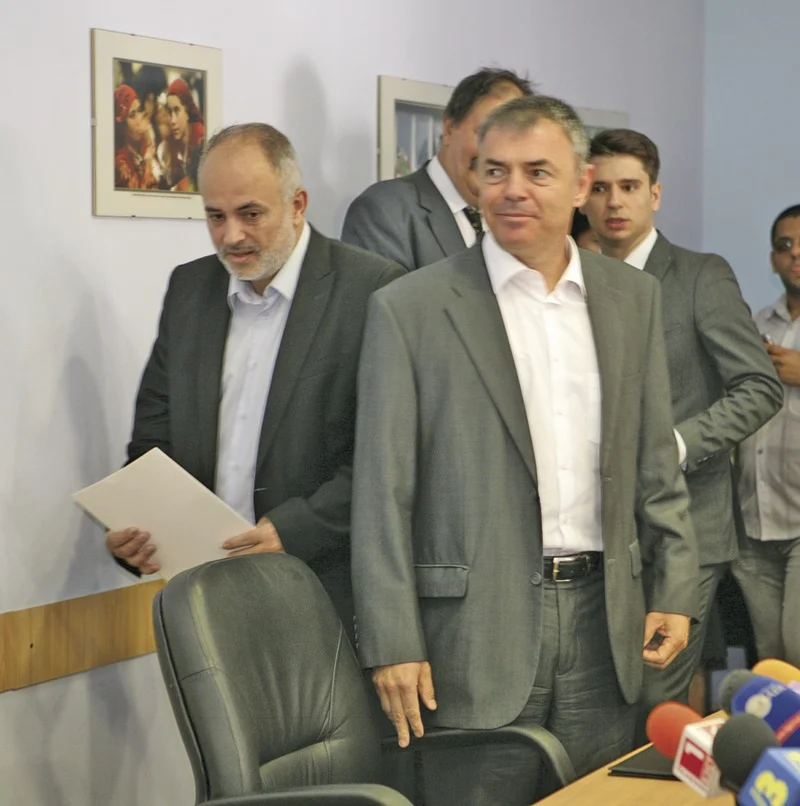
There can hardly be a more precise picture of the current government’s attitude to science, research and innovation from the speech of the Minister of Education, Youth and Science Sergey Ignatov celebrating the 143 years since the creation of Bulgaria’s Academy of Sciences. During the celebration a week ago Mr. Ignatov managed to make seriously angry the scholars when he said he could hardly provide more funds for the institution of the draft sum set in 2013, which is 60 million lev, because it was the available cash in country. The exclamations of the room were that this was not true, but the answer was brief – who disagrees, may try to find more. However, Minister Ignatov promised that the government will struggle to push for European funding the notorious Science and Education for Smart Growth Operational Programme in which three ex-cabinets broke their heads over the last decade.
New concept for the new OP that covers the 2014-2020 year is now a fact. But Minister for EU Funds, Tomislav Donchev should show miracles of eloquence to persuade Brussels to accept a chaotically written document where there is no analysis and which lacks details.
Even at first reading one can get the unpleasant impression that the concept does not offer any financial parameters. This is quite disturbing given the fact that in its composing were actively involved academics, academia, other agencies, civil society and other experts. That is, a whole lot of experts actually does not know how much money they want Minister Donchev to ask from Europe for science and education in Bulgaria. The education ministry specified that the document does not seek only the absorption of European funds, but is rather an overall vision for the development of science and education in the next programming period. In recent years, however, under various names dozens of similar looking and useless visions appeared. And Brussels wants clearly defined measures and commitments, is it has to pay.
Experts from the ministry managed to calculate that as an intermediate unit under the Human Resources Development Operational Programme they are beneficiaries in 16 projects totaling over BGN590 million. But they can not calculate how much money they will need to separate into their own programme.
Very disturbing is that candidate OP presumably should be aimed primarily at science, but it seems more like a theoretical statement and action plan for a mechanical mix of educational and social ministry’s issues.