
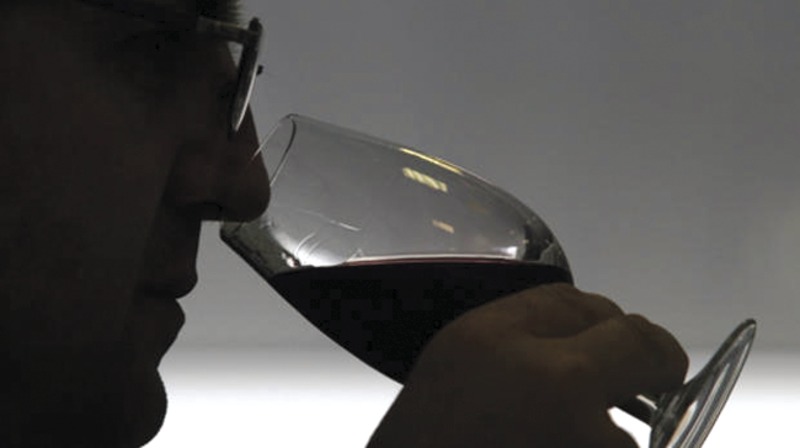
About 22 are the winemakers in the country, holding over 90% of the market in recent years, according to industry experts. Although the number of companies actually functioning is more than 60, the major players with significant market share are only one-third of them. The reason is the retail sector – large retail chains are the main distribution channel for the sale of wines and they have certain requirements. First, to provide brands from all price segments – from the most expensive to the cheapest, which is feasible only for larger and stronger companies.
Small wineries that have emerged over the last five or six years, holding only 8-10% of sales, offer their products in specialized boutiques. These are primarily more expensive wines, and in some cases the difference between their price and the average reaches 40%.
According to the Ministry of Agriculture and Food, over the first nine months of the year, the domestic market sales amounted to 68,505,993 litres, which compared with the same period in 2011 is an increase of 17.1 percent. As the months leading up to New Year are traditionally strong for wine, the annual increase is expected to reach 20% by the end of 2012. This will sharpen competition and make the battle for customers even more serious.
Although Bulgarian wine has strong positions on the local market, the imports are not yet a significant factor, experts say. They say they take no more than 10-12% of the annual quantity soldwhich means that so far the monopoly of Bulgarian wineries is obvious. However, this situation could change quickly, because a significant proportion of subsidized imported wines manage to keep retail prices around the Bulgarian average and even lower. Basically Sofia imports drinks from Chile, Australia, and Argentina. In very limited volumes it also buys from France and Italy. But there are signs that due to the stagnation in Europe, some European companies are paying close attention to the smaller markets such as Bulgarian one. This is suggested also by the first mass television advertising for French wines sold in one of the biggest local supermarket chains. If this pressure continues, then local manufacturers may give another ten percent of their market share, mainly due to competitive prices.
The BANKER