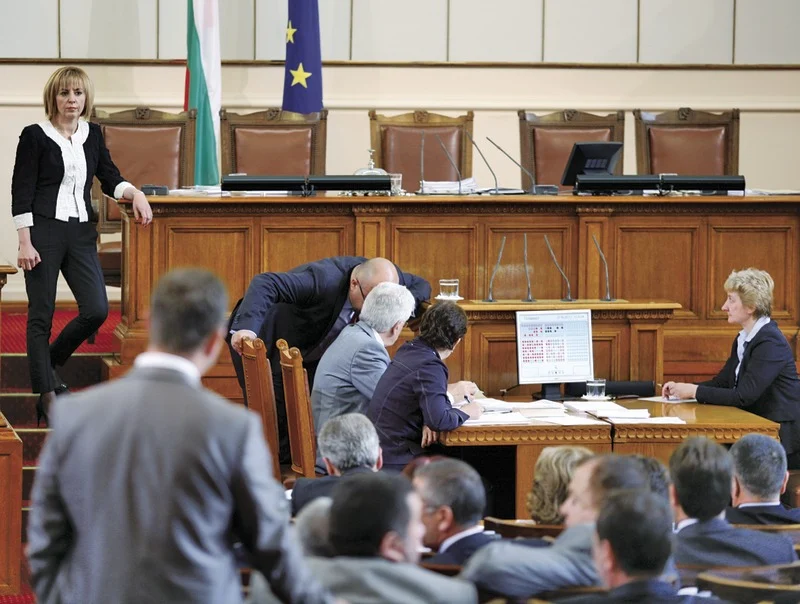
It will not be easy for the current National Assembly of Bulgaria, everybody is convinced now. Not only because of the difficulty of forming a quorum, but because of the complex communication between the governing parties. Formations that only three months ago spoke in completely different languages in their individual political existence, are perhaps trying to master a form of consensus, but would hardly be able to implement it in practice. The first examples are already visible.
The alliance between the socialist BSP, the ethnic Turk DPS (MRF) and the nationalist ATAKA is only superficial and it’s clear even for designers of the tacit coalition. The unanimous support one or the other texts receive in the Chamber is just a mask that will be soon removed when it comes to the actual details in the bills. And especially when populist social measures to support pensioners, the unemployed and mothers with children will have to give way to serious regulations to encourage business development and the fight against monopolies. As soon as the composition of the committees are ready and MPs are forced to work in accordance with current party interests this will be manifested. In fact, this has already happened during the discussions of the new parliamentary rules, when BSP desired to end the political nomadism (moving of on MP to another party) was sabotaged by DPS despite the displeasure of ATAKA.
At this stage, the MPs have little cause for quarrel because their legislative activity is too modest. For the past almost month from their official entering into office, the records of Parliament received a total of 26 bills, half of which are changes in the Penal Code and changes in international agreements and memoranda. In specific legislative garment is dressed only the election promise to increase maternal allowances from 240 to 310 levs, which received the support of GERB and passed first reading in plenary. The proposal that 45 thousand first-graders receive a one-off sum of 250 levs for the beginning of the school year 2013/2014, however, mysteriously disappeared from the list of bills submitted to the website of the National Assembly, and is likely to be revised as a proposal. What remained was only the project for changes in the Education Act that will require municipalities to provide places for all children in kindergartens, or if this does not happen to pay 120 lev monthly compensations to the families of rejected kids since January 2014.
The only texts behind which now stay all the four parliamentary groups are the amendments to the Penal Code for criminal assaults on medical personnel while performing their duties. Individual proposals of the opponents to this issue were even put together in a single bill and are soon time to be considered on second reading.
From here on in plenary sessions, however, it is unlikely to be easy. At first, the left will do everything possible to fulfill their social programme and support not only the mothers with children and students, but also the poor who need assistance for heating costs. And since we are talking about spending of almost 32 million levs by the end of the calendar year that will be reflected in the state budget, while the generosity of the government will almost certainly face the discontent of the opposition. There will be further arguing on new income policy, but their viewing will be done very carefully by the government so as not to provoke riots from the general public.
For now, though GERB support the social package of the left, but there will be no wonder if they sharply change their attitude if ultimately this means no money left for their favorite priority – reducing unemployment.
The BANKER