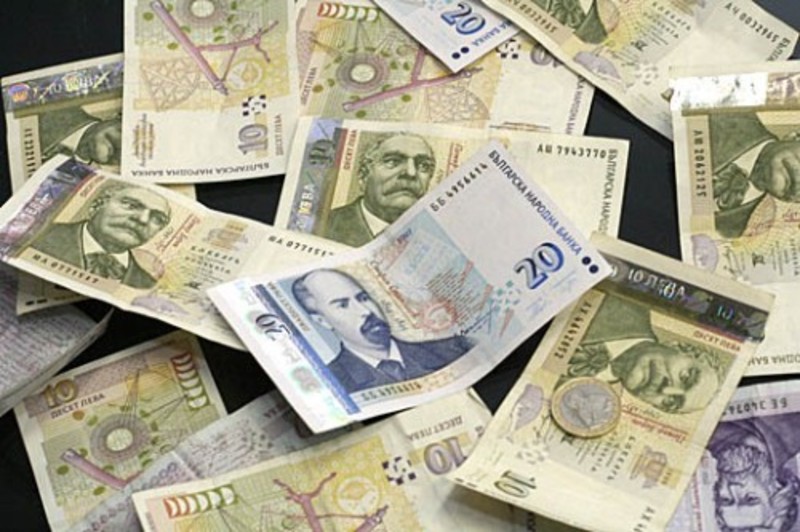
When September comes, the majority of Bulgarian businessmen are eagerly awaiting possible changes to tax legislation. The reason is that this is a period when usually a working group of representatives of employers and trade unions negotiate another little, but rather painful increase of the minimum insurance thresholds with the Government, which takes effect from the following year. This is most often done in negotiations behind closed doors. Paradoxically, after so many years of so-called agreements, there are still no explicit criteria to determine which professions thrive and should take the burden of higher taxes, and which are less well-doing and have to be pardoned. Or maybe it is that politicians have no incentive to regulate the process because the cash flow to the budget will thus be cut short?
Now it is almost certain that in 2014 will soar minimum insurance income for at least 44 economic activities, employing over 1 million people will jump. According to rough estimates the state will gain at least 20-30 million levs from the move. But the talks are likely to continue as the sectors are eighty-five. In the 20 sectors of the economy minimum insurance that workers pay each month will not be increased. Recommended guidelines made ??by the Ministry of Labour and Social Policy for specific increases are based on economic indicators released for real growth in GDP of 1.8 percent, and an annual harmonized inflation of 2.7 percent, as well as a minimum wage of 330 levs per month. But if GDP does not grow, and inflation comes to twice as this figure, will the state give back the overpaid money? The answer, of course, is a resounding no. Employers will be in a tough situation if they have previously failed to make the right calculations.
Even a brief overview of the list of favoured and punished sectors is leading to the conclusion that the results of the negotiated procedure are absurd, subjective and have no relation to the real economic situation in the country. From the officially unconfirmed reports it becomes visible that the most severe blow is directed to the otherwise suffocating healthcare. Managers of clinics and hospital wards are planned to see a record-high growth of 15.8 percent, whereby the heads will have to be socially secured at least on a monthly salary of 1100 levs instead of the previous 950 levs. It looks like a normal rate, but only in the capital city. While for manages in small community hospitals it is simply unachievable.
Even greater is the shock for the lowest groups of employees and those who are most neglected in the system – nurses, practitioners, rehabilitation therapists, midwives and technicians who will have to spend 13 percent of their salaries on social security. And it is just because these low wages that they emigrate abroad and the healthcare sector personnel in the country is thinning. On this occasion, President of the Employers’ Association in Healthcare, Dr. Dimitar Dimitrov said that financially healthy hospitals are anyway increasing the incomes of their staff and for the first quarter of 2013 they paid 300 thousand levs more on insurance payments. According to Mr. Dimitrov, such a decision is impossible for others, at least until the prices of clinical pathways are increased by at least 5 percent.
It is unclear on what basis a growth of 12.9 percent has been calculated in the sector of processing and preservation of fruits and vegetables. The most recent analysis of the industry was published by the professional organization in 2011. Meanwhile Bulgarian fruits and vegetables are an increasingly scarce commodity on the market.
Unknown is also why they voted an increase of between 6-8 percent for wood processing, horticulture, water sector, and especially in the production of furniture. Even little children know now that in the latter branch the rules are dictated by large retail chains, and the domestic consumption has shrunk. Smallholders survive with reduced manufacturing costs (and therefore quality), redundancies and technological innovations, which is also a step towards reducing the staff. If there is an increase in sales, it is due to the Swedish giant IKEA that anyway is hardly likely to secure its employees at the minimum rate.
It is a total mystery why an increase of 1.6 percent is envisaged for the payroll in tourism. Restaurateurs and owners of catering establishments have already been ruined by the smoking ban indoors. Now they will have to pay more, although lately Bulgarians prefer to spend their holiday money in Greece and Turkey for a reasonably priced holidays and much better service.
A proof that the system is totally flawed, is the analysis of the Institute for Market Economy, that only from the increase in payroll taxes by 26.6 percent since 2009 will bring losses to the local economy of 4.65 billion levs in the ten-year horizon. The net effect is a minus 6.09 billion levs for businesses and citizens, but a plus of 1.44 billion levs for the state. Not accidentally even the European Commission recommend that Bulgaria should review its scheme of security thresholds. According to EU experts, this can be a barrier in the recruitment of low-skilled workers in some areas of the country, as it doesn’t allow for adjustment of wages during the crisis. Furthermore this regulates a regressive taxation with higher effective insurance rate for employees with lower wages than workers in higher wage zone. The Bulgarian Chamber of Commerce added that the mechanism for continuous growth of the insurance income is unfortunate and leads to a contraction of small and medium enterprises and their shifting to the grey economy thus rising official unemployment. Similar arguments sound persuasive, but someone has to listen to them.
The BANKER