The days around Christmas and New Year’s undoubtedly something very nice – people relax physically and mentally, and most often tend to spend more. Unfortunately, after the holidays comes the period of sobering or in other words – of paying unavoidable household bills and utilities that must be paid throughout the year to come. And it seems that, despite the assurances of Bulgarian politicians that our country is an island of stability, local prices will continue to grow, as opposed to income.
Yet as of 1 January
natural gas increases in price.
nbsp;
According to the decision of the State Energy and Water Regulatory Commission (SEWRC) taken last week, natural gas jumps by 4.53 percent to reach BGN621.29 per 1,000 cubic meters (excluding VAT). At least at first glance, these figures do not look quite so scary, especially given that in early December, Bulgargaz insisted on price increase of 17.74 percent for the first quarter of 2012.
But the truth is somewhat different and it was hinted at in the discussions of the tariff regulator. Representatives of the gas company said that for the second quarter of next year they will need an increase of the gas to be at least 20 percent to compensate for the present cuts in their tariff. The arguments which they indicate are more than serious – the appreciation of prices at which Bulgargaz buys natural gas from suppliers, including the Bulgarian deposits. Natural gas extracted from Melrose Resources in the Black Sea shelf, next year jump by 4 percent, although the Scottish company originally had requested an increase of 20 percent. Russian gas is also rising by 16.62 percent as of 1 January.
Speaking of gas, one must not miss one additional fact. From 1 June next year the country introduces
an excise duty on natural gas
nbsp;
amounting to BGN0.85 per gigajoule (a gigajoule is equal to 0.28 MWh of energy) when it is used as a propellant, and BGN0.10 per 1 gigajoule for use as heating fuel for industrial purposes. For natural gas used in households, at least for now the rate remains 0 per gigajoule.
In fact, the appreciation of natural gas from 1 January by only 4.53 percent is again due to the fact that SEWRC doesn’t want to create unnecessary social tension in the middle of the winter season. Almost all the country’s district heating companies use gas to produce steam and hot water, but if the appreciation of natural gas is within 5 per cent, it is assumed that the prices of heating cannot be hiked.
We have a report on the effect of the increase in gas prices to district heating companies. They are able to cope with it. This will be entirely at the expense of their profits, said the chairman of the regulator Angel Semerdzhiev.
However, the current delay in raising the prices may come out rather expensive in the spring when the price of heat for the whole country will have to include the impending rise of natural gas with the 4.53 percent plus that for the second quarter, which, as we said above, won’t be insignificant.
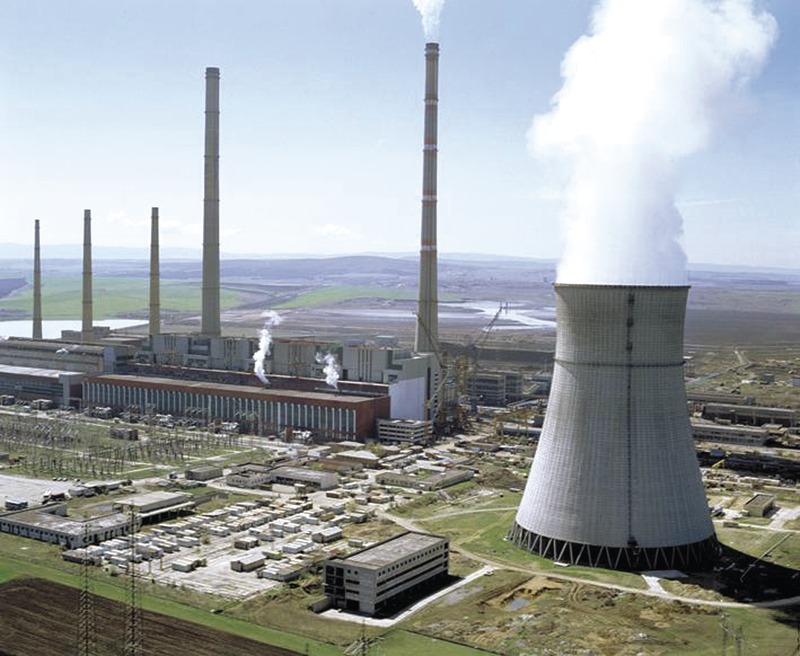
Unfortunately, bad news for consumers does not stop there. Deeper into their already depleted pockets will dig the environment commitments Bulgaria has undertaken with regard to reducing carbon dioxide emissions. Calculations show that the electricity price may increase by 15-20 percent by mid 2012, as manufacturers will now have to buy allowances for emissions that they are now receiving free from the state. They are not cheap at all – an average of EUR15 for a quota, which equals 1 tonne of greenhouse gases, while thermal power plants emit millions of tonnes of such substances.
In an attempt to ball calmed down a little recently, Minister of Economy and Energy Traycho Traykov tried to calm down tensions that power prices could rise only by 11 percent if the European Commission approves a delay in the requirement Bulgaria to abolish free quotas. Whether this will happen now is hard to tell, but what is more important is that Sofia has already sent a request to Brussels for a smooth introduction of payments for emissions by 2020. The idea is at the beginning of 2013 businesses to receive up to 70 percent of the quotas for free, while every year this percentage may decrease by 10 percentage points, while in 2020 it goes down to zero. Against this, however, TPPs will be required to invest in green technologies, which
will also raise the cost of electricity production.
nbsp;
Another possibility for keeping social tensions at bay could be a reallocation of quotas previously allotted to bankrupt plant Kremikovtzi and that can now be shared between power plants. In this case the question is about 3.5 million permits that can be used for nothing else unless a miracle happens and the plant resumes operations. According to estimates of the Bulgarian Industrial Association, a possible redistribution of this reserve of carbon emissions will save businesses between EUR35 and 40 million. For this purpose, Bulgaria sent a formal letter to the European Commission in November. Sofia can now just wait and see what the answer will be.
Because of greenhouse gases airfares will also rise in price, though far more modestly. On New Year’s airlines will be included in the EU scheme for emissions trading, and in 2012 will receive 85 percent of their required quota for free. From 1 January 2013 till 31 December 2020 this share will be 82 percent, and the additional three percent will be allocated as a reserve for new entrants and fast growing companies. The accounts show that in this situation the cost of transatlantic flights for a passenger would have to be raised by around EUR12.
But not only prices of air tickets will go up,
train transportation also appreciates.
nbsp;
Since the beginning of December the price of tickets in a second-class car, were raised by 15 percent in January the cost of travveling by train is expected to be hiked by additional 9 percent. Somewhat reassuring at this stage is the fact the Bul;garian Railways do not plan to eliminate discounts for students and pensioners.
As for the bus transportation, the signals now are mixed. Some of the companies that operate in the market rose their fares by 10-15 percent during the strike, which paralyzed the railways for a month. Their explanation was that for a long time they have not changed their prices, and during this period there was a significant appreciation of fuels.
Open remains the question of the price of vignettes for cars. Although the ruling party loudly declared that they will not change, the move actually depends on the Supreme Administrative Court (SAC), which until 20 January will have to decide on the issue.